$100M BTC Ponzi scheme Finiko founder arrested in Russia
Abstract:The founder of one of Russia’s largest cryptocurrency scams to date is behind bars, and his accomplices are being sought by Russian authorities. Moscow police arrested Kirill Doronin on charges of allegedly defrauding $100 million from his investors, although some reports purport the figure could be over $1 billion.

The founder of one of Russias largest cryptocurrency scams to date is behind bars, and his accomplices are being sought by Russian authorities. Moscow police arrested Kirill Doronin on charges of allegedly defrauding $100 million from his investors, although some reports purport the figure could be over $1 billion.
Finiko was established in the city of Kazan in 2019 and posed as a legitimate BTC investment firm. The scheme promised its investors ludicrous returns—in this case up to 30% monthly. It also claimed its investors would be able to purchase apartments and cars at discounts with the assistance of the founders, according to the Moscow Times.
In December 2020, Finiko released FNK, its native digital currency. As per local reports, the founders would take the BTC from the investors and award them the FNK tokens.
And while the promises of ludicrous returns brought in several investors, it was in its word-of-mouth incentives that Finiko managed to lure the most clients. It would award huge referral fees to those that brought in new clients. This led to many bringing in their close friends and relatives, and for many of the new clients, this was their first interaction with digital currencies.
Before his arrest, Doronin had attempted to flee to Turkey, going as far as obtaining Turkish citizenship under the name Onur Namik. Russian police have now put his co-conspirators Marat Sabirov, Zygmunt Zygmuntovich and Edward Sabirov on their wanted list.
In the case of Sabirov, authorities said his involvement in the scam has brought to focus his other ventures, with the biggest concern being a joint venture he was involved in with Nikolay Nikiforov, a former Russian minister for communications.
Its not yet clear how much money the fraudsters made away with. By some local reports, the amount was a mere 70 million Russian rubles ($1 million). However, there are others, like Russian business publication The Bell that puts the amount at over $100 million.
And then there is Sergey Mendeleev, the founder of Garantex exchange who believes that the amount the scammers made away with was 10 times higher. According to him, in January this year, the Finiko team withdrew $100 million in BTC in just one week, sending the “entire Moscow crypto market on fire.”
Blockchain intelligence firm Crystal Blockchain identified 111 million USDT, 1.8 million USDC and 888 ETH (worth $2.8 million) which it tied to Finikos wallet. The founder of the analytics firm Kyrylo Chykhradze told one outlet that some of the tokens were sent to Uniswap, a decentralized digital currency exchange.

Read more
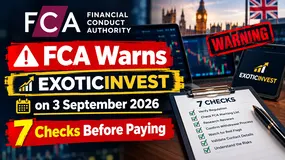
FCA Warns EXOTICINVEST on 3 September 2026 with Seven Checks Before Paying
FCA warns EXOTICINVEST in a notice first published and updated on 3 September 2026. The UK regulator identifies EXOTICINVEST TRADING AND INVESTMENT FIRM and the website www.exoticinvest.ltd, stating that the firm is not authorised and may be targeting people in the UK. This is a dated regulatory warning, not a customer review or a confirmed loss report. Anyone approached through the named website should stop before paying, avoid sharing login credentials and verify the exact business independently through the FCA Firm Checker.
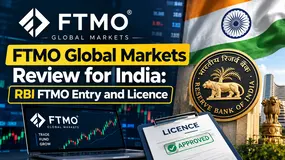
FTMO Global Markets Review for India: RBI FTMO Entry and Licence GB21027119
This FTMO Global Markets review starts with a naming problem. The RBI Alert List updated 22 October 2024 names FTMO and links to ftmo.com/en at item 13. FTMO's current contact page separately lists FTMO Global Markets in Mauritius, company ID C187370 and licence GB21027119. Its January 2025 privacy policy describes FTMO Global Markets Ltd as a Mauritius investment dealer. These records do not prove RBI authorisation for the broker domain, and they do not justify treating every FTMO-branded service as the same product or legal entity.
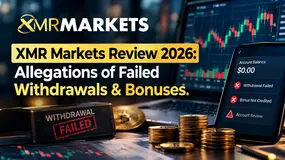
XMR Markets Review 2026: Allegations of Failed Withdrawals & Bonuses
XMR MARKETS, a South Africa-based brokerage entity, continues to face user allegations questioning the authenticity of its withdrawal processes. Some complaints also talk about bonuses failing to reflect in the traders' accounts. Users have reported these allegations on broker review platforms such as WikiFX. In this XMR MARKETS review, we have examined user complaints and provided a regulatory overview of the broker.
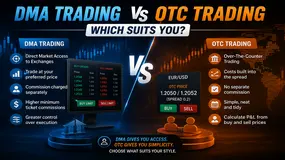
DMA Trading vs OTC Trading - Which Suits You?
Foreign exchange trading is basically of two types: Direct Market Access (DMA) and Over the Counter (OTC). Both come with their own pros and cons. It’s important to understand these two concepts before figuring out the differences between them. In this article, we will explain all of these.
WikiFX Broker
Latest News
Australian Dollar drifts higher above 0.7200 despite as strong US NFP
 WikiFX
Do You Know Your Cost of Swinging Gold? Gold CFD Costs Shift From Spreads To Overnight Fees
WikiFXSwiss Franc weakens as US Dollar strengthens on Fed rate hike bets
WikiFXXMR Markets Review 2026: Allegations of Failed Withdrawals & Bonuses
WikiFXOANDA Is Shutting Down MT4 Trading by 25 September 2026
WikiFXAustralian Dollar rides thin-trading lift as Fed test looms
WikiFXBlackwell Global UK Loss Widens as Revenue Falls 37%
WikiFXLiquid Network Suffers from a US$320 Million Bitcoin Hack
WikiFXCouple Faced Over RM1.5 Million Loss After Stock Tip Scheme
WikiFXThai Baht: Recent THB gains face headwinds – OCBC
WikiFXRate Calc

