RBI Keeps Repo Rate Unchanged at 5.25%; What Will Happen to Your Home Loan EMI and Savings?

Abstract:The Reserve Bank of India (RBI) decided to keep the repo rate unchanged at 5.25% in its monetary policy meeting on June 6, 226. The decision comes after the six-member monetary policy committee discussed the situation over days. The unanimous decision came hours after the US President Donald Trump decided a double-sided ceasefire with Iran. The global markets, including India, rallied after the US decision. The RBI governor-led monetary policy committee sits every two months to analyze key economic indicators and discuss the way forward through their policies.
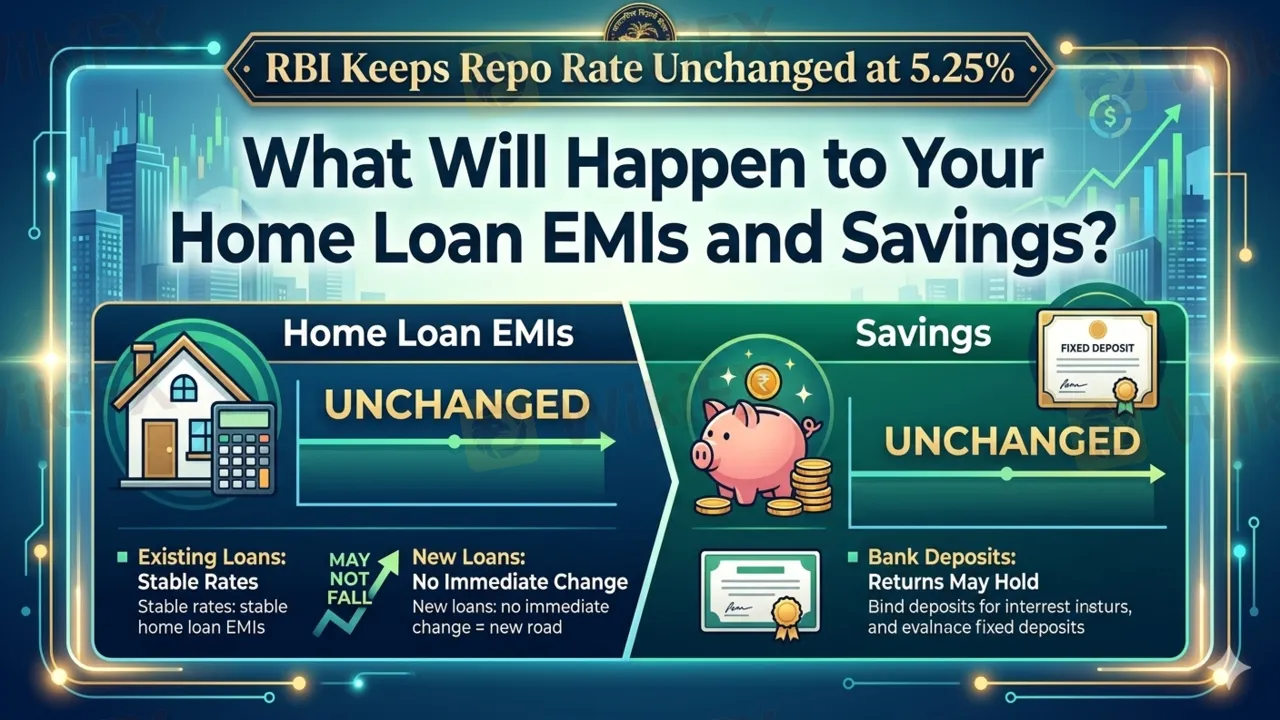
The Reserve Bank of India (RBI) decided to keep the repo rate unchanged at 5.25% in its monetary policy meeting on June 6, 226. The decision comes after the six-member monetary policy committee discussed the situation over days. The unanimous decision came hours after the US President Donald Trump decided a double-sided ceasefire with Iran. The global markets, including India, rallied after the US decision. The RBI governor-led monetary policy committee sits every two months to analyze key economic indicators and discuss the way forward through their policies.
Statements Issued by the RBI Governor Sanjay Malhotra on MPC Meeting
- Indias macro-economic fundamentals remain robust.
- The situation became challenging in March due to the war in the Middle East.
- The rise in energy prices poses risks to global growth.
- The Middle East conflict-led uncertainty weighs on economic outlook.
- Equities recorded a board-based dip.
- FY27 Real GDP growth to slip to 6.9% amid war risks. Quarter-wise projections - 6.7% in Q1, 6.7% in Q2, 7% in Q3, 7.2% in Q4.
- Indias forex reserves stood at $697.1 billion.
- The STF rate and MSF rate remain at 5% and 5.5%, respectively.
What Made RBI Keep the Repo Rate Unchanged at 5.25%?
- Headline inflation, despite war, remained below 4%, the central banks target.
- However, theres an upside risk to the headline inflation.
- Increased risks to rising food prices due to weather-related disturbances.
- The risk of a widening current account deficit amid high crude oil prices.
- Growth may be impacted due to disruptions in the Strait of Hormuz
What Does the Latest RBI Decision Mean for You?
The unchanged repo rate means the floating rate home loans will see no changes in the Equated Monthly Installment (EMI). At the same time, there will be no changes in deposit rates. However, as there‘s upside risks to inflation, it will be interesting to see what the RBI decides in its next monetary policy meeting. If the inflation goes beyond the central bank’s comfort zone of 4%, the RBI will likely raise the rates, leading to increased interest rates on floating rate loans. Also, as energy prices are rising, its important to increase your savings through investments in products such as stocks, forex, fixed deposits or any other based on your risk appetite.
Conclusion
The RBIs decision to keep the repo rate unchanged at 5.25% reflects a cautious approach amid rising global uncertainties, including geopolitical tensions in the Middle East and volatile energy prices. While stable interest rates provide relief to borrowers by keeping home loan EMIs unchanged for now, the central bank remains alert to inflationary pressures stemming from higher crude oil prices and potential supply disruptions.
For households, this means maintaining a balanced financial strategy. Borrowers can continue to benefit from stable loan repayments, while savers and investors should consider strengthening their financial resilience through disciplined savings and diversified investments aligned with their risk tolerance. Going forward, inflation trends, crude oil prices, and global economic developments will play a crucial role in shaping the RBIs future policy decisions. Monitoring these factors will be essential for anyone looking to manage their loans, savings, and investments effectively.
For the latest forex updates, visit the WikiFX App. Download Now!

More Insightful Articles for You




Read more

Brokers With Maximum Credible Regulatory Licences
Walk into any forex marketing pitch in India in 2026 and the first claim you will hear is some variation of "we are regulated by multiple international authorities". The implication is obvious — multiple regulators equals safer brokers. But after WikiFX has documented thousands of complaint cases from Indian and other South Asian traders, one inconvenient truth has become impossible to ignore: Not all regulatory licences are equal. Not even close. A broker can claim "regulated by 5 authorities" — and if those 5 authorities are all offshore-tier (MISA, Vanuatu, Seychelles, Saint Lucia, Comoros), it offers approximately the same protection as no regulation at all. Meanwhile, a single FCA or ASIC licence carries more practical investor protection than a dozen offshore registrations stacked together. This is the WikiFX 2026 ranking of forex brokers by genuine regulatory credibility — measured not by quantity of licences, but by the strength and enforcement weight of the regulators behind
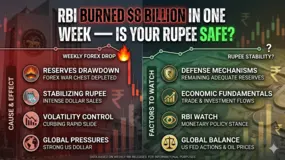
RBI Burned $8 Billion in One Week — Is Your Rupee Safe?
The rupee bounced to 95.20 but RBI's forex reserves took a brutal $8.1 billion hit in a single week — here is what every Indian investor needs to understand right now.

Nifty 24,000 Breakout or Bull Trap? 5 Signs You Must Check Now
Dalal Street gap-up on Iran-US peace hopes and crude crash has traders divided between a 1,500-point rally and a classic bull trap — here is what the data actually says.

YaMarkets Shuts Down Operations as Broker Website Goes Offline
YaMarkets has announced the closure of its services and operations, while its main website and B2B brand site have gone offline. WikiFX records show a Mauritius licence and business visibility across several regions.
WikiFX Broker
Latest News
How to Read Market Reversals Through Price Action and Indicators
WikiFXA Single TikTok Ad Cost Him RM100,000
WikiFXLONG ASIA Review: Broker Complaints, Regulation Gaps, and Withdrawal Alarms
WikiFXHow Proprietary Trading and Artificial Volume Move Prices
WikiFXCrude Jumps Amid Structural FX Shifts
WikiFXAximTrade Review: Regulation Warnings and Broker Withdrawal Complaints
WikiFXHow the Long Shadow Trap Ruins Reversal Trades
WikiFXAsian FX Markets Modernise As Crude Oil Surges
WikiFXInstitutional FX Volumes Edge Higher in May 2026
WikiFXKANAK CAPITAL MARKETS Review 2026: Official Warnings and Withdrawal Risks
WikiFXRate Calc

