Brokers With Maximum Credible Regulatory Licences

Abstract:Walk into any forex marketing pitch in India in 2026 and the first claim you will hear is some variation of "we are regulated by multiple international authorities". The implication is obvious — multiple regulators equals safer brokers. But after WikiFX has documented thousands of complaint cases from Indian and other South Asian traders, one inconvenient truth has become impossible to ignore: Not all regulatory licences are equal. Not even close. A broker can claim "regulated by 5 authorities" — and if those 5 authorities are all offshore-tier (MISA, Vanuatu, Seychelles, Saint Lucia, Comoros), it offers approximately the same protection as no regulation at all. Meanwhile, a single FCA or ASIC licence carries more practical investor protection than a dozen offshore registrations stacked together. This is the WikiFX 2026 ranking of forex brokers by genuine regulatory credibility — measured not by quantity of licences, but by the strength and enforcement weight of the regulators behind
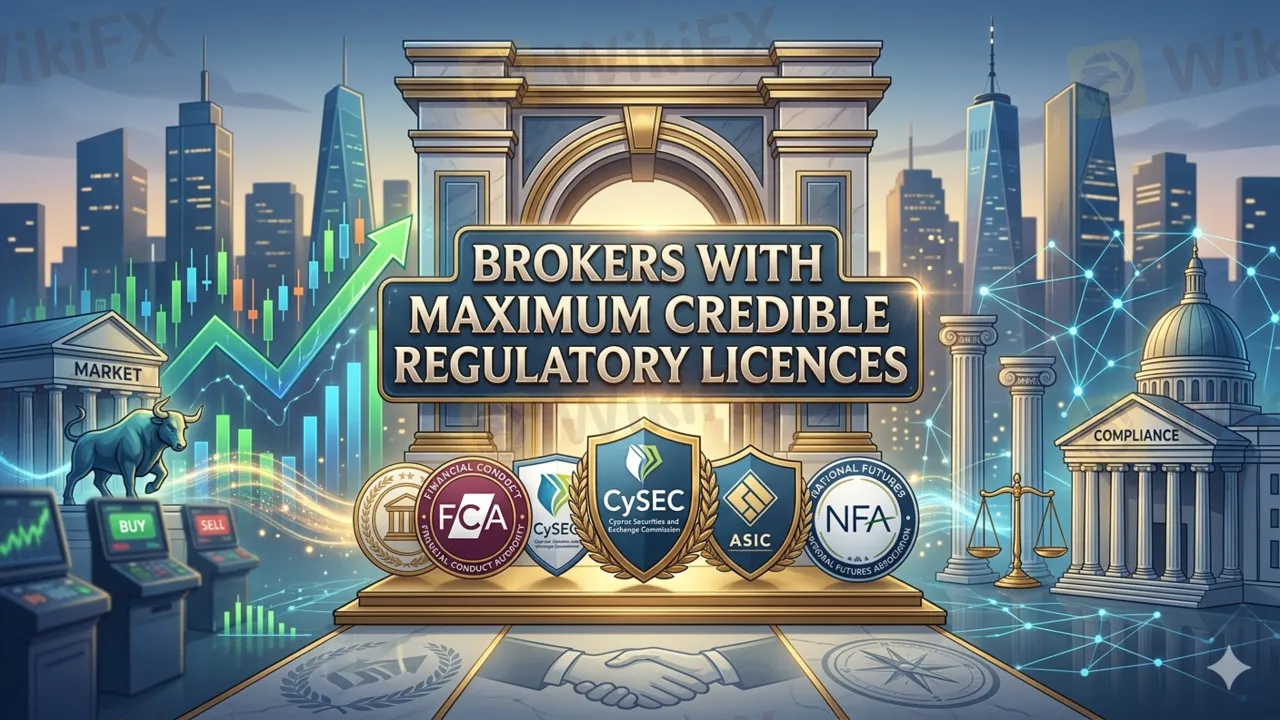
Walk into any forex marketing pitch in India in 2026 and the first claim you will hear is some variation of “we are regulated by multiple international authorities”. The implication is obvious — multiple regulators equals safer brokers. But after WikiFX has documented thousands of complaint cases from Indian and other South Asian traders, one inconvenient truth has become impossible to ignore:
Not all regulatory licences are equal. Not even close.
A broker can claim “regulated by 5 authorities” — and if those 5 authorities are all offshore-tier (MISA, Vanuatu, Seychelles, Saint Lucia, Comoros), it offers approximately the same protection as no regulation at all. Meanwhile, a single FCA or ASIC licence carries more practical investor protection than a dozen offshore registrations stacked together.
This is the WikiFX 2026 ranking of forex brokers by genuine regulatory credibility — measured not by quantity of licences, but by the strength and enforcement weight of the regulators behind them.
First: How To Read A Forex Broker's Regulation Properly
Before the ranking, two essential concepts:
Quick Term Explainer — “Regulatory Tiers”: The forex industry unofficially classifies regulators based on stringency. Tier-1 = FCA (UK), ASIC (Australia), CFTC/NFA (USA), SFC (Hong Kong), MAS (Singapore), BaFin (Germany), FINMA (Switzerland), JFSA (Japan). These require substantial capital reserves, segregated client funds, regular audits, and have real enforcement teeth. Tier-2 = CySEC (Cyprus), FSCA (South Africa), DFSA (Dubai), CIRO (Canada). Solid regulation but with less aggressive enforcement. Tier-3 / Offshore = Mauritius FSC, Vanuatu VFSC, Seychelles FSA, Comoros MISA, Saint Lucia IFC, Vincent and Grenadines FSA. Minimal real protection.
Quick Term Explainer — “Investor Compensation Scheme”: A government-backed insurance scheme that pays out a fixed amount to retail clients if the broker becomes insolvent. The UK FSCS pays up to GBP 85,000 per client. Cyprus ICF pays up to EUR 20,000. Most offshore regulators offer zero compensation scheme. This is one of the single most important regulatory differences for retail traders.
With those frameworks in mind, here is the ranking.
Rank 1: Interactive Brokers — The Institutional Gold Standard
Tier-1 Licences: SEC + CFTC + NFA (USA), FCA (UK), ASIC (Australia), MAS (Singapore), JFSA (Japan), HKSFC (Hong Kong), CIRO (Canada), CBI (Ireland), and notably — SEBI (India)
Interactive Brokers holds genuine SEBI regulation in India, making it one of the very few internationally-credible brokers Indian residents can use without FEMA complications. The licence stack is genuinely unmatched — 9 Tier-1 regulators across the world's most important financial markets, plus publicly listed status on NASDAQ (IBKR).
Why it matters: A broker regulated by both the US CFTC/NFA and the UK FCA has effectively zero room for the kind of misconduct seen at offshore brokers. The compliance infrastructure costs are enormous, and the legal exposure for any violation is severe.
Caveat: Higher minimum capital requirements, more complex platform, less focus on retail forex marketing. Designed for serious investors, not first-day beginners.
Rank 2: Saxo Bank — The European Banking Standard
Tier-1 Licences: Danish FSA (Finanstilsynet) + FCA (UK) + MAS (Singapore) + JFSA (Japan) + ASIC (Australia) + FINMA (Switzerland) + BaFin (Germany)
Saxo Bank is structured as an actual licensed bank in Denmark, not just a brokerage. This is a fundamentally different regulatory standing. The Danish FSA regulates Saxo at the banking level — meaning capital adequacy requirements are calculated under European banking law, not just brokerage rules.
Why it matters: A bank failure is structurally less likely than a brokerage failure. The capital reserves required are an order of magnitude higher. The European Deposit Insurance Scheme applies (up to EUR 100,000 per depositor).
Caveat: Higher minimum deposits (USD 2,000+ in most markets), pricing oriented toward affluent clients, not the budget retail trader segment.
Rank 3: IG Group — Publicly Listed With Multi-Tier-1 Stack
Tier-1 Licences: FCA (UK) + ASIC (Australia) + FINMA (Switzerland) + JFSA (Japan) + DFSA (Dubai) + MAS (Singapore) + BMA (Bermuda)
IG Group is one of the oldest publicly-listed forex/CFD brokers in the world (LSE: IGG), founded in 1974. The transparency of its financials, board composition, and operational structure is publicly accessible quarterly.
Why it matters: Public listing means the broker is audited by major accounting firms, subject to stock-exchange reporting rules, and operationally transparent in ways private brokers cannot match.
Caveat: Higher spreads than ECN-focused competitors. Designed for the retail investor segment that values safety over absolute lowest cost.
Rank 4: Pepperstone — Multiple Tier-1 With ECN Focus
Tier-1 Licences: ASIC (Australia) + FCA (UK) + DFSA (Dubai) + BaFin (Germany via affiliation) Tier-2 Licences: CySEC (Cyprus), SCB (Bahamas)
Pepperstone offers an unusual combination — multiple Tier-1 regulators plus genuinely competitive ECN execution. Most brokers either focus on regulation (sacrificing pricing) or focus on pricing (sacrificing regulation). Pepperstone manages both.
Why it matters for South Asians: The DFSA Dubai entity provides Sharia-compliant Islamic account structures while still maintaining Tier-1 regulatory standards.
Rank 5: XTB — Stock-Exchange Listed Multi-Regulator Coverage
Tier-1 Licences: FCA (UK) + CNMV (Spain) + BaFin (Germany) Tier-2 Licences: CySEC (Cyprus), KNF (Poland — XTB's home regulator), DFSA (Dubai), FSC (Belize)
XTB is listed on the Warsaw Stock Exchange (WSE: XTB), making it one of the very few publicly-listed forex brokers in the world. The KNF (Polish Financial Supervision Authority) regulates XTB at the home-entity level with strict capital and conduct rules.
Caveat for Indian traders: XTB does not accept Indian clients. This is itself a sign of regulatory discipline — XTB chose compliance over revenue.
Rank 6: Vantage Markets — Strong ASIC Plus Lloyd's Insurance
Tier-1 Licences: ASIC (Australia) + FCA (UK) Tier-2 Licences: FSCA (South Africa), CIMA (Cayman), VFSC (Vanuatu — offshore for international clients)
Vantage's ASIC regulation through VANTAGE GLOBAL PRIME PTY LTD provides serious institutional credibility for a mid-tier broker. The recent expansion of client insurance to USD 50 million underwritten by Lloyd's of London adds an unusual layer of protection that most competitors do not match.
Why it matters for Indian traders: Vantage onboards Indian clients through its offshore entity (like all international brokers serving India), but the institutional parent under ASIC adds meaningful credibility to the overall structure.
Rank 7: FP Markets — Multi-Tier Coverage With Pakistani Trader Recognition
Tier-1 Licences: ASIC (Australia) Tier-2 Licences: CySEC (Cyprus), FSCA (South Africa) Offshore: FSA Seychelles, FSC Mauritius
FP Markets has built strong recognition specifically in the Pakistani retail trader community. The ASIC regulation provides genuine institutional credibility, while the CySEC and FSCA additions ensure compliance across multiple major markets.
Caveat: Like all international brokers serving South Asia, FP Markets onboards Pakistani and Indian clients through offshore entities, so the practical regulator-of-record is typically the Seychelles or Mauritius entity, not ASIC.
The Critical Reality For South Asian Traders
Here is the inconvenient truth that “best broker” articles rarely state plainly:
No internationally-credible forex broker accepts South Asian retail clients under their Tier-1 regulated entity. Every single one of them, without exception, onboards Indian and Pakistani residents through their offshore entity (Cayman, Mauritius, Vanuatu, Seychelles).
This means:
- The Tier-1 regulation in the broker's home country does not directly protect you.
- The investor compensation scheme of FCA / ASIC / CFTC does not apply to your account.
- You are functionally a client of the offshore entity, with the institutional parent's name on the marketing materials.
The reason multi-regulator status still matters: the institutional parent has reputation, capital, and audit infrastructure that an offshore-only broker does not. The behaviour patterns of a broker whose parent is FCA-regulated are fundamentally different from a broker whose top regulator is MISA Comoros.
But always understand the practical reality: you are not the FCA client. You are the offshore client of an FCA-regulated parent.
The Final Word: How To Verify Real Regulation
Marketing claims about regulation are everywhere. Verified regulatory status is somewhere else entirely. Here is exactly how to check:
- Open the WikiFX app and search the broker.
- Look at the regulator list — WikiFX colour-codes regulators by tier and verifies them against actual regulator databases. Green = verified active. Yellow = limited scope. Red = revoked or fake claim.
- Cross-reference the licence numbers — WikiFX lets you click through to the actual regulator's website to verify the licence directly.
- Read the exposure section — even properly regulated brokers can have complaint patterns. The combination of regulation AND complaint history is what matters.
- Check the regional risk warnings — RBI Alert List, BAPPEBTI block list, FCA warning list, SEC investor alerts. WikiFX consolidates all of these in one place.
The brokers in this ranking are the ones with the strongest regulatory architectures in the world today. But strong regulation is the starting line, not the finish line. Combine regulatory verification with complaint-history review and live trading-environment data — that is the WikiFX way, and that is the only way to choose a broker that will still be there tomorrow when you decide to withdraw.
In retail forex, the safest dollar you ever spend is the one you spend on verification before depositing. Open WikiFX. Verify. Then trade.
Download the WikiFX app today.

More Interesting Articles for You
Read more
TRANS X MARKETS Review 2026: I Lost as Much as $40K. One of Many Verified User Allegations
This allegation representing fund loss worth $40,000 came from a verified Indian user on a trusted platform such as WikiFX. However, this is not the only allegation from users across India and other regions. Many verified users have complained about the loss of access to withdraw profits from the TRANS X MARKETS platform. At the same time, we came across complaints about the withdrawal issue from the free software provided by the brokerage firm. In this TRANS X MARKETS review, we have examined these allegations while also giving you the company’s regulatory background.
5 Warning Signs Your Forex Account is Heading Toward a Margin Call
New to forex trading? Surprised by the margin call from your forex broker? In one moment, you seem to have manageable trades. The next moment, you receive a warning from your broker about inadequate equity to support your open positions. So, if the market movement continues to be on the opposite side of your positions, some or all of your trades may see an unfortunate automatic closure through a stop-out process. However, margin calls do not usually happen without warning. Recognizing the early signs can help traders take corrective measures and avoid a potentially significant loss in their trading accounts. But what are those signs that indicate that a margin call is all but near? Let’s discuss the same here.
exfor Review 2026: I’m Unable to Receive My Profits. We Investigated This Common User Allegation.
User complaints regarding profit withdrawals have become an increasingly discussed issue among some Exfor traders, including those in South Asia. Trading profits never come easy; they come by spending hours understanding the fundamental and technical factors and their impact on different markets such as forex. However, what matters is whether you are able to receive them. For exfor clients, according to their complaints, this problem is worse! While they claim profits on the dashboard, the same do not reach their trading accounts, resulting in many negative exfor reviews. In this article, we have examined user allegations concerning several issues, including this common profit withdrawal problem.

Your Backtesting Results Mean Nothing If You Ignore This One Live Trading Reality
Backtesting remains one of the primary skills forex traders learn. By implementing a trading strategy based on historical currency pair price information, traders can view their past performance. The strategy leading to consistent profits during backtesting can raise confidence and lay a structured approach to the forex market. However, the path is not as simple as it may sound. Several traders tend to meet a harsh reality when transitioning to live trading. The strategy that seemed almost flawless on historical charts suddenly fails to deliver the results it did before. The sudden difference may not necessarily be because of a poor strategy. Rather, it indicates limitations concerning backtesting and several factors that play their part in a live market where conditions change frequently. It is thus important to understand these differences so that you can set realistic expectations and work on to achieve consistent success.
WikiFX Broker
Latest News
StoneX Review 2026: Should You Trade with This Broker?
WikiFXYen Firms While Dollar Pauses
WikiFXGFS Review 2026: Withdrawal Complaints, Weak Regulation Data, and Account Access Risks
WikiFXTRANS X MARKETS Review 2026: Unregulated Status and Serious Withdrawal Complaints
WikiFXRyvoTrade Review 2026: Unregulated Status and Withdrawal Complaints
WikiFXPhillip Nova Review 2026: Should You Trade with This Broker?
WikiFXThinking About KATOPRIME? What Every Trader Should Know Before Depositing Funds
WikiFXYour Backtesting Results Mean Nothing If You Ignore This One Live Trading Reality
WikiFXOver US$2.9 Million Saved: Singapore's Crypto Scam Crackdown Sends a Warning to Malaysian Investors
WikiFXHow Pig Butchering Scams Drain Beginner Trading Accounts
WikiFXRate Calc

