Top 5 Reasons Why Rupee Slips Below 95 Twice in 2026

Abstract:Times are tough for the rupee as it again slipped to 95 against the USD towards the end of April 2026 after some gains due to the RBI-led interventions early this month. The depreciation is largely attributable to surging crude oil prices. The prices climbed to their 3-year high over the US-Iran conflict. On April 30, 2026, the rupee opened at 95.02 mark against the USD, sliding 0.2% from its previous day’s ending at 94.84 against the greenback. As the day progressed, it slipped further to a new record low of 95.32 against the USD, beating the earlier fall of 95.22 in March 2026.
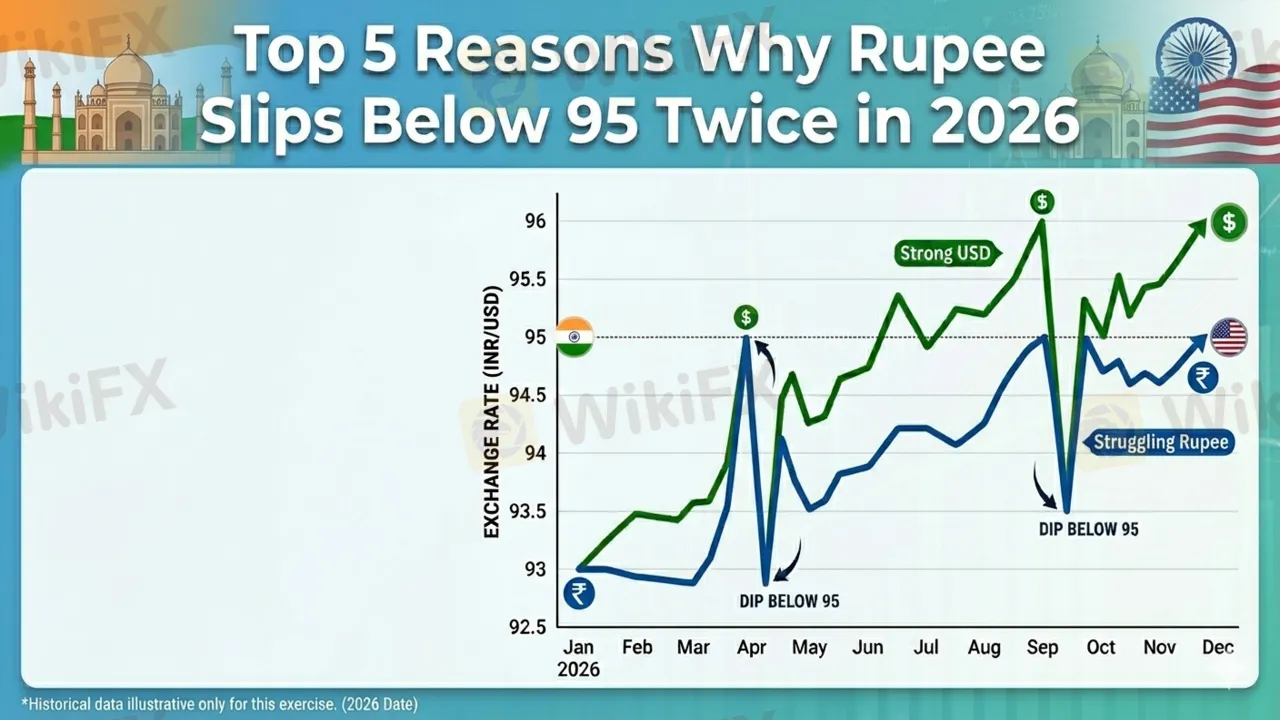
Times are tough for the rupee as it again slipped to 95 against the USD towards the end of April 2026 after some gains due to the RBI-led interventions early this month. The depreciation is largely attributable to surging crude oil prices. The prices climbed to their 3-year high over the US-Iran conflict. On April 30, 2026, the rupee opened at 95.02 mark against the USD, sliding 0.2% from its previous days ending at 94.84 against the greenback. As the day progressed, it slipped further to a new record low of 95.32 against the USD, beating the earlier fall of 95.22 in March 2026.
Investors Fear Massive Crude Oil Price Spikes
The negative sentiment for the rupee gained prominence on April 30, 2026 as investors pondered over the economic risks threatening India in the face of likely crude oil price hikes of 2022, causing concerns for the net energy importer and wiping out capital flows.
Factors Contributing to a Slide in the Rupee‘s Value
Crude Soars Past $126/bbl, Rupee Slides Faster
The rupee is sliding mostly due to the surging crude oil prices, with Brent crude futures topping the $126/bbl mark, attaining their highest level in more than three years. At the same time, the US benchmark, West Texas Intermediate, is also trading high at approximately $110/bbl. Emerging market currencies such as the Indian rupee are deeply affected as oil trading is executed mostly in dollars. An increase in crude prices raises the demand for dollars, causing a fall in the rupee’s value. Other Asian currencies such as Thai Bhat, Philippine peso and Indonesian rupiah also lost more ground.
With shipments stalled through the Strait of Hormoz, the situation has become critical for India, which imports a massive proportion of its oil and energy requirements from the Middle East.
Import Bill Surges Due to Oil Pressure
The dual blockade of the Strait of Hormuz has made the markets feeling jittery about the smooth passage of the shipments. The situation is concerning as 20% of global energy supplies happen through this route.
According to a forex experts quote in a reputed Indian journal, oil itself has added $12-13 billion to the import bill every month for the last three months. The expert termed this as a pressure on trade deficit, inflation and eventually the rupee.
The Growing FPI Outflows
According to news reports, foreign investors have sold equities worth approximately $20 billion so far in 2026, beating the $18 billion outflow in 2025. This makes the rupee feel the pressure, allowing the dollar to become stronger. The NSE data estimated the net sale of domestic equities by FIIs at INR 2,185.95 crore as of April 29, 2026.
Dollar Index Rise
The US Dollar index gained strength following a hawkish stance adopted by the US Federal Reserve in its policy decision. A rise in the dollar index raises demand for the USD, making investors move away from riskier emerging market currencies such as the rupee to the dollar.
RBI Intervention May Not be Sufficient to Arrest the Rupee‘s Slide
Even though the RBI is intervening to help the rupee recover, the effort may not bear 100% results. According to experts, the strategy adopted by India’s central bank is of volatility management, not level defence. As long as Brent stays above $115 and FIIs continue to sell Indian equities, the rupees value against the USD will always be under pressure. The rupee might slip to 97 if Brent crude tops $125/bbl.
Download the WikiFX app for the latest forex updates, including broker exposure reports, smart trading strategies & tips

More Interesting Articles for You
for Rupee Derivative Traders as RBI Lifts Curbs on Banks Review 2026: Withdrawal Issues, Account Blocks & Execution Complaints Exposed Announces USDC-INR Trading Services for Indian Users


Read more

Best Lowest Spread Forex Brokers in Indonesia 2026
Indonesia's retail forex market has matured into one of Southeast Asia's most active. With more than 800,000 Indonesians now trading currencies online and demand for tighter pricing rising every year, the spread — the gap between a broker's bid and ask quote — has become the single most decisive cost factor for active traders. A difference of even half a pip on EUR/USD can add up to thousands of US dollars annually for a trader running 50+ standard lots a month. This guide breaks down the brokers offering the lowest spreads to Indonesian traders in 2026, explains exactly how spread mathematics impacts your bottom line through real trader scenarios, and walks through the regulatory framework you should understand before depositing.

ECN vs STP Forex Brokers: A Complete 2026 Comparison
If you've spent any time researching forex brokers, you've almost certainly run into the labels ECN and STP. They sound technical, broker marketing departments use them interchangeably, and the actual difference matters more for your trading costs than most beginners realize. Both ECN and STP are No Dealing Desk (NDD) execution models — neither broker type takes the opposite side of your trade. That alone separates them from market makers and matters because it removes a fundamental conflict of interest. But the way each model routes your order, prices it, and earns revenue is structurally different, and those differences directly translate into the spread you pay, the slippage you absorb, and whether your strategy is profitable at scale. This guide breaks down exactly how the two models work, where they diverge, and which one fits which type of trader.

RoboForex Review 2026: Examining Withdrawal Issues and Unfair Account Termination Complaints
While trading with any forex broker, the fundamental aspect to look at is its regulation and user reviews. Today, we will examine the RoboForex broker, its offerings, user reviews, regulatory perspective and more. In a nutshell, user reports have been largely negative for this broker in 2026, with many complaining about funds being withheld despite KYC confirmation, illegitimate account termination and other trading aspects. Let’s start investigating all of these in this RoboForex review article.

Trade Quo Review: Do Traders Face Long Withdrawal Delays & Order Freezes?
Did Trade Quo not respond effectively to your fund withdrawal application? Did you fail to receive funds despite complying with all the documentation requirements? Have you encountered an order freeze by the broker during news hours? There have been multiple user complaints regarding the suspected trading operation glitch at this brokerage firm. This article on Trade Quo review analyzes user allegations along with the broker’s product offerings and the regulatory supervision
WikiFX Broker
Latest News
OANDA Japan to End Browser-Based MT4 and MT5 Access in May
WikiFXFake Trading App Costing Woman Over RM288,000 After Scam Originated on Chinese Social Media Platform
WikiFXMalaysia Records RM2.77 Billion in Online Scam Losses as Investment Fraud Surges
WikiFXWhere Does Your Forex Trade Go? The Reality of OTC Markets
WikiFXTradeEU Review: Regulated Broker, Severe Withdrawal Complaints Exposed
WikiFXFG Morgan Review 2026: Unregulated Status and Critical Risk Signals
WikiFXOil Surges Beside Rising Treasury Yields
WikiFXKevin Warsh to be sworn in as Federal Reserve chair on Friday
WikiFXFAST TRADEFX Review 2026: Official Warnings and Severe Risk Signals
WikiFXDollar Eases As Gulf Tensions Cool
WikiFXRate Calc

