You Must Know How These Psychological Traps Destroy Financial Judgment

Abstract:Every aspiring forex trader begins with a powerful vision of financial freedom. Yet despite this promise, most traders struggle to achieve consistent success.
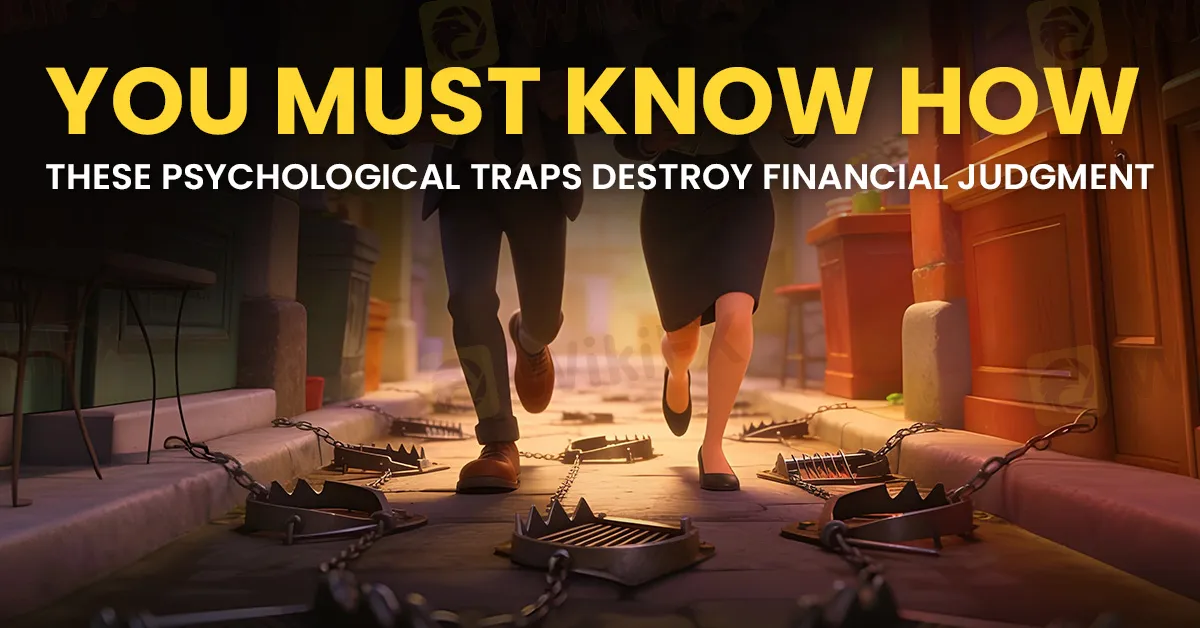
Every aspiring forex trader begins with a powerful vision of financial freedom. The idea of escaping routine work, building independent income, and taking control of ones life is deeply attractive. The forex market appears to offer exactly that. It is accessible, liquid, and full of opportunity. Yet despite this promise, most traders struggle to achieve consistent success.
The reason is rarely a lack of strategy or knowledge. Instead, it lies in the psychological traps that quietly shape decision making. These traps influence how traders think, feel, and act under pressure, often without them realizing it. If left unchecked, they distort judgment and lead to repeated mistakes that prevent long term profitability.
When Your Identity Becomes Your Profit and Loss
One of the most damaging psychological habits among traders is the tendency to tie personal identity to trading results. Instead of viewing trading as a process of executing probabilities, many traders begin to see their profit and loss as a reflection of their intelligence, discipline, and self worth.
This creates an emotional dependency on outcomes. A profitable trade brings a sense of pride and validation, while a losing trade triggers frustration and self doubt. Over time, this emotional attachment leads to inconsistent behavior. Traders become overconfident after wins and overly cautious or reactive after losses. Decisions are no longer based on logic or strategy, but on the need to protect or restore ones self image.
This mindset makes it nearly impossible to maintain discipline. A trader who feels personally affected by every trade cannot think objectively. Instead of asking whether a trade follows their plan, they begin asking what the outcome says about them. This shift may seem subtle, but it is enough to disrupt consistency and performance over time.
The Dangerous Cycle of Fear and Hope in Trade Management
Another common trap lies in how traders manage winning and losing positions. Many fall into a pattern where they close winning trades too early while holding onto losing trades for too long. Although this behavior feels natural, it is one of the fastest ways to erode an account.
The root of this issue is emotional imbalance. When a trade is in profit, fear begins to take control. Traders worry that the market might reverse and take away their gains, so they exit prematurely to secure what they have. On the other hand, when a trade moves into a loss, hope becomes dominant. Traders convince themselves that the market will turn around, allowing them to avoid realizing the loss.
This combination of fear and hope creates a destructive pattern. Small gains are consistently locked in, while losses are allowed to grow larger. Over time, this leads to a negative risk to reward profile, where the average loss outweighs the average gain. Even with a relatively high win rate, this imbalance makes long term profitability extremely difficult.
Successful trading requires the opposite approach. Losses must be controlled and kept small, while winning trades should be allowed the space to grow. Without this discipline, even the most accurate strategies will fail to deliver sustainable results.
The Pressure of Wanting Financial Freedom Too Quickly
The desire for financial freedom is often what draws people into forex trading in the first place. While this ambition is not inherently negative, it can become a problem when it creates unrealistic expectations. Many traders enter the market with the belief that success should come quickly, and that trading can provide a rapid escape from financial pressure.
This sense of urgency leads to impulsive decision making. Traders begin to overleverage their positions in an attempt to accelerate profits. They take trades that do not fully meet their criteria because they feel the need to be constantly active. They chase the market after missing opportunities, driven by the fear of falling behind.
As this pressure builds, discipline starts to break down. Risk management rules are ignored, and consistency is replaced by emotional reactions. Trading shifts from a structured activity into something closer to gambling, where decisions are guided by the desire for immediate results rather than long term sustainability.
The reality is that trading success is built over time through consistency, patience, and controlled risk. When traders focus too heavily on the end goal of financial freedom, they often undermine the very process required to achieve it. By trying to speed up the journey, they increase the likelihood of failure.
Rebuilding Control Over Your Trading Decisions
Breaking free from these psychological traps requires a shift in perspective. Traders must learn to separate their identity from their results and treat trading as a process rather than a personal test. This means focusing on execution and discipline instead of individual outcomes.
It is also important to develop emotional awareness. Fear and hope will always be present in trading, but they must not be allowed to dictate decisions. By following a structured plan and accepting losses as part of the process, traders can reduce the influence of these emotions.
Finally, expectations must be adjusted. Financial freedom through trading is possible, but it is not immediate. It requires time, consistency, and a commitment to gradual improvement. When traders align their actions with this reality, they create a foundation for long term success.
The forex market does not simply reward knowledge or ambition. It rewards those who can manage themselves under pressure. By understanding and addressing these psychological traps, traders can begin to make clearer decisions and move closer to achieving their goals.
Read more
FINEX Review: A+++ Rating Does Not Remove Risks - How to Read Spread, Withdrawals & Other Aspects
FINEX review 2026 for readers comparing an Indonesia forex broker: understand what Bappebti's A+++ rating does and does not show, then check floating spreads, withdrawals, segregated accounts and the complaint route for PT Finex Bisnis Solusi Futures.
Tier 1 Liquidity Forex in 2026: What Institutional Really Means for a Broker
Choosing a tier 1 liquidity forex is not a search for the lowest displayed spread or the longest provider list. It is a broker decision about pricing integrity, depth, routing, credit, reporting, incident response, and client communication. This 2026 guide explains how an institutional liquidity provider, bank liquidity forex, or interbank liquidity provider arrangement fits into a broker’s execution chain; what to test before onboarding; why a “best tier 1 liquidity forex” claim cannot replace due diligence; and how to compare cost beyond commission. Use the execution-quality scorecard, provider questions, routing scenarios, and 90-day onboarding plan to assess whether a liquidity relationship can support your actual client mix, instruments, risk model, and jurisdiction. The goal is not to make a universal ranking. It is to build evidence that your broker can explain, supervise, reconcile, and recover its execution service when market conditions are difficult.
MIFX Review 2026: How to Read Spreads, Withdrawal Rules and the Complaint Route
MIFX review 2026: understand published commissions and spreads, the withdrawal process, Instant Withdrawal conditions, and the PT Monex Investindo Futures complaint route without turning community discussion into factual allegations.
Forex Liquidity Provider in 2026: Why the Tightest Spread is Not Always the Best Execution Decision
Choosing a forex liquidity provider is not a search for the lowest displayed spread or the longest provider list. It is a broker decision about pricing integrity, depth, routing, credit, reporting, incident response, and client communication. This 2026 guide explains how a forex LP, FX liquidity provider, or liquidity provider forex arrangement fits into a broker’s execution chain; what to test before onboarding; why a “best forex liquidity provider” claim cannot replace due diligence; and how to compare cost beyond commission. Use the execution-quality scorecard, provider questions, routing scenarios, and 90-day onboarding plan to assess whether a liquidity relationship can support your actual client mix, instruments, risk model, and jurisdiction. The goal is not to make a universal ranking. It is to build evidence that your broker can explain, supervise, reconcile, and recover its execution service when market conditions are difficult.
WikiFX Broker
Latest News
Just Markets Review: 1.82 Score and No Regulation Despite Positive Reviews
WikiFXTier 1 Liquidity Forex in 2026: What Institutional Really Means for a Broker
WikiFXFizmo Fx Markets Review 2026: Unregulated Status and Withdrawal Complaints
WikiFXWhy Elections Make Currencies Swing Harder Than You Expect
WikiFXUS PPI Cools, but the Core Number Tells a More Complicated Story
WikiFXSingapore Nabs 270 Suspects in RM17 Million Scam Bust
WikiFXBX Trade Review: Is a $1 Minimum Deposit Worth the No-Regulation Risk?
WikiFXWhy Importers Panic When Dollars Dry Up, and Why You Should Care
WikiFXRinggit climbs vs US dollar as markets await inflation data
WikiFXFINEX Review: A+++ Rating Does Not Remove Risks - How to Read Spread, Withdrawals & Other Aspects
WikiFXRate Calc

