Police Smash Forex Scam Network Operating from Pahang

Abstract:A police raid on an unassuming home in Pahang has exposed a covert app-based fraud operation targeting foreign investors.
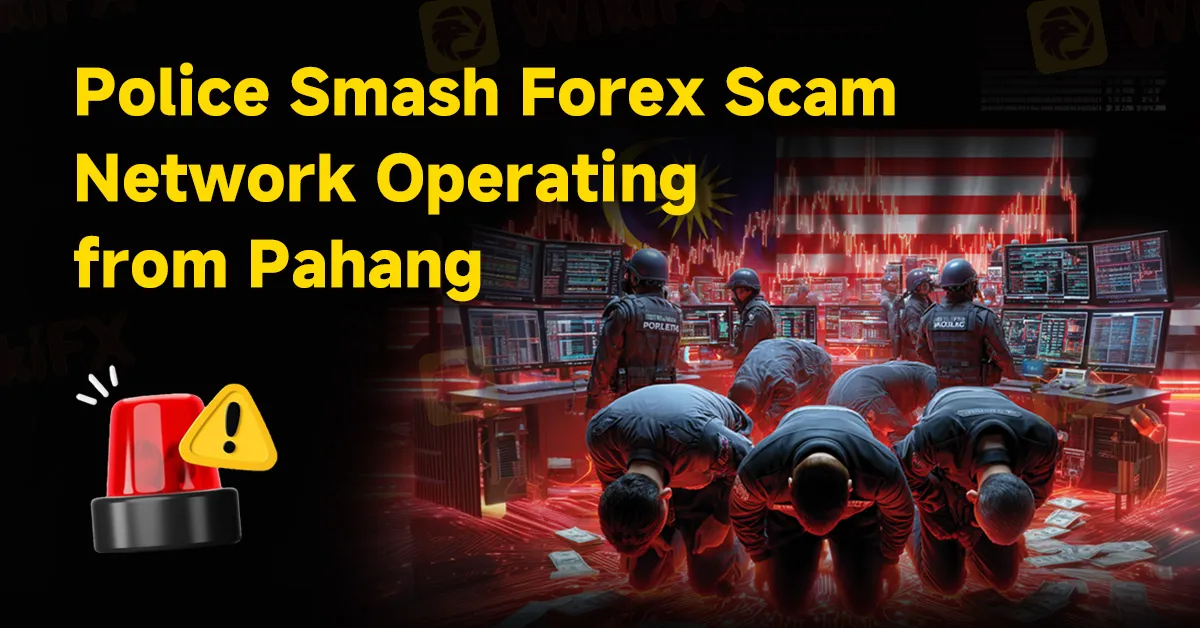
Malaysian police have dismantled a technology-driven fraud syndicate operating from a residential property in Pahang. The operation involved the development of mobile applications used to deceive victims overseas, particularly in China.
The raid took place at a house in Puncak Lestari, Mentakab, in the district of Temerloh. Acting on intelligence, officers moved in during the early evening of 2 December and arrested five individuals believed to be central to the operation. The suspects included a local man and woman, two Chinese nationals, and an Indonesian woman, all aged between 29 and 39.
According to police findings, the group specialised in designing and managing applications linked to foreign exchange fraud schemes. These platforms were used to lure victims with promises of investment returns, a tactic that has become increasingly common in cross-border financial scams. The syndicate is believed to have focused primarily on Chinese nationals, exploiting distance and digital anonymity to avoid detection.
Early investigations suggest the group had been operating from the property since July. Those involved reportedly worked under the guise of customer service staff, handling communications with victims and providing guidance through fraudulent trading processes. Monthly payments to the suspects ranged between RM2,500 and RM4,000, pointing to an organised structure rather than a casual operation.
Authorities believe the property functioned as a dedicated scam centre, equipped with the tools needed to manage online platforms and maintain regular contact with targets abroad. The arrests mark the third such operation shut down in Pahang this year, following similar raids in Genting Highlands and Bera. Together, these cases paint a picture of a state increasingly targeted by organised fraud groups seeking discreet locations to run digital crime networks.
Police officials have also drawn attention to the broader financial impact of these crimes. Fraud-related losses recorded between January and November this year reached RM90.3 million, a sharp rise from just over RM80 million during the same period last year. The figures underline a troubling upward trend, despite repeated enforcement actions and public awareness campaigns.
The steady increase in losses reflects how rapidly fraud methods are evolving. Scam operations now rely heavily on professionally designed apps, scripted customer interactions, and foreign recruitment, making them harder to detect and dismantle. For regulators and law enforcement, this shift presents new challenges, particularly when crimes cross national borders and involve digital assets or online trading platforms.

Read more
PM Group 365 Review: Withdrawal Denials & Poor Customer Support Frustrate Traders
Has PM Group 365 breached the trading agreement with you? Have you had to face withdrawal denials for a long time with the Cyprus-based forex broker? Did you witness a margin call from the broker with just one bad trade after a good one earlier? Do you get a feeling that the less said about PM Group 365 customer support service, the better? You are not alone! Many traders have opposed the broker for its illegitimate trading activities. In this PM Group 365 review article, we have discussed these complaints in greater detail. Take a look!

Introducing Broker in Forex Trading: Meaning, Roles, Responsibilities & Fees
Acting as an intermediary between traders and brokerage firms, Introducing Brokers (IBs) can be both a company and an individual. They do not have a role in trade execution or account management. Their role is to offer advice and let clients open trading accounts and trade on the platform. In this article, we have discussed the meaning of the term 'introducing broker,' its role, payment structure, and other related aspects. Read on!
FSMA Warns of Fraudulent WhatsApp Investment Groups
FSMA alerts the public to growing WhatsApp scams using fake investment tips, identity theft, and fraudulent trading apps targeting investors on social media.

CySEC Warns Public of Four Unauthorised Investment Firms
CySEC alerts investors about four unlicensed investment firms operating without authorisation under Cyprus law.
WikiFX Broker
Latest News
The "Broker Group" Abyss: How OmegaPro Trapped Thousands in a Digital Dead End
WikiFXFXORO Under the Microscope: Revoked Licenses and The "Advisory" Trap
WikiFXXXLMARKETS Review: Regulatory Status and Trading Conditions
WikiFXIUX Review 2025: Regulatory Status and Withdrawal Complaints
WikiFXSaxo Bank Review 2025: Regulatory Status and Safety Score
WikiFXAmariFX Review: Traders Annoyed by Slippage, Login & Withdrawal Issues
WikiFXLibertex Investigation: When "Expert Advice" Leads to Total Ruin
WikiFXEZINVEST Exposure: When a "Personal Advisor" Becomes Your Portfolio’s Worst Enemy
WikiFXDeriv Review: Is This Popular Broker Legit or Risky?
WikiFXIs CICC Broker Safe? CICC Regulation Check & In-Depth Review
WikiFXRate Calc

