He Trades Full-Time, Was Still Profitable That Month - And Ruined a Long Weekend with One Action

Abstract:"Once my trading is stable, I’ll quit my job and do this full-time." This is probably a thought many forex and futures traders have turned over in their minds. No clocking in, no office politics, no reading the boss’s mood - supporting yourself with one computer and one strategy. The picture is tempting enough. But when you actually ask those who have taken this step, the answers are often far more complicated than imagined, even carrying a discouraging flavor. This article does not talk about "how much you can earn." It answers a few more critical questions: is full-time trading really a goal worth pursuing? What kind of person makes it from "short-term profit" to "long-term profit"? And before you hand in your resignation, which realities must you think through first?
“Once my trading is stable, Ill quit my job and do this full-time.”
This is probably a thought many forex and futures traders have turned over in their minds. No clocking in, no office politics, no reading the bosss mood - supporting yourself with one computer and one strategy. The picture is tempting enough.
But when you actually ask those who have taken this step, the answers are often far more complicated than imagined, even carrying a discouraging flavor.
This article does not talk about “how much you can earn.” It answers a few more critical questions: is full-time trading really a goal worth pursuing? What kind of person makes it from “short-term profit” to “long-term profit”? And before you hand in your resignation, which realities must you think through first?

First splash of cold water: most people never reach the “full-time” stage
Before discussing “how to turn full-time,” we must admit an uncomfortable fact: consistently profitable traders are a very small minority.
According to some broker disclosure data and regulatory statistics, the rough distribution among traders is this: the vast majority end up losing; only a small portion can be profitable over a shorter period; and those who can be profitable steadily over the long term make up a very small share. The specific figures differ across sources, but the direction is highly consistent - long-term winners are a minority.
There is an extremely important but often overlooked distinction here: short-term profit and long-term profit are two different things.
Someone profitable for three to six months running can fully call themselves a “profitable trader.” But far fewer remain profitable two to five years later - because leverage, emotion, overtrading, and blown accounts are problems that often need time to surface and liquidate the account.
This distinction bears directly on the decision of “whether to turn full-time.” If you decide to quit on the strength of a few good months, what you may be betting on is a stretch of luck, not a genuine edge. A piece of advice that recurs in the trader community: judge your readiness not by how beautiful certain months were, but by consistency over a long enough period.
Second splash of cold water: full-time traders are not necessarily happier people
This point may surprise many. In the discussions, some people who have already achieved “making a living from trading” instead question treating full-time trading as a life goal.
One representative view: they have seen people who trade and do nothing else, who can earn a lot just by clicking a mouse, yet are not particularly happy. The reasoning is that humans are social animals, and how well a person is doing depends largely on their connection to a group, to other people. Trading is a “screen activity” that involves almost no relationship with others. It can bring income and freedom, but struggles to bring that sense of satisfaction that “what you do is meaningful to others, and you see others get better because of it.”
But the discussion also has a directly opposing view, equally reasonable. The opposing side argues this is too idealistic: the reality is that most ordinary peoples jobs carry no lofty meaning either - they go to work simply to pay bills and shoulder responsibilities, an obligation they have to endure. If most jobs are out of necessity rather than love, then trading at least gives you something many traditional jobs cannot - control over your own time, environment, and life. The opposing side adds a rather cutting line: those “empty, lonely” full-time traders are probably a “person problem,” not a “trading problem” - offices are equally full of empty, numb people, who have merely swapped the setting.
We will not pick a side for you. But laying out both views is meant to let you see this: full-time trading is a lifestyle decision, not just an income decision. It changes who you spend each day with, what you draw a sense of worth from, how you arrange your time. A worthwhile middle-ground idea: even if trading goes well, keep some things outside of trading - another job, a venture, or volunteer work - as both psychological support and an income buffer.
Third splash of cold water: when trading becomes your only income, everything changes
Between amateur trading and full-time trading lies not just a difference in “how much time,” but a thorough change in psychological structure.
The most direct change is the status of risk management. When trading is just a side activity, one loss makes you unhappy for a few days at most; but when it is your only income source, every drawdown in the account bears directly on next months rent and food. At this point, the importance of “preserving capital” far outweighs “going for big gains.” Nearly everyone in the discussion points to the same consensus: after going full-time, the focus of trading must shift from “offense” to “defense.”
There is also an often-underestimated change: psychological pressure gets amplified by income pressure.
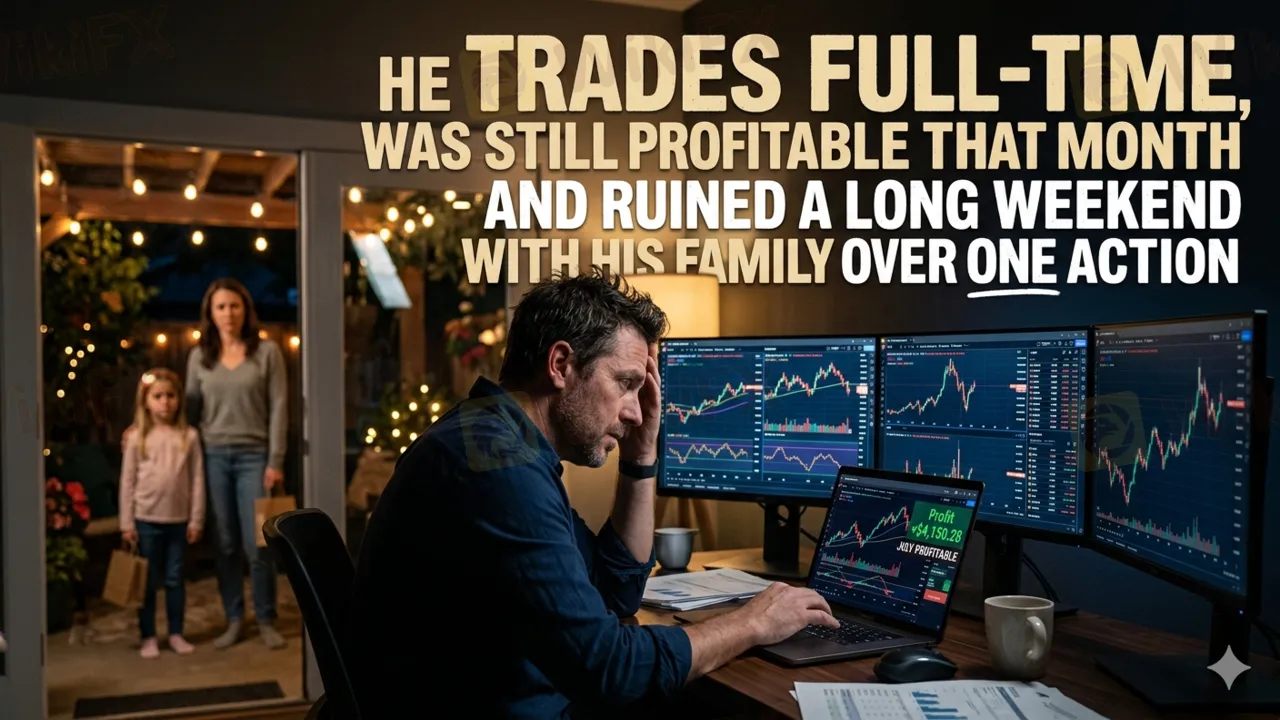
Here is a very real example worth telling. A trader who had already turned full-time, and was clearly still profitable that month, simply broke his own discipline of “not touching the market-open session” one day - rushed in to trade, lost, then unwilling to accept it, rushed in again and lost again, putting a heavy dent in what could have been a beautiful month.
The account was still in profit. But he spent almost a whole week digesting the psychological blow, and even admitted it ruined the long weekend he was spending with his family, unable to let go.
The value of this example is not in the profit-and-loss figure, but in revealing the most hidden cost of full-time trading: when trading is your everything, the price of one discipline breach is not just money, but your emotions, your family time, your quality of life. An amateur trader can “close the laptop after a loss and get on with things”; a full-time trader struggles to make that kind of clean break.
This is also why experienced people say full-time trading, in the end, comes down not to how clever the strategy is, but to whether discipline and emotional management can hold up.
So what should you think through before turning full-time?
- Judge yourself by “long-term consistency,” not “a few good months.” Test with at least one to two years of records spanning different market environments.
- Have money outside of trading ready before you quit. Most people who turn full-time smoothly have savings or other income beyond the trading account. Leave yourself emergency funds covering several months of living expenses.
- Think through in advance “what you draw meaning from outside of trading.” This is not a feel-good slogan but a real issue tied to whether you can stay the course long-term.
- Treat risk management as the first premise of going full-time, not one technique among many. Once it is your income, preserving capital takes priority over making profit.
Finally, place platform safety at the very foundation of all your plans.
This point is especially critical in a full-time context: when trading is your only income source, you absolutely cannot afford one “platform failure.” No strategy, however robust, and no mindset, however good, can hedge the risk brought by an unreliable broker - questionable regulatory credentials, withdrawal difficulties, abnormal quotes - any one of which can reduce years of effort to zero.
So before seriously considering “supporting yourself with trading,” the first thing is not to optimize your strategy, but to confirm your funds are held with a broker effectively regulated by a credible authority. This can be done efficiently: using a broker-lookup tool like WikiFX, you can check a broker‘s license status, regulatory ratings, and historical complaint records in one place, completing in minutes the due diligence that would otherwise require visiting several regulators’ sites. The tool helps you get the information; the final choice is still yours. This is the true foundation of the structure that is full-time trading.
Margin trading in forex, futures, and similar instruments carries high leverage and extremely high risk, and may result in the total loss of your capital. It is not suitable for all investors. The full-time trading experiences and descriptions of returns and psychological states in this article are experiential discussions and general views from the trader community, do not represent typical results, and do not constitute any investment, employment, or financial advice. Whether to make trading a primary income source is a major decision; readers should fully assess their own financial situation, risk tolerance, and psychological preparation, and as a priority verify the regulatory credentials of their chosen broker before making any decision.
Adapted and rewritten from public discussion on Reddit (r/Forex) - original thread: “Are There Any Actually Profitable Forex EAs”
Download the WikiFX app for broker investigation reports, smart trading strategies & more.

More Insightful Articles for You
?

WikiFX Broker
Latest News
ECB hikes interest rates for first time since 2023 as Iran war ramps up energy costs
WikiFXRaiseFX Review 2026: Is This Forex Broker Safe?
WikiFXIBKR VIP limited Review: No Regulation, Withdrawal Blocks, and a Broker Warning
WikiFXFXVIEW Review 2026: Regulation, Platform Access, and Complaint Signals
WikiFXWhy Holding a Winning Forex Trade Feels Harder Than Holding a Loss
WikiFXHow a Cambodia Scam Trapped Korean Investors with Fake Trading App & False Profits
WikiFXCNMV Warns Against 10 Unauthorized Investment Platforms and Clone Firms
WikiFXDollar Steadies As US Inflation Reaches 4.20%
WikiFXFrom Demo to Real Money: Overcoming the Fear of Holding Your First Live Trade
WikiFXWhy Market News and Spread Shocks Sweep Your Stop Loss
WikiFXRate Calc

