YaMarkets Shuts Down Operations as Broker Website Goes Offline
Abstract:YaMarkets has announced the closure of its services and operations, while its main website and B2B brand site have gone offline. WikiFX records show a Mauritius licence and business visibility across several regions.

YaMarkets has announced that it has officially closed its services and operations, bringing an end to the broker‘s run after more than five years in the market. The shutdown message appeared on the company’s website, while public posts from the brand also confirmed the decision. Its B2B brand YaPrime has also taken down its site.
On its LinkedIn page, YaMarkets published a farewell message saying the company had decided to close operations after more than five years, citing a changing business environment and operational challenges over time. The website notice directs clients and partners with pending issues to contact the firm through help@yamarkets.com.

Website access has changed
At the time of writing, the brokers main site no longer operates as a normal trading website. Instead, it shows a short Service Closure Announcement stating that all services and operations have been closed. The separate YaPrime site has also been taken down, according to reports covering the closure.
This marks a visible break from YaMarkets earlier operating model as an offshore CFD broker serving clients across multiple regions. Public reporting described the company as being run mainly from Dubai and India, with a strong focus on the Indian market and other eastern regions.
WikiFX profile still shows a Mauritius licence
According to the brokers WikiFX profile, YaMarkets is linked to a Mauritius FSC Securities Trading License (EP)under YA GROUP LTD, with licence number C119023898. The same profile shows the broker as having operated for 5–10 years and states that its WikiFX score was lowered because of a high volume of unresolved client complaints.
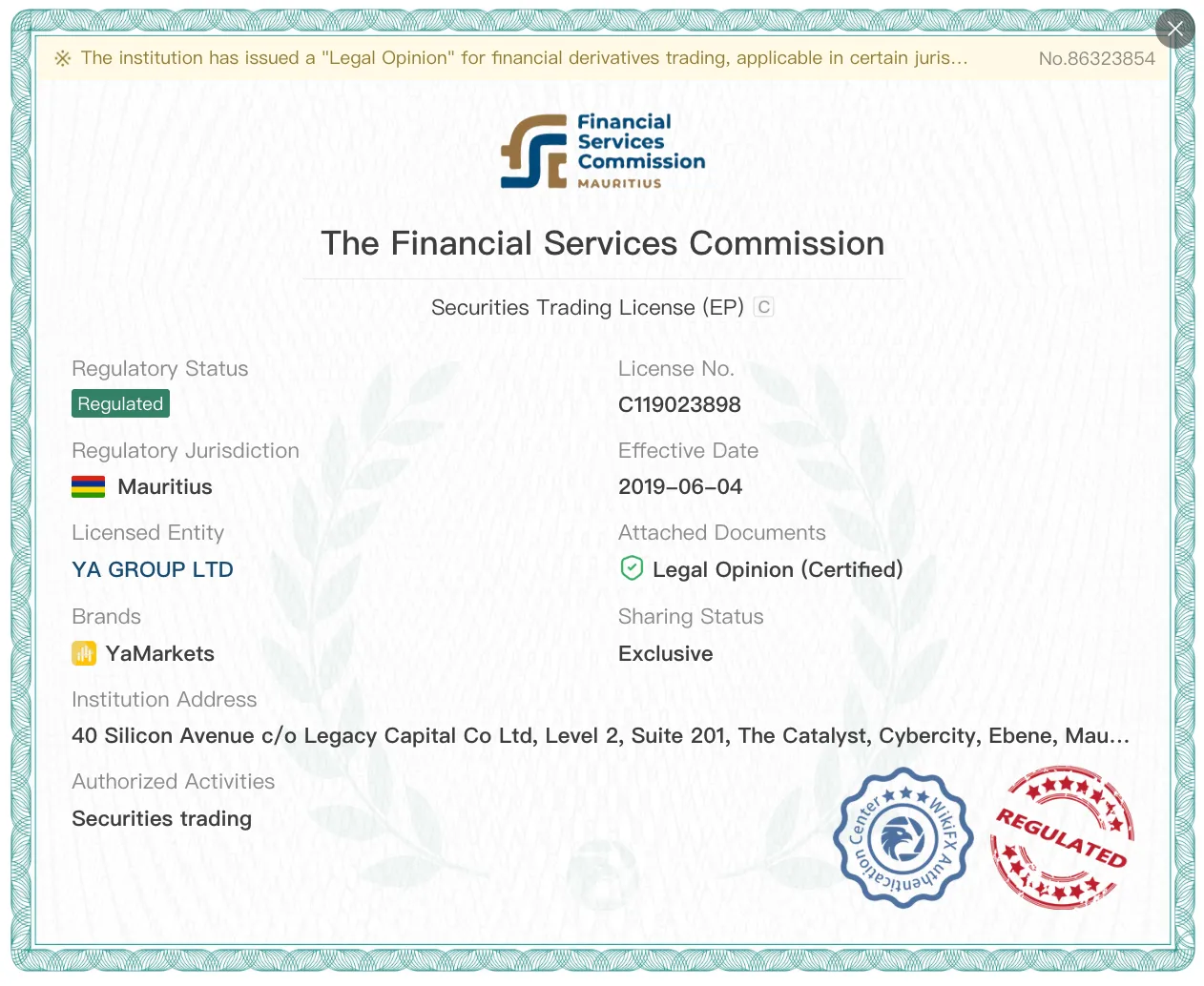
The WikiFX page also lists the brokers website as yamarkets.com and shows the company address in Ebene, Mauritius.
Business reach extended across several markets
WikiFXs influence map shows that YaMarkets had visible business reach across a number of regions, with India at the top, followed by Kenya, Indonesia, Pakistan, Vietnam, Egypt, the Philippines, Germany, South Africa, and the UAE.
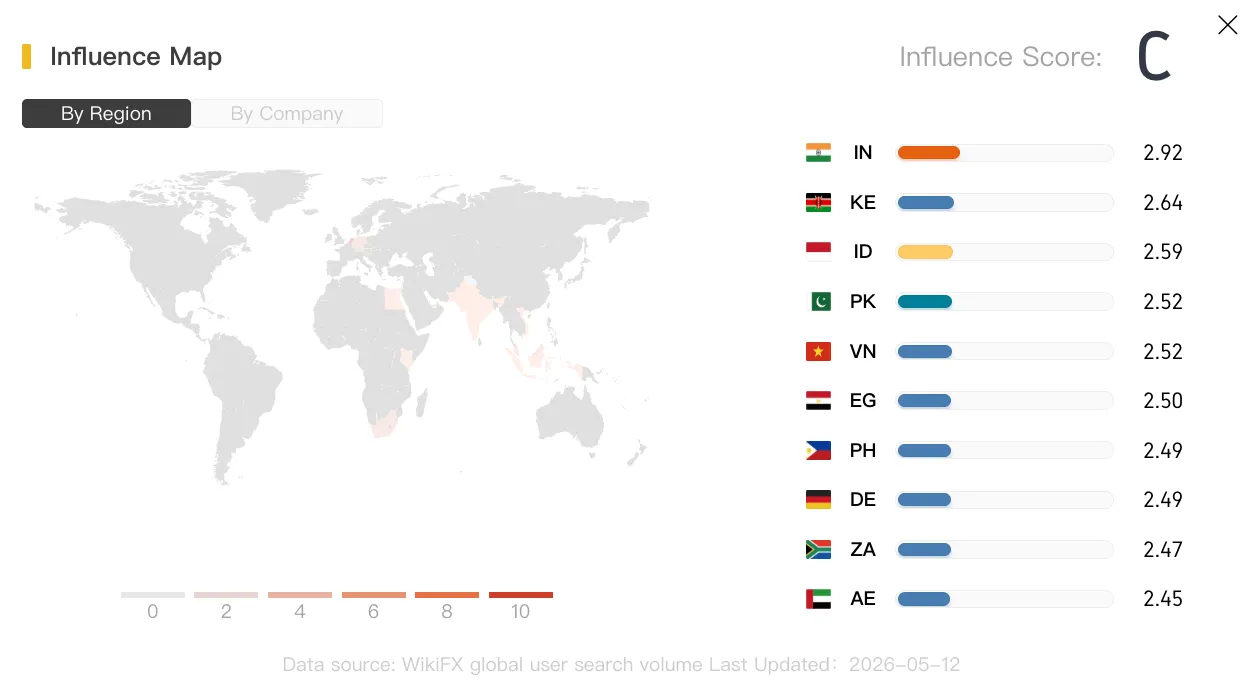
That regional spread helps explain why the closure may have consequences beyond one market. While the company was strongly associated with India-facing operations, its visibility extended across Asia, Africa, and parts of the Middle East as well.
A broker exit with limited public detail
The closure statement released by YaMarkets is brief and does not set out a more detailed wind-down plan in public. It confirms the end of operations and provides a contact email for pending claims, account-related concerns, support requests, or other queries. Beyond that, the companys explanation remains limited to general references to business conditions and operational challenges.
For now, the key confirmed points are straightforward: the trading website has been replaced by a closure notice, the LinkedIn page has acknowledged the shutdown, and the YaPrime site is no longer available.
About WikiFX
WikiFX is a global broker information platform that provides broker profiles, licence records, user complaint data, and regulatory alerts across multiple jurisdictions. It is widely used by traders to check a brokers background before opening an account or transferring funds.


Read more

US and China Publish $60bn Tariff-Cut Lists-Soybeans Stay Out, and Nothing Is in Force Yet
The United States and China have published reciprocal tariff-cut lists covering about $30 billion of goods on each side, $60 billion in total. Neither list is in force. China's covers 1,619 categories of American products. America's covers 77 categories of Chinese goods. Soybeans are on neither. That omission is the first thing to register. Soybeans are the largest single US agricultural export to China, and they stay subject to China's 10% additional tariff even as corn, wheat, sorghum, beef and dairy come off the list.

Brent Clears $108 and ₹17 Lakh Crore Exits Indian Stocks — PSU Banks Took the Worst Hit
Indian equities shed ₹17 lakh crore in value on Monday, with the Nifty closing 1.56% lower and the Sensex falling 1,124 points to a six-month low, as Brent crude traded above $107 and PSU bank shares led the decline. The fall was not concentrated in one corner of the market. A widely circulated post on X put PSU banks down 3.24%, realty 2.12%, energy 2.00%, metals 1.78% and autos 1.64% — a sweep across the sectors most sensitive to fuel costs, borrowing costs and government spending. That post also put the rupee at ₹95.98 to the dollar. None of the news reports reviewed for this article confirmed that currency level, so treat the number as a single-source claim until the RBI reference rate for the session is checked.

Gold Slid Despite the US-Iran Escalation, Rupee Opened 7 Paise Weaker at 95.88
Gold and silver fell after the weekend's US-Iran escalation, and Indian markets opened lower on 28 September. The rupee opened 7 paise weaker at 95.88 against the dollar. Brent crude traded around $107 a barrel. US 10-year yields sat near 5.20%. Those figures come from trader posts on X, not from any media report in this material. None of them has been independently confirmed. Treat them as what traders saw on their screens at the open, not as settled fact. The counterintuitive part is the metals. War usually pushes gold up. This time it didn't. "Both precious metals had other plans after this weekend's US-Iran war escalation," wrote @YuvrajShah02, an account with 15,103 followers, roughly two hours after the open. The same post says Indian markets "have also taken a hit today." That post is the event this article is about. Everything below comes either from it or from other trader posts published the same morning.

SEBI's New PMS Rules Let Fund Managers Run 'Sub-PMSes' — But the Fine Print is Still Open
SEBI's board on September 24 approved a sweeping overhaul of portfolio management rules, opening PMS to foreign securities, IPOs and a new mutual-fund-only route called PRIM. But one X user with 101,000 followers flagged a structural change that could reshape how PMS products are sold: a 'platform PMS' can now host independent fund managers (IFMs), each running their own strategy on the PMS's licence. Under the new SEBI (Portfolio Managers) Regulations, 2026, replacing the 2020 framework, existing PMS can invest in foreign securities under both discretionary and non-discretionary mandates, according to multiple media reports. The allowed list includes listed equity, debt, REITs, overseas mutual funds, ETFs, index funds and foreign government debt. All of it stays bound by FEMA and RBI's Liberalized Remittance Scheme — so you still can't buy foreign ETFs in rupees. The PMS just becomes a wrapper.
WikiFX Broker
Latest News
Romance and Investment Scams Drain Billions From Asia
 WikiFX
U.S. Dollar Tests New Highs As 30-Year Yield Hits 5.60%: Analysis For EUR/USD, GBP/USD, USD/CAD, USD/JPY
WikiFXAlpari Broker Exposed: What Are Other Traders Saying About This Broker?
WikiFXUS Dollar Price Forecast: DXY Holds Above 101 as EUR/USD and GBP/USD Stay Pressured
WikiFXWeltrade Review 2026: Chart Error, Withdrawal Cancellation and Unaccounted Fund Deduction Claims
WikiFXGOAT FUNDED TRADER Review: Is This Prop Trading Firm Safe & Trustworthy?
WikiFXCash FX Accused of $950 Million Forex Fraud
WikiFXTopstep Review: Is This Prop Trading Firm Safe & Trustworthy?
WikiFXTrade W Broker Exposed: User Feedback, Delayed Orders and Office Survey
WikiFXInstaForex Review of a USD 600 Deposit Complaint with Entity Limits
WikiFXRate Calc
