Hanoi Woman Loses RM1.23 Million in Fake Gold Investment Scam

Abstract:A woman in Hanoi was allegedly cheated out of RM1.23 million, through a fake online gold trading platform.
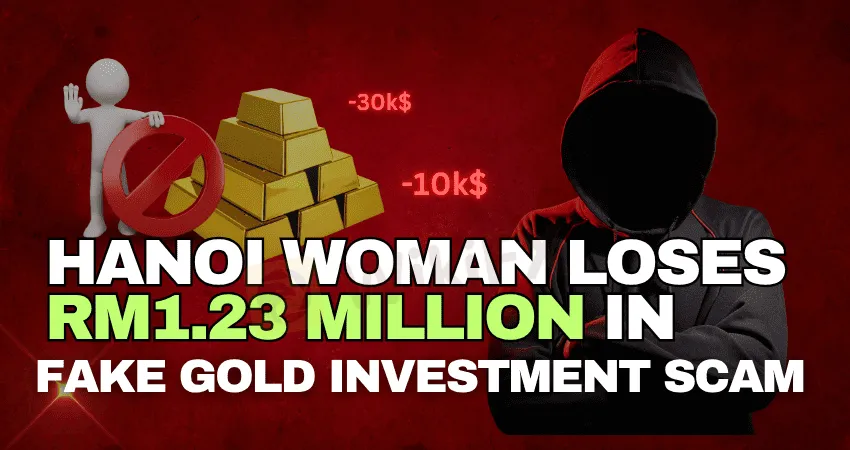
A major investment fraud case in Vietnam has raised fresh concerns across Southeast Asia after a woman in Hanoi was allegedly cheated out of VND8.2 billion, or about RM1.23 million, through a fake online gold trading platform that falsely claimed ties to a major foreign bank.
On April 17, 2026, the Hanoi Police Department issued an urgent public warning over the scam, describing it as a sophisticated operation that used the name of State Street Bank to lure victims into transferring funds.
Authorities said the case highlights how scammers are increasingly using trusted international financial brands to target everyday investors searching for safe and profitable opportunities online.
Fake Global Bank Branding Used to Gain Trust
According to investigators, fraudsters promoted a trading platform that claimed to be connected to State Street Bank, presenting it as a professional and secure channel for online gold investment.
The victim was reportedly promised high returns, low risk, and stable profits. By associating themselves with a well known financial institution, scammers were able to create the illusion of legitimacy and professionalism.
Police warned that this tactic is becoming more common, especially as retail investors become more familiar with global finance brands.
Early Withdrawals Designed to Lower Suspicion
In the early stages, the victim was encouraged to make small deposits to test the platform.
Soon after transferring funds, her account allegedly showed rapid gains and rising profits. She was also able to make initial withdrawals successfully.
Investigators said this was a deliberate trust building tactic. Fraud syndicates often allow small withdrawals at first so victims believe the platform is genuine. Once confidence is established, victims are persuaded to invest increasingly larger sums.
Funds Locked Once Bigger Transfers Were Made
After the woman increased her investment, the platform reportedly blocked her attempts to withdraw money.
Instead, operators began demanding repeated payments under different excuses. These included:
- International currency exchange charges
- Overseas account opening fees
- Corporate account registration fees
- Trading insurance charges
- Document release costs
- Financial certification fees
- Taxes
- Anti money laundering verification charges
Each time a payment was made, another fee was introduced.
Police said this pattern is a serious red flag. Legitimate brokers do not repeatedly demand extra money before allowing clients to access their own funds.
RM1.23 Million Lost
Authorities said the woman eventually transferred a total of VND8.2 billion, equivalent to around RM1.23 million, but never recovered any of the money.
The scale of the loss has shocked the public and serves as a warning that even experienced adults can fall victim when scams appear polished, professional, and financially credible.
Why Malaysians Should Pay Immediate Attention
This case should concern Malaysians because Vietnam is geographically close to Malaysia, and cross border scam networks often operate across Southeast Asia using the same playbook. Fraud syndicates frequently rebrand schemes for different markets, changing only the company name, website identity, or language used to target victims. A fake platform using an American bank name in Vietnam today could appear in Malaysia tomorrow under a different financial brand.
As online investing grows in popularity among Malaysians, similar scams involving gold, forex, cryptocurrency, and overseas stock trading may already be circulating through WhatsApp, Telegram, Facebook, or dating apps.
Key Warning Signs for Investors
Authorities urge the public to be alert if an investment platform offers:
- Guaranteed profits
- Risk free returns
- Pressure to deposit quickly
- Requests for fees before withdrawals
- Claims of secret insider opportunities
- Unlicensed operations
- Poor customer support or evasive responses
WikiFX Broker
Latest News
Why Sunk Costs Trap Traders in Losing Positions
WikiFXHidden Traps Built Into Your First Forex Trading Plan
WikiFXIFA Review: KYC Withdrawal Blockade Meets an Unauthorized Broker Warning
WikiFXSageFX Review 2026: Should You Trade with This Broker?
WikiFXEasyEquities Review 2026: Should You Trade with This Broker?
WikiFXQuotex Review 2026: Blocked Withdrawals and Regulatory Warnings
WikiFXXPO Fund Wants $10,000 Before You Trade a Single Real Dollar — Read This Stunning Revelation
WikiFXBalancing Chart Volatility With Account Limits in Stop Loss Placement
WikiFXHTFX Review 2026: Withdrawal Complaints, Offshore Regulation, and Account Access Risks
WikiFXThe Dunning-Kruger Trap: How Beginner Forex Traders Can Overcome Overconfidence and Manage Risk
WikiFXRate Calc

