XTB Fined PLN 20 Million by Polish Regulator Over CFD-Related Compliance Issues
Abstract:Poland’s financial regulator has fined XTB PLN 20 million over findings related to client information, CFD product handling, target-group classification, and potential conflict-of-interest issues.
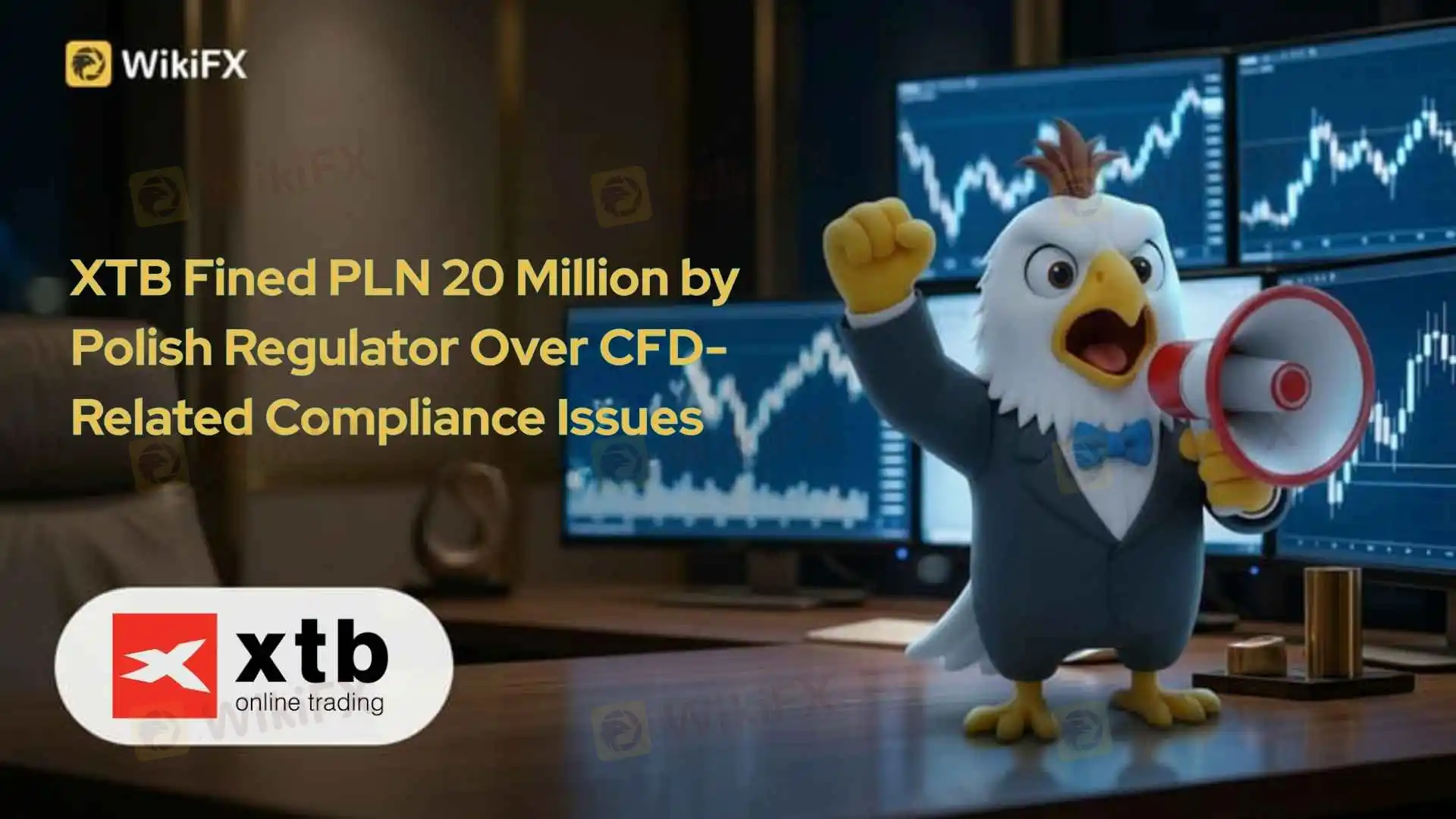
Poland‘s financial regulator has imposed a PLN 20 million fine on XTB SA, citing several compliance failures connected to the broker’s handling of financial instruments, including contracts for difference.
The decision mainly covers the period from early 2022 to mid or late 2023. According to the regulator, the issues involved how XTB assessed client knowledge, how it classified target groups for products, how it handled possible conflicts of interest, and how it presented information on risks linked to CFDs.
Regulator points to client information and product classification
One of the main findings concerned XTBs use of client questionnaires and assessment methods.
The regulator said the company did not properly determine whether some clients had sufficient knowledge and experience to understand the risks of the services or products offered to them. In particular, the regulator took issue with the way experience in simpler financial instruments could still lead to a positive assessment for more complex products such as CFDs.
The decision also found problems in the way XTB defined target groups for different financial instruments. Although the company had formal target groups in place, the regulator said the criteria used were not sufficiently adjusted to the complexity and risk profile of each product category.
HOT list raised conflict-of-interest concerns
Another part of the decision focused on XTBs HOT list, which was made available to clients.
The regulator said XTB did not properly identify circumstances in which the list could create a potential conflict of interest, particularly because some instruments included on the list could involve higher spreads and therefore potentially higher revenue for the company.
According to the regulator, clients were not given enough clarity on how instruments were selected for the list and what commercial considerations could be involved.
Misleading or incomplete risk information
The regulator also concluded that XTB provided clients or potential clients with information that was unreliable or insufficiently detailed in relation to certain financial instruments and the risks of CFDs.
The decision stated that clients should receive information detailed enough to make informed investment decisions, especially when products carry a high level of risk.
CFDs were singled out as complex instruments where losses can occur quickly and may be substantial. The regulator also referred to past data showing that a large share of active retail clients lose money when trading such instruments.
Fine reflects continued focus on retail CFD conduct
The PLN 20 million penalty shows that Polish regulators remain focused on how brokers distribute and present complex products to retail clients.
The case is not only about whether a broker is licensed or active in the market. It also concerns the internal process behind product access, the clarity of client communication, and whether potential conflicts are properly identified and disclosed.
For the regulator, the central issue was whether clients were given a fair and sufficiently clear basis to understand the products being offered, particularly in the CFD segment.
About WikiFX
WikiFX is a global broker information platform that provides broker profiles, licence records, risk alerts, and regulatory updates across multiple jurisdictions. It helps traders review a brokers background before opening an account or depositing funds.


Read more

Crib Markets Review 2026: Traders Saw Profits Appear - Then Something Changed! Details Inside!
Crib Markets, a Mauritius-based multi-asset brokerage entity, has been accused of profit deletions by users worldwide, including those from India. After studying the Crib Markets complaints, it was observed that problems started happening when users looked to withdraw funds from the platform. Multiple users claimed deliberate profit deletions by the brokerage firm upon a withdrawal request. In this Crib Markets review, we have found many such complaints in 2026. Besides sharing complaints, we have provided a thorough look into the broker’s regulatory framework.
IUX Review:Before Investing a Single Penny, Read These Jaw-Dropping Deposit & Withdrawal Experiences
IUX, despite having an operational presence for approximately a decade, continues to face allegations from users regarding its several trading aspects. These include complaints on withdrawal processing, deposit failure, and even wide slippages that eat into users’ margins. For some, withdrawals were never executed, for others, withdrawal processing remained only on paper. On the other hand, some’s deposits fail to show on the IUX login even after 45 days of the transaction initiation date. Concerned by these seemingly suspicious trading incidents, users hit out on several review platforms such as WikiFX. This IUX review examines these user allegations while providing a regulatory framework the broker adheres to.
ForexDana Review 2026: Traders Report Losses—But What Happened Behind the Trades?
A brokerage operation history of over six years without any clarity of the accounts offered. This stunning fact allegedly applies to ForexDana. While this has been a major concern on the transparency front, user experiences concerning suspicious deposit failures and trade manipulation have not been good for the broker’s reputation either. In this ForexDana review, we have attempted to find the reason behind the growing user frustration, not only through their complaints but also what possibly could have led to these complaints. Yes, you heard it right! We are going to probe the ForexDana regulation status. This will help you make the right financial decision.
Saxo Exposure Report 2026: Withdrawal Delays and Transfer Disputes Leave Traders Concerned
As you look forward to reading the Saxo reviews, you come across both positive and negative user experiences concerning trading. However, what makes prospective users dwell more is the significant insight shared through negative experiences compared to positive ones. The negative experiences are more detailed around fund withdrawals and deposits. Although they are allegations, they represent a disturbing picture. For example, we came across a case where a user highlighted the inability to trade an instrument, which is actively traded in the market. We have examined the recent allegations against the brokerage firm in this in-depth review. At the same time, we have provided a thorough look into the broker’s regulatory framework
WikiFX Broker
Latest News
RoboMarkets Review: Regulation Questions Around a Broker Facing Fresh Trading Complaints
 WikiFX
Review 2026: Deriv Regulation, Complaints, and Withdrawal Risk Signals
WikiFXStop Trading in the Middle of Ranging Forex Markets
WikiFXSTONE WALL CAPITAL Review 2026: Is This Forex Broker Safe?
WikiFXUnderstanding Day Trading: Fast Decisions, High Stress, and Zero Overnight Risk
WikiFXErrante Review: Regulation Alarms and Broker Complaints Traders Cannot Ignore
WikiFXFXTF Review 2026: FSA Regulation, MT4 Access, and Mixed Trader Reports
WikiFXFinalto Review 2026: Regulation, Trading Environment, and Platform Access
WikiFXMetaTrader 5 Expands Infrastructure With New Amsterdam Hosting for Backup Servers
WikiFXBaFin Issues Fresh Warnings Over Unauthorized Financial and Crypto Services
WikiFXRate Calc

