Mr Pips Forex Scam Exposed as Losses Hit RM240 Million

Abstract:A major forex scam uncovered in Vietnam is sending shockwaves across Southeast Asia as investor losses over RM240 million.
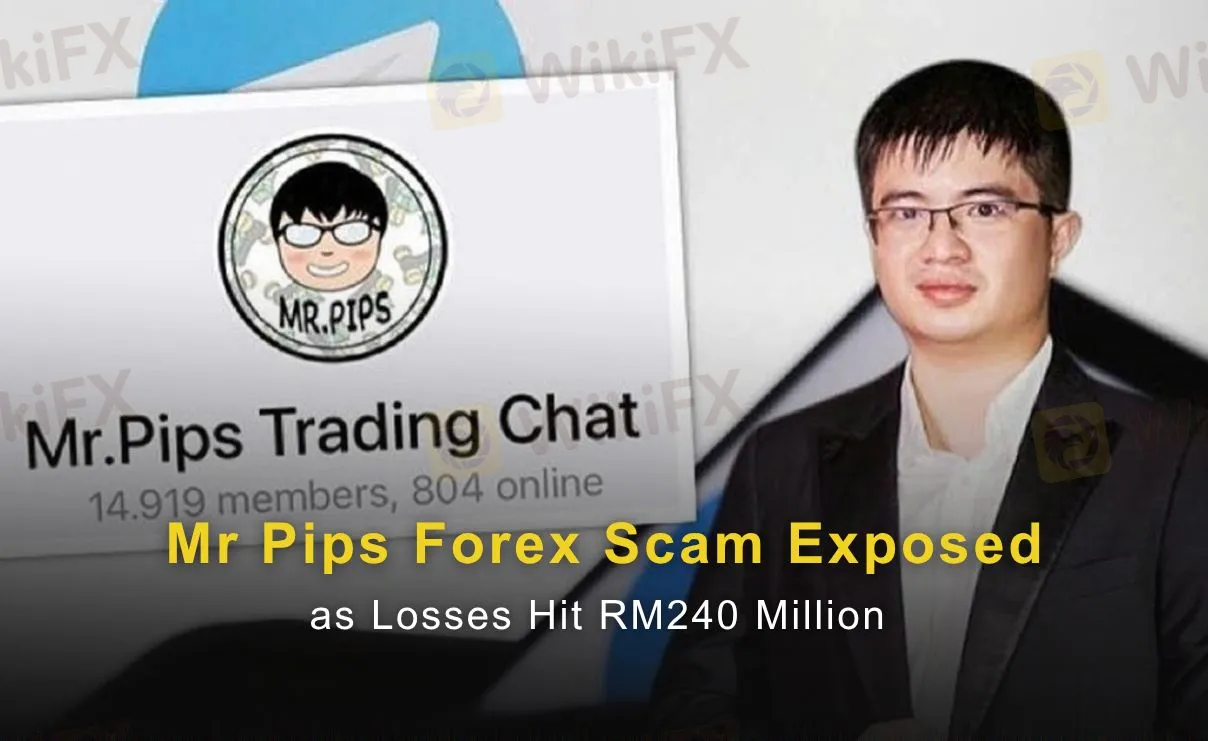
A major foreign exchange fraud case uncovered in Hanoi is sending shockwaves across Southeast Asia, with authorities revealing investor losses equivalent to more than RM240 million. The scale and sophistication of the so called Mr Pips scam are now raising urgent concerns among regulators and market participants in Malaysia, where similar online investment schemes continue to emerge.
The operation, led by Pho Duc Nam, widely known as Mr Pips, has been described as the largest forex scam ever exposed in Vietnam. Law enforcement agencies have launched criminal proceedings against 83 individuals linked to the network, with the majority facing charges related to fraud, alongside accusations of money laundering and financial misconduct.
Authorities have already seized millions in cash, luxury vehicles and large quantities of gold, while freezing assets tied to nearly 130 properties. These findings underline the vast financial reach of the syndicate and highlight how quickly fraudulent trading operations can scale across borders.
Investigators traced the origins of the scheme to a partnership formed in 2018 between Nam and a foreign associate. Together, they developed a network of fraudulent trading websites designed to mimic legitimate international brokers. These platforms were integrated with widely used trading software such as MetaTrader 4 and MetaTrader 5, giving them an appearance of credibility that would easily convince unsuspecting investors.
Despite their professional design, the platforms were not connected to real financial markets. Instead, they were configured to allow operators to control outcomes, effectively ensuring that investor losses became profits for the syndicate. This structure mirrors tactics seen in several scam cases reported in Malaysia, where fake trading platforms simulate market activity to mislead users.
The network expanded aggressively, with investigators identifying at least 36 fraudulent websites supported by dozens of shell companies. These entities handled recruitment, technical operations and customer engagement. Staff were hired without financial qualifications and trained using scripted conversations to persuade victims to invest.
Victims were typically introduced to the scheme through online messaging platforms or social media. After opening accounts and depositing funds, they were shown small initial gains and allowed limited withdrawals. This tactic was used to build trust before encouraging larger investments.
Once victims committed significant sums, the situation changed. Trades were manipulated to generate losses, or additional fees were imposed to block withdrawals. In many cases, investors were unable to recover any of their funds.
Authorities documented hundreds of victims, with total deposits exceeding RM260 million. Only a small fraction of this amount was ever returned, leaving overall losses of around RM240 million. The figures illustrate the devastating financial impact such schemes can have within a short period.
The investigation has also uncovered the involvement of financial intermediaries accused of facilitating fund transfers. Among those named is a prominent businessman linked to the Shark Tank Vietnam programme, who is facing allegations of money laundering after reportedly continuing to provide payment services despite being aware of the illegal nature of the operation.

WikiFX Broker
Latest News
Telegram Investment Promises Turn Costly as Civil Servant Loses Nearly RM100,000 in 2 Separate Scams
WikiFXTRADEDEAL Review 2026: Unverified Regulation and Warning Signals
WikiFXFM-Fund Review 2026: Unregulated Status and High-Risk Signals
WikiFXOman’s FSA Warns Against Open Gate Trading as Website Claims Regulation
WikiFXBeeMarkets Review 2026: Is it Legit or a Scam? Read This Investigation
WikiFXInflation rate projected to hit 6% in the second quarter, top economic forecasters say
WikiFXOil Crosses $101 On Shipping Blockade
WikiFXCrude Shocks Meet Asian Inflation Surges
WikiFXStrong Dollar Sinks Asian Currencies
WikiFXCFDInterbank Review 2026: Unregulated Offshore Profile and Key Risk Signals
WikiFXRate Calc

