Rupee Rebound Paradox: A Regulatory Clampdown Produces Currency Stabilit

Abstract:The Indian rupee rebounded from record lows following aggressive regulatory intervention by the Reserve Bank of India, standing out during a muted Asian currency session.
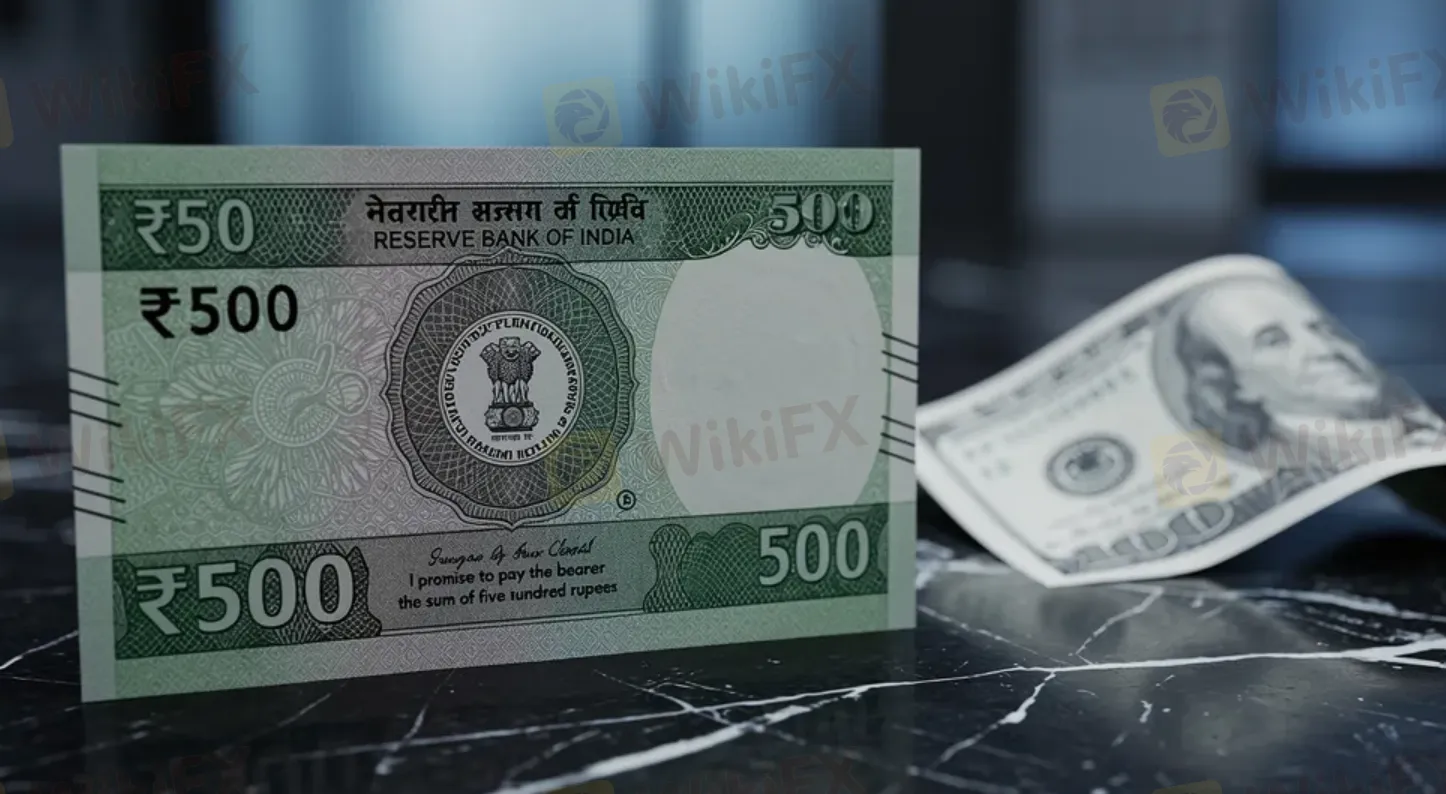
The Indian rupee strengthened materially—USD/INR compressing from a record 95.22 to 92.71—not because of improved macroeconomic fundamentals, but because the RBI administratively dismantled the mechanisms that allowed speculative positioning to exist. This is the contradiction: a currency recovering sharply in an environment where regional growth data is softening, U.S. rate differentials remain structurally punishing, and neighboring currencies are effectively frozen. Standard textbook FX theory holds that currency appreciation reflects improving current account dynamics, capital inflows, or relative monetary tightening. None of those conditions are present here. What is present is regulatory enforcement acting as a synthetic short-squeeze. The rupee did not strengthen—the short trade was forcibly closed.
The Structural Mechanics
Liquidity & Flows: The Manufactured Reversal
The RBI's dual intervention—capping banks' net open foreign exchange positions and prohibiting NDF offerings to clients—did not alter the underlying supply-demand balance for rupees. It severed the transmission mechanism through which speculative dollar demand was being expressed. Offshore NDF markets had functioned as a pressure valve, allowing institutional players to build synthetic short-INR exposure without directly touching onshore liquidity. By cutting access to that channel, the RBI forced a positional collapse. Institutions holding speculative dollar-long/rupee-short exposure through NDF structures had no compliant rollover path. The resulting onshore dollar liquidation was not driven by conviction—it was driven by regulatory compliance. This distinction is critical: the flows that produced the recovery were involuntary, not reflective of any reassessment of rupee fundamentals.
Derivatives & Hedging: The NDF Prohibition as a Gamma Reset
In conventional equity markets, a gamma squeeze occurs when dealer hedging activity amplifies a directional move beyond what fundamental positioning justifies. The RBI's NDF prohibition produced a structurally analogous dynamic in the currency market. Institutions that had written or held NDF contracts referencing INR were suddenly unable to maintain those books in a compliant state. The forced unwind created a concentrated burst of onshore dollar selling—essentially a synthetic gamma event manufactured by regulatory decree rather than by market structure. The resulting price action—a sharp, rapid INR appreciation—bears all the hallmarks of a technically-driven squeeze rather than a sustained revaluation. Bid-ask spreads likely widened during the unwind, and liquidity in the NDF market itself contracted abruptly, leaving residual positioning with no clean exit.
Policy Divergence: The Regional Stalemate
The broader Asian FX session exposes the fault line directly. USD/JPY sits at 159.60—within striking distance of the 160 threshold that previously triggered formal Japanese intervention—yet Tokyo continues issuing verbal warnings without executing. USD/CNY is held near its fix by institutional mandate. China's services PMI collapsing from 56.7 to 52.1 in a single month removed one of the few remaining narratives supporting regional reflation. The Federal Reserve's rate posture has not shifted. The result is a region caught between two policy imperatives: defending currencies against dollar strength driven by yield differentials, and avoiding the economic cost of the rate hikes that would organically close those differentials. The rupee's recovery is a local regulatory solution to a structural problem that remains entirely unresolved.
The Historical Contrast
The 1998 Malaysian ringgit crisis offers a partial reference point. Following the Asian Financial Crisis contagion, Bank Negara imposed capital controls and fixed USD/MYR at 3.80—a blunt administrative intervention that halted speculative attacks by removing the instruments through which they were conducted. The rupee intervention of the current episode shares the same core logic: deny speculators the tools, and the position unwinds itself. The critical difference lies in institutional plumbing. In 1998, offshore NDF markets were nascent. Today, the INR NDF market in Singapore and London is deep, liquid, and structurally integrated with global bank derivatives books. The RBI's prohibition did not eliminate the speculative thesis—it blocked one channel of expression. In 1998, Malaysia's controls were more architecturally comprehensive. The current intervention is narrower, and the offshore infrastructure capable of rebuilding speculative pressure remains intact.
The Current Paradigm
Asian FX markets are no longer operating in a price-discovery regime. They are operating in an administrative containment regime. The rupee's recovery is a case study in regulatory enforcement replacing market clearing as the primary price-setting mechanism. The yen is held in place by verbal intervention thresholds. The yuan is anchored by daily fixing authority. The rupee has now been stabilized by NDF prohibition and position limits. What these three cases share is not macroeconomic improvement—it is the active suppression of the mechanisms through which market participants would otherwise express bearish views. The structural dollar bid, driven by the Fed-Asia rate differential, has not been neutralized. It has been administratively denied an outlet. That is the current market reality: not stability, but containment.

WikiFX Broker
Latest News
Alfa Capital Review 2026: Should You Trade with This Broker?
WikiFXCatching Forex Breakouts After a Triangle Volatility Squeeze
WikiFXDollar Slumps On Iran Peace Hopes
WikiFXFBS Review: Regulation Warning Around a Broker Facing Withdrawal and Slippage Complaints
WikiFXRoboForex Review: Regulation Warnings Hit This Broker as Withdrawal Complaints Mount
WikiFXWhy Some Currency Pairs Have Much Wider Spreads Than Others
WikiFXHow Bank Rates, Reserves, and Revaluations Actually Move Currency Prices
WikiFXRupee Gains as Dollar Retreats
WikiFXSilverlight securities Review 2025: Is This Forex Broker Safe?
WikiFXPepperstone Review 2026: Complaints, Withdrawals, and Risk Signals
WikiFXRate Calc

