NSFX: A Closer Look on its Regulation and Reliability
Abstract:Explore the NSFX review, focusing on NSFX regulation, WikiFX score, and recent warnings. Understand the risks associated with NSFX Forex trading and whether NSFX is a reliable broker for your investments.
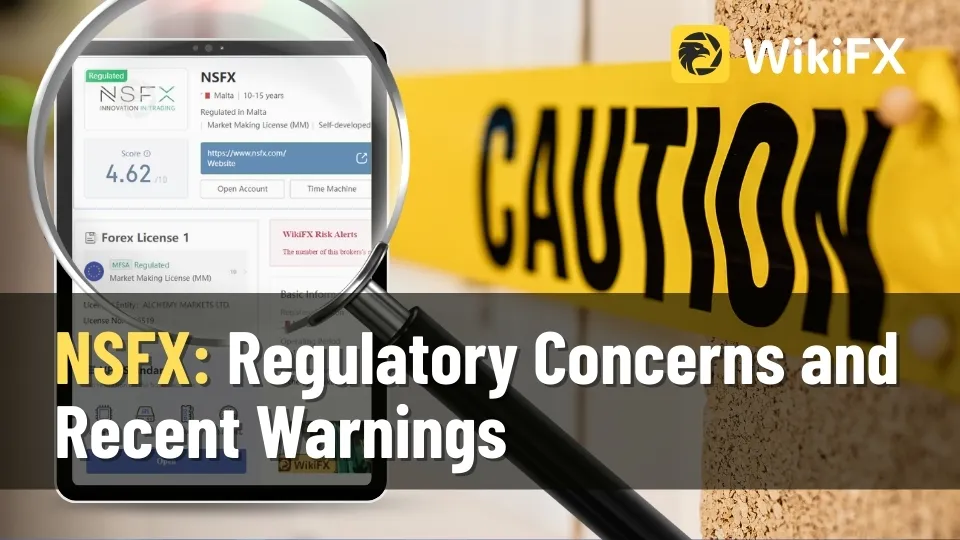
In the dynamic world of online Forex trading, selecting a reliable and regulated broker is paramount for safeguarding investments. This comprehensive NSFX review delves into the operational aspects of NSFX, a broker that has garnered attention on platforms like WikiFX. While NSFX presents itself as a regulated entity, a closer examination of its WikiFX score and recent regulatory alerts reveals a more nuanced picture, prompting potential traders to exercise caution. This article aims to provide an objective overview of NSFX, highlighting its regulatory standing, trading conditions, and the critical warnings issued by WikiFX, to help traders make informed decisions regarding NSFX Forex.
NSFX Overview: A Closer Look at the Broker
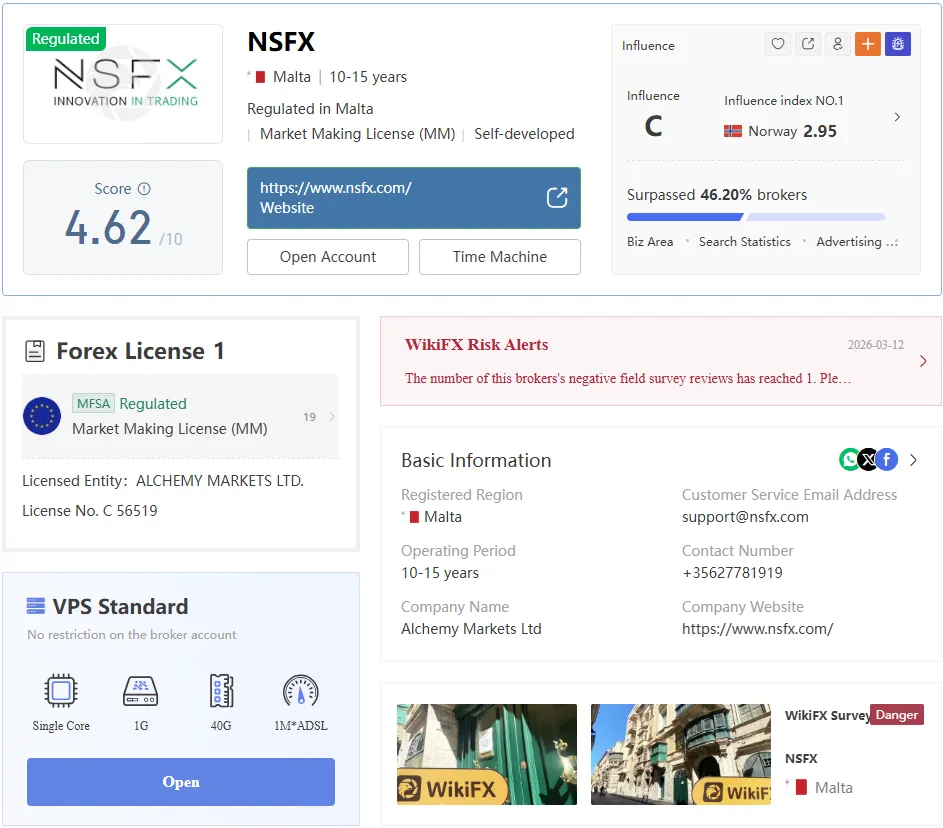
NSFX, operated by Alchemy Markets Ltd., has been active in the financial markets for 10-15 years, primarily registered in Malta. The broker holds a Market Making License (MM) from the Malta Financial Services Authority (MFSA) under license number C 56519. While this indicates a level of regulatory oversight, it is crucial to note that its FCA License, previously held, has been revoked. This change in regulatory status is a significant point of consideration for anyone looking into NSFX regulation. The WikiFX platform assigns NSFX a score of 4.62 out of 10, categorizing its survey rating as “Danger” due to a “Suspicious Scope of Business” and “High potential risk.” This low score on a reputable broker review platform like WikiFX immediately raises red flags for potential investors seeking a trustworthy NSFX broker.
Trading Conditions and Platforms
NSFX offers various trading instruments, including Forex pairs, commodities, and indices. The broker provides three main account types: ECN, Fixed Spread, and JForex, though detailed information about their features on the official website appears limited. For trading platforms, NSFX utilizes its proprietary NSFX JForex, which is accessible across multiple devices, including PC, Mac, iPhone, and Android. In terms of funding, NSFX supports several payment methods such as Wire Transfer, MasterCard, Maestro, Visa, Skrill, Neteller, and Fast Bank Transfer. However, it is worth noting that withdrawals via Skrill and Neteller incur a 2.9% fee. While the availability of diverse platforms and payment options might seem appealing, the underlying concerns regarding the brokers reliability should not be overlooked when considering an NSFX login.
Recent Regulatory Actions and Warnings
The most critical aspect of evaluating NSFX involves recent regulatory actions and warnings, particularly those issued from 2025 to the present. These alerts underscore the potential risks associated with this broker.
On March 12, 2026, WikiFX issued a significant Risk Alert concerning NSFX. The alert explicitly states: “The number of this broker‘s negative field survey reviews has reached 1. Please be aware of the risk and the potential scam!” This warning, issued by a leading independent third-party inquiry platform, serves as a direct caution to traders. It highlights a growing pattern of negative feedback that could indicate systemic issues within the broker’s operations or customer service. Such an alert from WikiFX is not to be taken lightly, as it often precedes or accompanies more severe regulatory interventions or widespread client dissatisfaction. This recent development is a crucial factor for anyone conducting an NSFX review or considering NSFX Forex trading.
Furthermore, a news item dated December 4, 2025, d “NSFX Forex Broker Review and Regulation Updates,” indicates ongoing scrutiny of NSFX‘s regulatory compliance. While the specific details of this news article were not fully available, its timing and suggest that NSFX’s regulatory standing and operational practices were under review or being updated. This continuous monitoring and the subsequent risk alert in 2026 paint a picture of a broker facing persistent challenges in maintaining a clean regulatory record and positive client sentiment. The combination of a low WikiFX score and these recent warnings strongly advises against engaging with NSFX.
WikiFX Survey and Risk Assessment
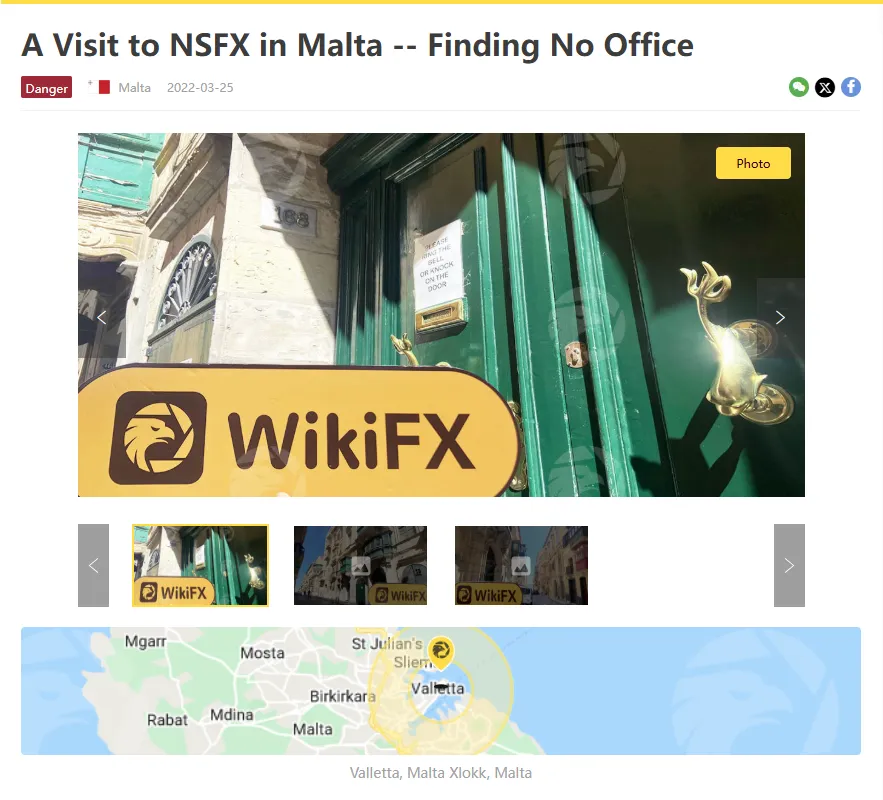
The WikiFX survey categorizes NSFX as “Danger,” a severe assessment that reflects multiple underlying issues. Beyond the recent alerts, WikiFX identifies a “Suspicious Scope of Business” and “High potential risk” associated with NSFX. These designations are derived from a comprehensive evaluation of the brokers operational transparency, regulatory adherence, and overall business practices. The revocation of its FCA license further compounds these concerns, suggesting a history of non-compliance or failure to meet stringent regulatory standards. The presence of unverified related companies and clones also adds to the complexity and risk profile of NSFX, making it difficult for traders to ascertain the legitimacy of their operations. For those researching NSFX regulation, these findings are critical.
Conclusion
In conclusion, while NSFX operates under an MFSA license, the overall picture painted by its WikiFX score of 4.62/10 and recent warnings from 2025 and 2026 is one of significant concern. The “Danger” rating, coupled with a “Suspicious Scope of Business” and “High potential risk,” strongly suggests that potential investors should approach NSFX with extreme caution. The WikiFX Risk Alert from March 2026, specifically mentioning negative field survey reviews and potential scams, cannot be ignored. For individuals seeking a secure and transparent trading environment, it is advisable to consider brokers with higher regulatory standing and a more favorable track record. Always conduct thorough due diligence and prioritize brokers with robust regulation and positive independent reviews before committing to any NSFX login or investment in NSFX Forex.


Read more
RBI Hikes Repo to 5.50%, Its First Rise in Nearly Four Years — What It Does to USD/INR
The Reserve Bank of India raised its policy repo rate by 25 basis points to 5.50% on Wednesday, October 7, its first increase in nearly four years, and shifted its stance to "calibrated tightening". Governor Sanjay Malhotra said outright that rate cuts are off the table for now. "Rate cuts are off the table in the near term and policy action ahead can only be a rate hike or a pause, depending on the evolving conditions and the outlook," Malhotra said. The six-member Monetary Policy Committee voted unanimously, according to multiple reports. For a retail trader, the number to sit with is not 5.50%. It is 5.25% — the Standing Deposit Facility rate, the floor of the RBI's corridor, and the rate that effectively sets what it costs to fund a short-rupee position overnight. The rupee has been weakening, and reports describe that weakness as one of the reasons the RBI moved.

Monsoon 13% Short, US Yields Above 5%; India Faces Food, Fuel & Fertilizer Shortage Risks
India is being hit by four shocks at once, according to a post on X published on Tuesday night: food, fuel, fertiliser and finance. The four numbers behind it are the ones worth checking. Monsoon rainfall running about 13% below normal and the weakest since 2015. Crude oil near $100 a barrel. None of them has been confirmed. The post attributes the framing to External Affairs Minister S. Jaishankar. Nothing published about Jaishankar in the past 72 hours mentions a four-F warning. Treat the attribution as unverified. What is verifiable is the timing. The post went out hours before an RBI policy decision, with Brent already slipping below $100 and US equity futures sitting at records. That split matters more to a USD/INR position than the label does. The four numbers, one at a time Everything in this section comes from the post. Food. El Niño left this year's monsoon about 13% short, the weakest since 2015, which points to lower crop harvests. Fuel. The US-Iran war has kept crude
RoboForex and Trading Pro Withdrawal Complaints Compared
Two public complaints raise different questions about account funds. A Pakistan-labelled RoboForex post dated 9 July 2026 alleges removal of $1,627.39 and blocked profile access. A Malaysia-labelled Trading Pro post dated 15 August 2024 describes a rejected withdrawal followed by a deduction. Their attached images preserve narrower observations: a displayed balance in the first case and a declined transaction in the second. Comparing the evidence helps readers identify what remains unverified, without ranking the brokers or treating either account as a proven fraud case.
FBS Review 2026: Traders Report Stop-Loss Issues and Deposit & Withdrawal Failures
Did your deposit fail to show on the FBS platform? Were you denied fund withdrawals by the Belize-based brokerage firm? Faced an unaccounted fund deduction from your trading account? Did you face losses due to the incorrect triggering of your stop-loss order on the FBS login? These issues have allegedy become widespread among users worldwide, and some of them have reported the same on broker evaluation platforms such as WikiFX. This FBS review 2026 investigates reported issues while providing an overview of the broker's regulatory status.
WikiFX Broker
Latest News
Oil Turned on Its Vertex Day: What It Means for Gold
 WikiFX
Oil, Yields and French Debt Keep Global Markets Under Pressure
WikiFXFrom Food Cart to Seized Mercedes: Panchkula Police Name Rajesh 'Nana' in Alleged Rs 8 Crore Fraud
WikiFXInflation fears on the rise as one-year outlook in Fed survey hits highest level since May 2023
WikiFXU.S. Dollar Retreats On Profit-Taking: Analysis For EUR/USD, GBP/USD, USD/CAD, USD/JPY
WikiFXWorld Bank warns of AI concentration risks as it lifts East Asia and Pacific growth outlook to 4.5%
WikiFXRBI Vows to Steady 'Undervalued' Rupee After It Hits Five-Month Low
WikiFXLuxury Brand Owner Shot Dead After Losing US$100 Million in Trading Last Month
WikiFXTag Markets Broker Review: Regulated but Is It Safe for Traders?
WikiFXFirst Light News: Nasdaq 100 Hits Another Record as 10-year Yield Holds at 5.3%
WikiFXRate Calc
