KEY TO MARKETS: A Deep Dive into an Unregulated Forex Broker and Its Alarming Issues
Abstract:Is KEY TO MARKETS a scam? This in-depth KEY TO MARKETS review exposes the broker’s unregulated status, critical withdrawal issues, and deposit problems, urging caution for potential traders. Learn why KEY TO MARKETS regulation is a major red flag.
The Perils of Unregulated Forex Trading
The world of online forex trading offers lucrative opportunities, but it is also fraught with risks, particularly when dealing with unregulated brokers. One such entity that has drawn significant scrutiny is KEY TO MARKETS. This comprehensive KEY TO MARKETS review delves into the operational practices, regulatory standing, and reported user complaints associated with this Forex broker, aiming to provide potential investors with a clear understanding of the risks involved. Our analysis, primarily based on data from WikiFX, reveals a concerning picture that warrants extreme caution.
The Alarming Lack of KEY TO MARKETS Regulation
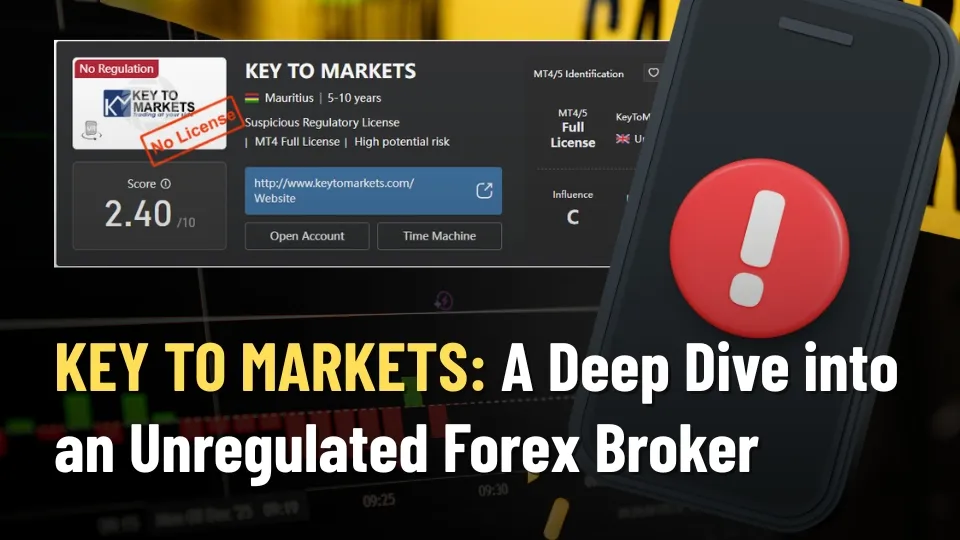
Perhaps the most critical finding regarding KEY TO MARKETS is its glaring lack of credible regulation. According to WikiFX, KEY TO MARKETS operates with
a “No Regulation” status and a remarkably low score of 2.40/10. This immediately raises a significant scam alert for anyone considering engaging with this platform. The absence of a valid forex trading license means that KEY TO MARKETS is not overseen by any recognized financial authority, leaving traders vulnerable to unchecked practices and without recourse in case of disputes.
While the broker claims to have an MT4/5 Full License, this refers to the trading platform software and not a regulatory license for financial operations. The WikiFX report explicitly states, “No forex trading license found. Please be aware of the risks.” This fundamental flaw in KEY TO MARKETS regulation is a primary indicator of high potential risk.
Red Flags and User Complaints: Withdrawal Issues and More
The lack of regulation directly correlates with a disturbing pattern of trader complaints and withdrawal issues reported by users. WikiFX highlights several exposure cases that paint a grim picture of the broker‘s operational integrity. These complaints often revolve around critical financial transactions, directly impacting traders’ ability to access their funds.
Notable Cases (2025 - Present):
- Withdrawal Denials: A user identified as WNAT from Indonesia reported a withdrawal denial of $10, stating, “Your withdrawal of -10.13USD from the account 2135249 has been declined for the following reason: . If you have any questions please do not hesitate to contact our support team or email us at Best regards, Key to Markets International Team.” This case, reported as recent as “Two days ago” (from the WikiFX update date of 2026-03-11), exemplifies the payout issues faced by clients.
- Deposit Problems: Another user, FX1155095729 from Nigeria, reported significant deposit problems on 2025-11-19. The user stated, “I Deposit I don‘t see USD in my broker account I send nira from this account name Abdurrahman Nura Ibrahim bank name opay bank to account name,Evone technologies bank name, Globus bank. my money ne come back to my account no enter to my broker account 😔 I waiting 26 I’ve been waiting for them for 26 hours now and they havent returned.” This indicates severe discrepancies in handling client funds, a hallmark of potentially fraudulent operations.
- Trading Manipulation Allegations: While not from 2025-present, an older complaint from FX7359315392 from Bangladesh (2021-09-13) describes the broker widening spreads to trigger stop losses, leading to significant losses. Although older, it points to a historical pattern of questionable trading practices that could still be prevalent. This type of allegation is common among forex broker scams.
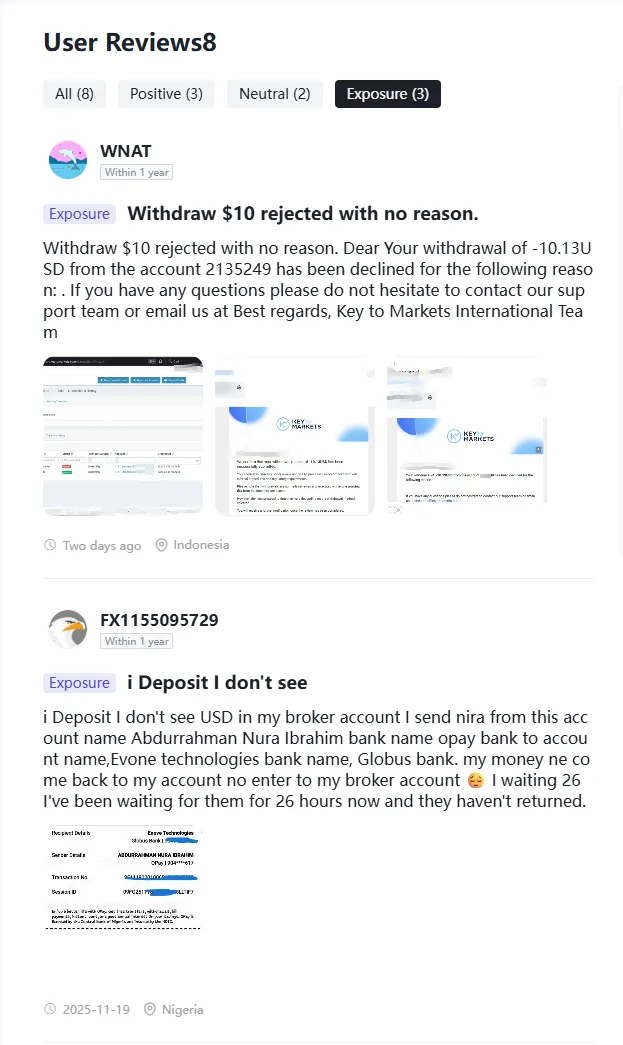
These instances underscore the severe risks associated with KEY TO MARKETS. The recurring themes of withdrawal issues, deposit problems, and general user complaints are strong indicators that this Forex broker may not be a trustworthy platform for investments.
The Deceptive Lure of KEY TO MARKETS: What to Watch Out For
Despite the alarming regulatory status and numerous complaints, KEY TO MARKETS attempts to present itself as a legitimate trading platform. It offers trading of over 400 CFDs via MT4 and MT5, covering forex, stocks, indices, commodities, and cryptocurrencies, with leverage up to 1:500 and ECN spreads as low as 0.0. They also mention copy trading, which can be appealing to beginners.
However, these features are overshadowed by the fundamental lack of KEY TO MARKETS regulation. A brokers ability to offer advanced trading instruments and platforms means little if the underlying financial operations are not transparent and regulated. The “Suspicious Regulatory License” tag on WikiFX further solidifies the concern.
Why KEY TO MARKETS Login and Trading Poses a Risk
For individuals considering a KEY TO MARKETS login, it is crucial to understand the inherent dangers. Without proper regulatory oversight, there is no guarantee that your funds are segregated, protected, or even accessible. The reported login failure or account suspension issues, while not explicitly detailed as recent cases, are common tactics employed by online trading scams to prevent users from accessing their accounts and funds.
Investing with an unregulated broker like KEY TO MARKETS means you are essentially placing your capital at the mercy of an entity that operates outside the bounds of established financial laws. This significantly increases the risk of forex investment scam and makes it nearly impossible to recover lost funds.
Conclusion: Avoid KEY TO MARKETS – Prioritize Regulation and Safety
In conclusion, the evidence strongly suggests that KEY TO MARKETS is a high-risk Forex broker that should be avoided. The absence of legitimate KEY TO MARKETS regulation, coupled with numerous withdrawal problems and deposit issues reported by users, paints a clear picture of a potentially unreliable and dangerous trading environment. The WikiFX score of 2.40/10 and the explicit warning to “stay away” serve as critical warnings.
For anyone seeking to engage in Forex trading, the paramount consideration must be the regulatory status of the broker. Always choose a broker that is regulated by reputable financial authorities to ensure the safety of your investments and to have a clear path for recourse should any issues arise. Do not let the allure of high leverage or diverse instruments overshadow the fundamental requirement of robust regulation. Protect yourself from forex scams by conducting thorough due diligence and prioritizing regulated platforms.


Read more
FOREX.com Review 2026: Deposit & Withdrawal Issues Persist, Traders Claim
FOREX.com, a US-based brokerage firm with over two decades of trading expertise, has received complaints from users on deposits and withdrawals. Users claim deposit failures and a slow fund withdrawal process. Additionally, there are complaints of wide spreads and account liquidation. These allegations have contributed to negative user reviews of FOREX.com. This article investigates user allegations and shares a regulatory overview of the broker.
capital.com Review 2026: Traders Report Alleged Trade Manipulation & Withdrawal Concerns
Did you have to pay extra fees to recover your deposited funds on capital.com, a Bahamas-based brokerage entity? Were you denied withdrawals in the name of an invalid account? Did the broker fail to respond to your withdrawal requests for weeks? Faced losses due to alleged slippage and stop-loss errors? This capital.com review investigates user allegations and shares how the broker's regulatory structure appears.
FBS Regulation Checks Before Choosing the Company Behind an Account
FBS regulation should be checked against the company named in an account agreement, not a brand-level statement alone. The FBS About page archived on 24 September 2026 describes operations under several local licences. That statement does not identify the provider for every applicant in South Asia. Before using an FBS login link to apply or submit documents, establish which company would contract with you and what the relevant authorisation covers.
RBI Hikes Repo to 5.50%, Its First Rise in Nearly Four Years — What It Does to USD/INR
The Reserve Bank of India raised its policy repo rate by 25 basis points to 5.50% on Wednesday, October 7, its first increase in nearly four years, and shifted its stance to "calibrated tightening". Governor Sanjay Malhotra said outright that rate cuts are off the table for now. "Rate cuts are off the table in the near term and policy action ahead can only be a rate hike or a pause, depending on the evolving conditions and the outlook," Malhotra said. The six-member Monetary Policy Committee voted unanimously, according to multiple reports. For a retail trader, the number to sit with is not 5.50%. It is 5.25% — the Standing Deposit Facility rate, the floor of the RBI's corridor, and the rate that effectively sets what it costs to fund a short-rupee position overnight. The rupee has been weakening, and reports describe that weakness as one of the reasons the RBI moved.
WikiFX Broker
Latest News
Gold Near Nine Week Low as Fed Rate Fears Intensify
 WikiFX
Tag Markets Broker Review: Regulated but Is It Safe for Traders?
WikiFXRBI Vows to Steady 'Undervalued' Rupee After It Hits Five-Month Low
WikiFXSri Lanka's NDB Bank Fraud Losses Rise to Rs. 13.6 Billion as Final Audit Flags Governance Failures
WikiFXLuxury Brand Owner Shot Dead After Losing US$100 Million in Trading Last Month
WikiFXSingaporean Man Arrested Over Gambling Investment Scam Linked to S$2.2 Million in Losses
WikiFXFBS Regulation Checks Before Choosing the Company Behind an Account
WikiFXGold and the US Dollar Are Both Rising – Heres What Traders Should Watch
WikiFXDoctor Loses RM300,000 in an Investment That Promised 10% Monthly Returns
WikiFXGold and Silver Bounce After Trump Rules Out Pre-Election Strikes
WikiFXRate Calc
