OANDA Expands CFD Trading to US and European Traders
Abstract:OANDA enhances its CFD offering in Australia, adding US and European share CFDs for traders through the new OANDA One sub-account.

OANDA Expands CFD Offering in Australia
Online trading firm OANDA has expanded its Contracts for Difference (CFD) portfolio in Australia, introducing share CFDs on major US and European-listed companies. The move widens access for retail traders seeking greater market diversification and forms part of the companys broader global platform update.
The new product suite allows Australian clients to trade CFDs on individual shares such as Nvidia, Microsoft, Alphabet, Tesla, and Amazon, spanning key markets including the United States, the United Kingdom, Germany, France, and other European economies.
Integration Through OANDA One and MT5
At the core of this rollout is OANDA One, a new sub-account integrated with the MetaTrader 5 (MT5) platform. The seamless upgrade enables eligible traders to access a unified interface for trading multiple asset classes. Through MT5, clients can benefit from enhanced analytical tools, faster execution, and the stability needed for high-volume CFD trading.

According to Rafal Slon, Managing Director of OANDA Australia, the enhancement reflects a strategic response to evolving trader preferences. “CFDs remain popular for their ability to capture market movements without requiring ownership of the underlying asset,” Slon said. He added that OANDAs latest offering focuses on improving client flexibility and providing a streamlined digital experience through its platforms and intuitive mobile app.
Strengthening Market Position Amid Rising CFD Demand
OANDAs latest update rounds out its multi-asset CFD lineup, which already includes indices, forex, commodities, metals, and bonds. Industry experts note that the addition of international share CFDs positions the firm more competitively against other global brokers operating under Australian regulation.
With Australian retail trading volumes trending upward over the past year, the companys strategic timing aligns with broader market dynamics emphasizing diversified CFD exposure and advanced platform integration.
Enhanced Client Experience and Industry Recognition
OANDA‘s client-centric approach has earned consistent recognition. In the Investment Trends 2024 Australia Leverage Trading Report, the company received top honors for Overall Client Satisfaction, Customer Service, and Platform Features. These awards reinforce the firm’s reputation for reliability and innovation in the competitive CFD trading space.
The complete range of tradable instruments will remain accessible via a single connection on the OANDA app and third-party integrations such as TradingView, supporting both new and experienced traders.
Regulatory Oversight and Investor Considerations
OANDA Australia Pty Ltd operates under the oversight of the Australian Securities and Investments Commission (ASIC) (ABN 26 152 088 349, AFSL No. 412981). The company continues to emphasize regulatory compliance and investor education, reminding clients that CFDs are complex financial products involving leverage and high risk. Traders are encouraged to review the firms Target Market Determination Policy before participating.
About OANDA
Founded in 1996, OANDA has evolved from a pioneer in online foreign exchange data to a global leader in multi-asset trading and analytics. With operations across major financial hubs — including New York, London, Toronto, Singapore, Tokyo, and Sydney — the company provides regulated access to various instruments, from derivatives of equities and currencies to commodities and cryptocurrencies.
OANDAs continued product innovation, regulatory transparency, and digital platform development underscore its aim to meet the diverse needs of retail and institutional clients worldwide.


Read more

Crib Markets Review 2026: Traders Saw Profits Appear - Then Something Changed! Details Inside!
Crib Markets, a Mauritius-based multi-asset brokerage entity, has been accused of profit deletions by users worldwide, including those from India. After studying the Crib Markets complaints, it was observed that problems started happening when users looked to withdraw funds from the platform. Multiple users claimed deliberate profit deletions by the brokerage firm upon a withdrawal request. In this Crib Markets review, we have found many such complaints in 2026. Besides sharing complaints, we have provided a thorough look into the broker’s regulatory framework.
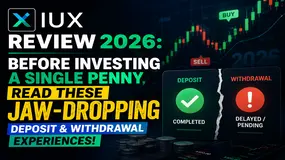
IUX Review:Before Investing a Single Penny, Read These Jaw-Dropping Deposit & Withdrawal Experiences
IUX, despite having an operational presence for approximately a decade, continues to face allegations from users regarding its several trading aspects. These include complaints on withdrawal processing, deposit failure, and even wide slippages that eat into users’ margins. For some, withdrawals were never executed, for others, withdrawal processing remained only on paper. On the other hand, some’s deposits fail to show on the IUX login even after 45 days of the transaction initiation date. Concerned by these seemingly suspicious trading incidents, users hit out on several review platforms such as WikiFX. This IUX review examines these user allegations while providing a regulatory framework the broker adheres to.
ForexDana Review 2026: Traders Report Losses—But What Happened Behind the Trades?
A brokerage operation history of over six years without any clarity of the accounts offered. This stunning fact allegedly applies to ForexDana. While this has been a major concern on the transparency front, user experiences concerning suspicious deposit failures and trade manipulation have not been good for the broker’s reputation either. In this ForexDana review, we have attempted to find the reason behind the growing user frustration, not only through their complaints but also what possibly could have led to these complaints. Yes, you heard it right! We are going to probe the ForexDana regulation status. This will help you make the right financial decision.
Saxo Exposure Report 2026: Withdrawal Delays and Transfer Disputes Leave Traders Concerned
As you look forward to reading the Saxo reviews, you come across both positive and negative user experiences concerning trading. However, what makes prospective users dwell more is the significant insight shared through negative experiences compared to positive ones. The negative experiences are more detailed around fund withdrawals and deposits. Although they are allegations, they represent a disturbing picture. For example, we came across a case where a user highlighted the inability to trade an instrument, which is actively traded in the market. We have examined the recent allegations against the brokerage firm in this in-depth review. At the same time, we have provided a thorough look into the broker’s regulatory framework
WikiFX Broker
Latest News
RoboMarkets Review: Regulation Questions Around a Broker Facing Fresh Trading Complaints
 WikiFX
Review 2026: Deriv Regulation, Complaints, and Withdrawal Risk Signals
WikiFXStop Trading in the Middle of Ranging Forex Markets
WikiFXSTONE WALL CAPITAL Review 2026: Is This Forex Broker Safe?
WikiFXUnderstanding Day Trading: Fast Decisions, High Stress, and Zero Overnight Risk
WikiFXErrante Review: Regulation Alarms and Broker Complaints Traders Cannot Ignore
WikiFXFXTF Review 2026: FSA Regulation, MT4 Access, and Mixed Trader Reports
WikiFXFinalto Review 2026: Regulation, Trading Environment, and Platform Access
WikiFXMetaTrader 5 Expands Infrastructure With New Amsterdam Hosting for Backup Servers
WikiFXBaFin Issues Fresh Warnings Over Unauthorized Financial and Crypto Services
WikiFXRate Calc

