One Year In, Trump's Economy Defies The Experts And Outpaces G7

Abstract:The same analysts and institutions that applauded massive stimulus, monetary excess, and regulatory
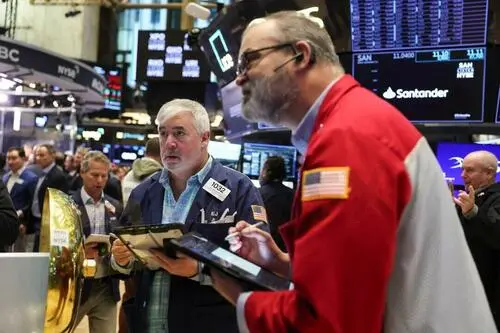
The same analysts and institutions that applauded massive stimulus, monetary excess, and regulatory overreach under the previous administration now struggle to explain why the economy they expected to sink into stagflation is instead outperforming all its G7 peers. Furthermore, the U.S. peers that embraced net-zero goals, big government, and high tax policies are now experiencing secular stagnation.
From the ‘Tariff Tantrum’ to a Global Surprise
When Trump announced his new wave of tariffs and trade policies, much of the global consensus rushed to predict a disaster. I called it the “tariff tantrum.” Commentators warned of an inflation surge beyond 2021 levels, 6 to 7 percent Treasury yields, collapsing investment, a recession, and global rejection of U.S. leadership in favor of supposedly more responsible European governments.
Twelve months later, none of those predictions has materialized. The 10-year Treasury yield has fallen to 4.1 percent. The United States is the only G7 economy growing robustly, while nations that intensified hyperregulation, climate restrictions, high taxes, and government spending are stuck in stagnation despite the tailwind of low oil and gas prices.
The “tariff tantrum” never became the structural shock that critics warned of. Tariffs, though debatable, do not cause inflation because they do not add currency units to the economy; uncontrolled public spending and monetary excess do.
Growth, Investment, and a Rare Fiscal Adjustment
The performance of the U.S. economy in 2025 is extraordinary, not only in relative terms but also on its own merits. Real GDP is growing at approximately 3.8 percent, with the Atlanta Fed tracking around 3.5 percent annualized in the third quarter. Private investment is expanding at near double-digit rates. Crucially, this is happening while federal spending is being cut—public expenditure has fallen by about 3 percent over the year, avoiding the use of unproductive federal outlays to mask weak growth.
International institutions have revised their forecasts. The International Monetary Fund, which had projected much weaker performance, now expects U.S. growth of about 2.1 percent in 2026. Major research houses that previously forecast zero or negative growth have adjusted their 2025 outlooks to around 2.5 percent. Some economists now admit they misread the U.S. private sectors resilience and overestimated the impact of tariffs.
This American expansion is not driven by a wave of debt-fueled political spending, but by private sector recovery, investment, trade, and productivity. Unlike other developed nations that responded to crises with more spending, debt, and regulation, the new U.S. approach is producing better results.
Inflation Under Control
The most surprising divergence from the consensus narrative is inflation. The same Keynesian analysts who saw no inflation risk in 2021—while government spending and the money supply surged—predicted that tariffs would push inflation beyond previous highs. Instead, the consumer price index (CPI) in November stands at about 2.7 percent, below the 3.0 percent expected and far from the predicted 6 to 7 percent spike.
Core inflation, excluding food and energy, is around 2.6 percent, down from late 2024. Over the 12 months to November, the all-items index rose by 2.7 percent, down from 3.0 percent the previous year. Independent estimates suggest actual inflation may be closer to 2.5 percent.
The lesson is clear: tariffs did not cause the global inflation spike; the combination of unchecked fiscal expansion and central banks monetizing deficits did. The U.S. experience in 2025 proves this again.
Deficit, Debt, and the Politics of Discipline
While many advanced economies face ballooning deficits and rising debt, the United States has achieved a rare combination of growth and fiscal consolidation. The federal deficit has declined by about 22 percent, from $2.07 trillion in November 2024 to approximately $1.6 trillion a year later. This is due to increased tax and trade revenues and spending cuts. As a share of GDP, the deficit dropped from 7.1 percent to an estimated 5.9 percent.
This is notable, given that 97 percent of the 2025 budget had already been allocated when the Trump administration took office. Trump has also enacted the largest tax cut in decades, reducing the tax wedge on families to below 30 percent, according to the Tax Foundation.
Despite inheriting a nearly fully committed budget, the administration cut federal outlays by 5.6 percent in the first quarter and 5.3 percent in the second. Public spending is down 3.1 percent for the first half of the year. An 8 percent reduction in federal spending is planned for 2026.
Federal debt, which stood at $36.22 trillion in January, has stabilized and ticked slightly down to $36.21 trillion. The debt-to-GDP ratio has fallen from roughly 122 percent to 120 percent.
Labor Market: Native Workers Improve as Govt and Immigration Shrink
The November employment report shows the best month for native private-sector employment since 2015. Real wages are up 0.8 percent year over year, with middle- and lower-income workers gaining about 1.4 percent. Net real wages after taxes are rising at the fastest pace in years.
Unemployment stands at 4.6 percent, lower than in Canada, the United Kingdom, France, Italy, and the Eurozone.
Native employment has grown from 130.6 million in November 2024 to 133.3 million—an increase of 2.63 million jobs. Over the same period, foreign employment has declined by 21,000, and public-sector employment has dropped by 188,000.
Unlike Canada and Europe, where employment gains often involve subsidized public-sector jobs, the United States is achieving stronger private-sector gains through deregulation, tax cuts, and restrained public payrolls.
Trade Deals Have Been a Success
Rather than destroying America‘s global trade position, Trump’s approach has reduced the trade deficit from $79.8 billion in November 2024 to about $52.8 billion in September 2025—a drop of nearly one-third.
Targeted tariffs, renegotiated trade agreements, and stronger domestic industry support have improved trade flows without triggering the inflation that many feared.
Other Improvements That Matter
The Trump administration has taken major steps on other fronts: banning central bank digital currencies, rolling back speech-restrictive regulations, advancing health care reform, and committing to scrap 10 regulations for every new one approved. In foreign policy, it has advocated for peace in Gaza, realistic resolutions in Ukraine, and support for democracy in Venezuela.
The message for conservatives and centrists in Europe and Latin America is clear: growth, jobs, and lower inflation require more than copying bureaucratic, high-tax models.Trump may not be a classical liberal, but his results demonstrate what a reform-minded conservative administration can accomplish.
The uncomfortable reality for many global policymakers is this: the United States has achieved what others only promised—stronger growth, lower inflation, smaller deficits, a healthier labor market, and early signs of debt stabilization. All of this has been accomplished not through expanding the state, but through deregulation, lower taxes, and private-sector empowerment.
Other advanced economies opted for more government, more debt, and climate and social agendas funded through taxes. They now face stagnation, even with favorable energy prices.
Trump‘s new term does not guarantee future success. Risks remain. But the first year already poses a challenge to the Keynesian consensus. Had the United States followed the big-government, net-zero, high-tax path, its fiscal and economic situation would likely be far worse—as the United Kingdom’s example makes clear.
WikiFX Broker
Latest News
Alpari Review 2026: Official Warnings and High Complaint Patterns
WikiFXM4Markets Broker Review: Regulation, Licenses and WikiScore Analysis
WikiFXOver RM102 Million Crypto Seized in Romance Scam Crackdown
WikiFX"High Inspirations" Mastermind Disappears as $25 Billion Investment Scheme Collapses
WikiFXRupee Hits Two-Month Low as Oil Surges Past $95
WikiFXWhy RBI Sold $6.1 Billion in Forex Markets in May
WikiFXCNMV Red-Flags 9 Unauthorised Investment Platforms
WikiFXOrder Execution: What Discretionary Latitude Means for Your Trades
WikiFXScammed Twice: Recovery Fraud Takes Advantages of Victims Again
WikiFXWhy Prices Rush Back to Fill Gaps: Liquidity Voids Explained
WikiFXRate Calc

