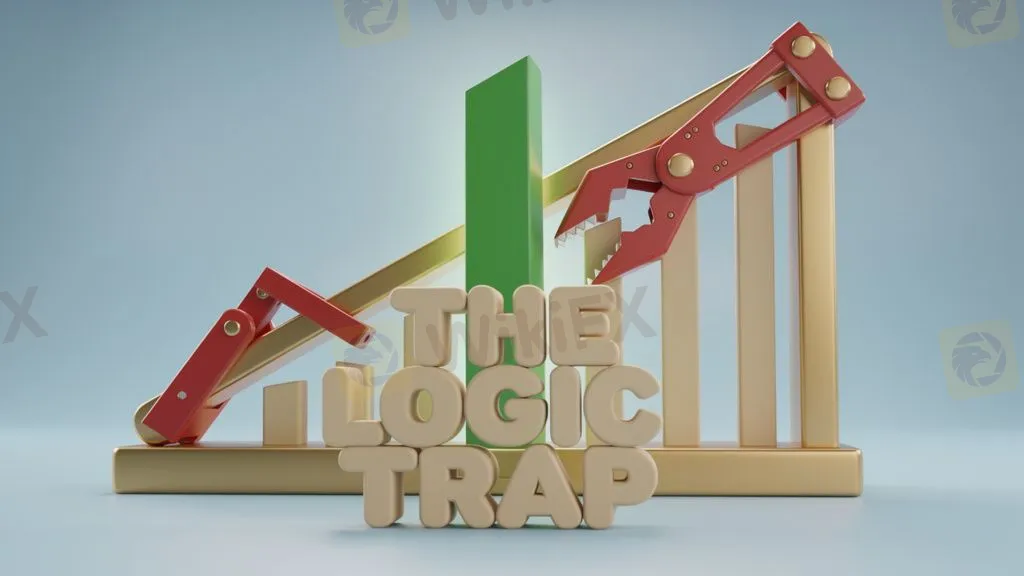
Why Good Data Wrecks Your Trade: The "Logic Trap" Every Newbie Falls Into

Abstract:Stop trying to force the market to make sense. It’s an auction, driven by fear, greed, and future expectations.
Youve been there. We all have.
Youre sitting in front of your charts, waiting for the Non-Farm Payrolls or the CPI data. The report drops. The numbers are fantastic—the economy is booming, jobs are up, businesses are crushing it.
You immediately click “Buy,” thinking the market has to go up. Its logical, right?
Then, in fewer than five seconds, the red candles start printing. The market tanks. You get stopped out, losing 2% of your account in a blink. You stare at the screen, feeling cheated. “How can the price drop when the news is so good?”
Here is the hard truth: The market does not care about your logic. It doesn't care about what is happening; it cares about what might happen next.
If you want to stop losing money on major news days, you simply have to understand why macro data and price action are often mortal enemies.
Does the Market Actually Care About the Facts?
Short answer: No.
The biggest mistake new traders make is treating the market like a report card. You think if the economy gets an “A,” the stock market goes up. Thats not how this game works.
The market is a discounting mechanism. Thats a fancy way of saying big institutional players place their bets weeks before the news actually comes out. They have models, insider chatter, and projections.
If the expectation is that a company will report record profits, the “smart money” buys the stock before the earnings call. By the time the actual report is released, the price is already high. Its already “priced in.”
When the good news finally hits the wires, those institutional traders use that liquidity to sell their positions and take profit. Who do they sell to? They sell to you—the retail trader chasing the headline.
This is the classic “Buy the Rumor, Sell the News.” If you are reading the news on a free website, you are already too late.
The “Bad News is Good News” Paradox
This is where things get really twisted, and it confuses the hell out of beginners.
Right now, we are in a cycle heavily influenced by Central Banks (like the Fed). The Fed wants to control inflation.
- If the economy is too strong (Good Data), the Fed gets scared of inflation. They might raise interest rates or keep them high. High rates act like gravity on stocks and crypto.
- If the economy looks weak (Bad Data), the Fed might cut rates to save the ship. Lower rates flood the market with cheap money.
So, when you see a “Bad” jobs report (high unemployment), you might see the S&P 500 or Bitcoin skyrocket. Why? because the market is betting that the Fed will turn on the money printer to fix the mess.
You are playing 3D chess against supercomputers. They aren't looking at today's number; they are calculating the Fed's move three months from now.
Volatility is the Shark, You are the Bait
trading around these macro events is dangerous. When data and price disconnect, volatility spikes. Spreads widen, and price action becomes erratic.
This creates a breeding ground for two things: emotional mistakes and bad brokers.
When the market moves 100 pips in a minute against the news, you might panic. You might double down. Thats how accounts get blown. But there is a silent killer you might not be watching: your broker.
Some unregulated brokers love these moments. They widen the spread so much that you get stopped out even if price didn't hit your level. Or suddenly, the “server freezes.”
This is why I always tell my students: Defense is more important than offense.
Before you try to trade the NFP or a rate decision, check who you are trading with. Use WikiFX to look up your brokers regulatory score. If they have a low rating or a history of complaints about slippage and withdrawal issues, get your money out. Don't let a scam broker use market volatility as an excuse to steal your profits.
How to Trade the Disconnect
So, how do you handle this? Do you stop trading news?
Not necessarily. But you need to change your approach.
- Wait for the “Fake Out”: The initial move on a news release is often a trap. If the news is good and price spikes up, wait 15 minutes. If it starts reversing hard, thats the real move.
- Follow the Trend, Not the Number: If the market is in a downtrend, “Good News” will often be used as a liquidity grab to short the market at a better price.
- Ignore the Headline: Stop trying to interpret if the number is “good” or “bad.” Look at key support and resistance levels. If price breaks a key support level on “good news,” that is a massive bearish signal. It means the sellers are so strong they don't care about the data.
The Bottom Line
Stop trying to force the market to make sense. Its an auction, driven by fear, greed, and future expectations.
When macro data and price go in opposite directions, it‘s not a mistake—it’s the market revealing its true hand. The “smart money” is selling into the strength or buying into the weakness.
Don't be the liquidity for someone else's exit. Verify your broker on WikiFX, keep your position sizes small during volatility, and trade the chart, not the headline.
Stay skeptical. Stay safe.
- Coach K
Disclaimer: This article is for educational purposes only and does not constitute financial advice. Trading involves significant risk, and you may lose your invested capital.
Read more
Why Markets Pump When the News Dumps: The "Bad Is Good" Trap
The market is a game of psychology, not just economics. Trade what the chart is doing, not what the news anchor is saying.
Stop Sabotaging Your Trades: Why Your "Christmas Tree" Chart is Killing Your Profits
I see it every single day. A student sends me a screenshot of their trading setup, asking why they got stopped out.
Forex vs. Stocks vs. Futures: Which Market Fits Your Wallet?
You’ve probably seen the screenshots on social media. Someone turns $500 into $5,000 in a single morning, and suddenly everyone wants to be a trader. But here is the cold reality: trading isn’t a single game. It’s a collection of different battlefields, and if you bring a knife to a gunfight, you’re going to lose your capital.
Why One Sentence Can Blow Up Your Trading Account (and How to Spot It Coming)
You’ve been there. You are staring at the EUR/USD chart. Your technical analysis is perfect. Support is holding, the RSI looks good, and you are 20 pips in profit.
WikiFX Broker
Latest News
Bull Waves Regulation Uncovered: A Deep Look into Their FSA License and Safety
WikiFXOPEC+ Stands Pat: Output Steady Amidst Geopolitical Storm
WikiFXXTRADE Broker Analysis: Understanding XTRADE Regulation & Verified XTRADE Review
WikiFXOil Markets on Edge: OPEC+ Holds Firm Amid Venezuelan Turmoil
WikiFXGeopolitical Shock: Trump's Venezuela Raid Sparks Oil Volatility & Impeachment Threats
WikiFXOne Click, RM1 Million Gone: Penang Retiree’s Social Media Scam Nightmare
WikiFXFed Watch: Paulson See 'Bending' Jobs Market; Yellen Warns of Debt Spirals
WikiFXGlobal Crypto Launch Tax Network to 48 Nations
WikiFXSpanish Regulator Raises Concerns Over Unlicensed Trading Platforms and Messaging-Based Apps
WikiFXOneRoyal Review: A Complete Look at How This Broker Performs
WikiFXRate Calc

