Capital.com Review: Is This Broker Safe or a Scam?
Abstract:Capital.com is a well-known brokerage established in 2017 with a significant global presence. Headquartered in the Bahamas, the broker has expanded its influence across regions such as the UAE, Australia, and parts of Europe, achieving an "AA" Influence Rank. On the surface, Capital.com presents a robust regulatory framework and a high WikiFX Score of 7.84.
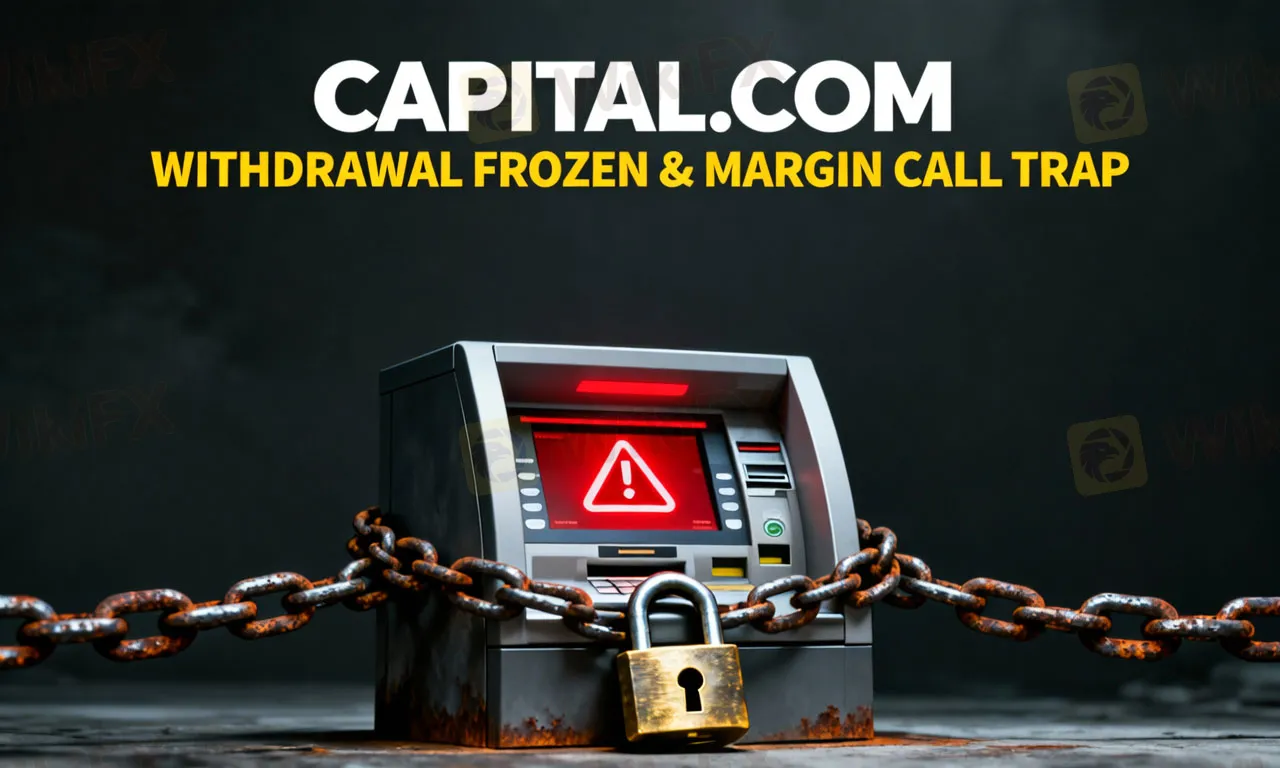
Capital.com is a well-known brokerage established in 2017 with a significant global presence. Headquartered in the Bahamas, the broker has expanded its influence across regions such as the UAE, Australia, and parts of Europe, achieving an “AA” Influence Rank. On the surface, Capital.com presents a robust regulatory framework and a high WikiFX Score of 7.84.
However, recent data indicates a sharp contrast between its regulatory status and user experiences. While the broker holds licenses from top-tier authorities, a surge in complaints regarding withdrawal difficulties and account freezing raises serious questions for potential investors. This review analyzes the safety, regulations, and user feedback associated with Capital.com to help you make an informed decision.
## Is Capital.com Legit? Regulatory Status
One of Capital.com's strongest selling points is its multi-jurisdictional regulation. The broker operates under the oversight of several major financial authorities, ranging from Tier-1 regulators to offshore commissions.
License Overview
| Regulator | Country | License Type | Status |
|---|---|---|---|
| FCA (Financial Conduct Authority) | United Kingdom | Major License | Regulated |
| ASIC (Australian Securities & Investments Commission) | Australia | Major License | Regulated |
| CySEC (Cyprus Securities and Exchange Commission) | Cyprus | Major License | Regulated |
| SCA (Securities and Commodities Authority) | UAE | General | Regulated |
| SCB (Securities Commission of The Bahamas) | Bahamas | Offshore | Offshore Regulation |
| FSA | Seychelles | -- | Revoked |
| NBRB | Belarus | -- | Revoked |
Regulatory Warnings
Despite holding valid licenses in the UK and Australia, Capital.com has faced regulatory headwinds elsewhere.
- Revoked Licenses: The licenses from the Seychelles FSA and Belarus NBRB are currently listed as “Revoked.”
- Investor Warning: The broker has been flagged by the Securities Commission Malaysia (SCM). It was placed on their Investor Alert List for carrying out unlicensed capital market activities (dealing in securities) in Malaysia.
## Exposure: Severe Withdrawal Complaints
While the regulatory background suggests legitimacy, the “Exposure” section reveals a troubling pattern of user complaints. In the last three months alone, WikiFX has received 32 complaints concerning this broker. The reports, coming from regions including China, the USA, South Korea, and Hong Kong, highlight critical issues.
1. Inability to Withdraw Funds
The most frequent complaint involves the refusal of withdrawal requests. Multiple users reported that their withdrawal applications were rejected or remained pending for excessive periods (up to 15 days or more).
2. Demands for Additional Deposits
Several severe complaints describe scenarios where the broker demanded “margin payments” or “security deposits” to unfreeze accounts or process withdrawals.
- High-Risk Behavior: One user detailed being asked to pay a 100% margin deposit ($13,122) within seven days to “verify flow.” After paying, they were allegedly asked for an additional $5,000 to prevent permanent account freezing. This tactic is highly irregular for compliant brokers and is a major red flag.
3. Account Freezing and Verification Loops
Users have reported that their accounts were frozen under the guise of “money laundering” investigations or “insufficient trading flow” (e.g., trading volume not meeting a 3x turnover requirement).
Others faced endless identity verification requests (Source of Funds/SOF), despite having previously verified their accounts.
## Trading Platforms and Software
Capital.com utilizes a mix of proprietary technology and industry-standard software.
- Software Types: The broker supports the MT4 (MetaTrader 4) platform and a self-developed proprietary platform.
- Mobile Focus: The trading experience appears to be heavily focused on mobile users, with apps available for iOS and Android (e.g., “Investmate”, “Capital.com”).
- Limitations: According to the provided summary, the platform experience is rated as “Average.” The summary notes a lack of support for certain desktop environments (Windows/MacOS) for its specific apps, forcing reliance on mobile or standard MT4 interfaces.
- Security: While the software has clear fee reporting and good search functions, it lacks advanced security features like two-factor authentication (2-step login) or biometric authentication for safer logins.
## Pros and Cons of Capital.com
Based on the available data, here is a summary of the broker's strengths and weaknesses:
Pros:
- High Regulatory Oversight: Regulated by top-tier agencies regarding specific entities (FCA, ASIC, CySEC).
- Established History: Operating since 2017 with a high influence index.
- Global Reach: Strong presence in the UAE, Europe, and Australia.
- Trading Software: Offers the popular MT4 platform.
Cons:
- Severe User Complaints: Multiple reports of blocked withdrawals and demands for extra payments.
- Regulatory Warnings: Listed on the Malaysia investor alert list; some licenses revoked (Seychelles, Belarus).
- Offshore Risks: The global entity is headquartered in the Bahamas (Offshore Regulation).
- Platform Limitations: Lacks support for certain desktop operating systems for its proprietary app; missing 2FA security.
## Can You Trust Capital.com? Final Verdict
Score: 7.84 / 10
Capital.com presents a complex case. It possesses the regulatory credentials of a legitimate, top-tier broker (FCA, ASIC), which typically ensures a high level of safety for clients under those specific jurisdictions. However, the volume and nature of recent complaints—specifically those alleging that users must pay “security deposits” to withdraw their own funds—are alarming and inconsistent with the conduct of a regulated entity.
Recommendation:
If you are trading under the UK or Australian entity, you are likely protected by strict laws. However, international clients trading under offshore entities should exercise extreme caution. The reports of frozen accounts and withdrawal denials cannot be ignored.
Stay Safe: Before depositing funds, verify which specific entity of Capital.com you are contracting with. Use the WikiFX app to check the latest complaint logs and regulatory status to protect your capital.

Read more
NaFa Markets User Reputation: A Deep Look into Complaints and Scam Claims
Let's answer the important question right away: Is NaFa Markets safe or a scam? After carefully studying all available evidence, NaFa Markets shows all the typical signs of a fake financial company. We strongly recommend not putting any money with this company. You should avoid it completely. Read on for more revelation about the broker.
Core Prime Exposure: Traders Report Illegitimate Account Blocks & Manipulated Trade Executions
Was your Core Prime forex trading account disabled after generating profits through a scalping EA on its trading platform? Have you witnessed losses due to manipulated trades by the broker? Does the broker’s customer support team fail to clear your pending withdrawal queries? Traders label the forex broker as an expert in deceiving its clients. In this Core Prime review article, we have investigated some complaints against the Saint Lucia-based forex broker. Read on!
NaFa Markets Regulation: A Deep Dive Investigation Exposing a Major Scam
WARNING: Do not put any money into NaFa Markets. Our research shows it has all the signs of a clever financial scam. This platform lies about its legal status and uses tricks that are the same as fake investment schemes designed to steal your funds. When people search for information about NaFa Markets regulation, they need to know the truth: it is fake and made up.
Is NaFa Markets Legit? A Complete Investigation
Our research into NaFa Markets gives us a clear and urgent answer. For anyone asking, "Is NaFa Markets legit?", the answer is definitely no. This platform shows all the typical signs of a fake operation created to steal funds from people who don't know better. We strongly recommend that all traders stay completely away from this platform.
WikiFX Broker
Latest News
ECB Minutes: Service Inflation and Wage Spikes Kill Rate Cut Speculation
 WikiFX
Trade War Averted: Euro Rallies as US Withdraws Tariff Threats
WikiFXYen Volatility Spikes: PM Takaichi Calls Snap Election Amid BoJ 'Hawkish Pause'
WikiFXSticky US Inflation Data Dashes Near-Term Fed Rate Cut Hopes
WikiFXYen Fragility Persists: Inflation Miss Cements BoJ 'Hold' Expectation
WikiFXBoJ "Politically Paralyzed" at 0.75% as Takaichi Calls Snap Election
WikiFX'Bond Vigilantes' Return: JGB Rout Sparks Contagion Fears for US Treasuries
WikiFXZarVista User Reputation: Looking at Real User Reviews to Check Is ZarVista Safe or Scam?
WikiFXGold Fun Corporation Ltd Review 2025: Is This Forex Broker Safe?
WikiFXMONAXA Review: Safety, Regulation & Forex Trading Details
WikiFXRate Calc
