RM310,000 Gone: Jobless Man Duped by “Sure-Win” Investment

Abstract:A 47-year-old unemployed man in Muar lost RM310,000 after a YouTube “high-return” investment led him to an app promoted via WhatsApp, showing fake profits of RM2.5 million before demanding an extra RM382,811.60 in “fees” to withdraw.
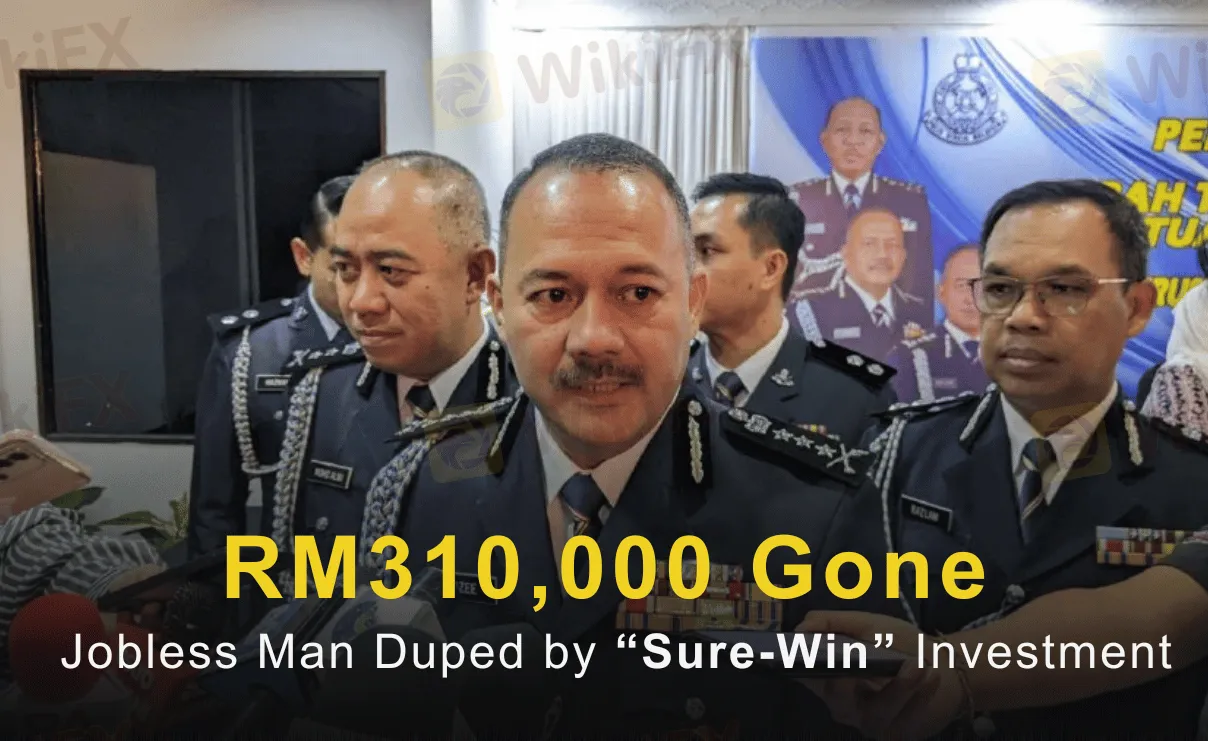
A 47-year-old man in Muar has lost RM310,000—his entire savings—after he was lured by a so-called “high return” investment he saw on YouTube in September. According to district police chief Asst Comm Raiz Mukhliz Azman Aziz, the ad promised quick profits. The victim filled in his details, and soon an unknown “agent” contacted him on WhatsApp, guiding him to download an investment app that supposedly paid 10%–30% depending on how much he put in.
The man, who is currently unemployed and relies only on his savings, made 17 transfers between 10 November and 5 December. Inside the app, his “portfolio” appeared to balloon to more than RM2.5 million—exactly the kind of screen that convinces people to keep topping up. But when he tried to withdraw, the story changed. The scammer demanded an extra RM382,811.60 in “fees” before any payout could be released. That was the moment he realised it was a scam and lodged a report.
Police have opened an investigation under Section 420 of the Penal Code for cheating, which carries a jail term of one to ten years, whipping, and a fine. They‘ve also reminded the public that genuine investment offers don’t start in casual WhatsApp chats, don‘t ask you to transfer money to multiple unrelated accounts, and definitely don’t guarantee double-digit monthly returns.
If youre ever unsure, take five minutes before transferring a single ringgit. Use the Semak Mule portal to check bank accounts that may be tied to scams. Verify licences and warnings on the Securities Commission Malaysia (SC) and Bank Negara Malaysia (BNM) websites. You can also use the WikiFX app to look up brokers, see their regulatory status, read real user reviews, and spot red flags early.
Cases like this often start with hope—a chance to grow savings, clear debts, or help family. Scammers know this. They use slick apps, fake dashboards, and “customer service” chats to keep you depositing more while delaying withdrawals with excuses. If an offer sounds effortless or “too good to be true,” treat it as a warning sign. A quick check now can save a lifetime of savings later.
Read more
BlackBull Markets User Reputation: Looking at Real User Reviews and Common Problems to Judge Trust
When traders ask, "Is BlackBull Markets safe or a scam?", they want a simple answer to a hard question. The facts show two different sides. The broker began operating in 2014 and has a strong license from New Zealand's Financial Markets Authority (FMA). It also has an "Excellent" rating on review sites such as Trustpilot. But when searching for "BlackBull Markets complaints," you find many negative user stories, including withdrawal issues and poor trading conditions. This article goes beyond simple "safe" or "scam" labels. We want to carefully look at both the good reviews and common problems, comparing them with how the broker actually works and its licenses. This fact-based approach will give you the full picture of its user reputation, helping you make your own smart decision.

Is BlackBull Markets Legit? An Unbiased 2026 Review for Traders
Is BlackBull Markets legit? Are the "BlackBull Markets scam" rumors you see online actually true? These are the important questions every smart trader should ask before exposing capital to markets. The quick answer isn't just yes or no. Instead, we need to look at the facts carefully. Our goal in this review is to go beyond fancy marketing promises and do a complete legitimacy check. We will examine the broker's rules and regulations, look at its business history, break down common user complaints, and check out its trading technology. This step-by-step analysis will give you the facts you need to make your own smart decision about whether BlackBull Markets is a good and safe trading partner for you.
A Clear BlackBull Markets Review: Trading Conditions, Fees & Platforms Explained
This article gives you a detailed, fair look at BlackBull Markets for 2026. It's written for traders who have some experience and are looking for their next broker. Our goal is to break down what this broker offers and give you facts without taking sides. We'll look at the important things that serious traders care about: how well they're regulated, what trading actually costs, what types of accounts you can get, and how good their technology is. We're not here to tell you to use this broker - we want to give you the facts so that you can decide if it fits your trading style and how much risk you're comfortable with. Making a smart choice means checking things yourself. Before you pick any broker, you need to do your own research. We suggest using websites, such as WikiFX, to check if a broker is properly regulated and see what other users say about it.
SGFX User Reputation: Is it Safe or a Scam? A Detailed Look at User Complaints
The most important question any trader can ask is whether a broker is legitimate. Recently, SGFX, also called Spectra Global, has been mentioned more often, leading to many questions: Is SGFX Safe or Scam? Is it a safe platform for your capital, or is it another clever online scam? This article will give you a clear, fact-based answer to that question. Read on!
WikiFX Broker
Latest News
Bull Waves Regulation Uncovered: A Deep Look into Their FSA License and Safety
WikiFXOPEC+ Stands Pat: Output Steady Amidst Geopolitical Storm
WikiFXXTRADE Broker Analysis: Understanding XTRADE Regulation & Verified XTRADE Review
WikiFXOil Markets on Edge: OPEC+ Holds Firm Amid Venezuelan Turmoil
WikiFXGeopolitical Shock: Trump's Venezuela Raid Sparks Oil Volatility & Impeachment Threats
WikiFXOne Click, RM1 Million Gone: Penang Retiree’s Social Media Scam Nightmare
WikiFXFed Watch: Paulson See 'Bending' Jobs Market; Yellen Warns of Debt Spirals
WikiFXGlobal Crypto Launch Tax Network to 48 Nations
WikiFXSpanish Regulator Raises Concerns Over Unlicensed Trading Platforms and Messaging-Based Apps
WikiFXOneRoyal Review: A Complete Look at How This Broker Performs
WikiFXRate Calc

