Trive Investigation: High Score, Hidden Risk - The Profit Paradox
Abstract:A disturbing pattern has emerged regarding the broker Trive. Despite holding a high WikiFX score (7.91) and valid licenses in South Africa and Australia, recent investor reports suggest a significant disconnect between the platform's reputation and its treatment of profitable clients. While the regulatory paperwork appears in order, our data indicates that traders are facing sudden account freezes and accusations of "trading abuse" precisely when they attempt to withdraw profits. This report investigates why a seemingly "safe" broker is generating high-risk complaints.
Anonymity Disclaimer: All cases cited in this report are based on real complaints lodged with the WikiFX Exposure Center. To protect the privacy and safety of the victims, specific names and exact locations have been anonymized.
The “Profit” Paradox: Winning Traders Locked Out
For many African investors, the primary fear in the Forex market is encountering a “fly-by-night” operation—a platform with no history and no regulations. Trive does not fit this profile. Established in 2013 and holding a highly respected license from the Financial Sector Conduct Authority (FSCA) in South Africa, Trive presents itself as a fortress of stability.
However, a deeper investigation into the WikiFX complaint logs reveals a troubling narrative that contradicts this image. The issue is not that Trive disappears; it is that they appear to actively penalize success.
The $5,000 “Abuse” Accusation
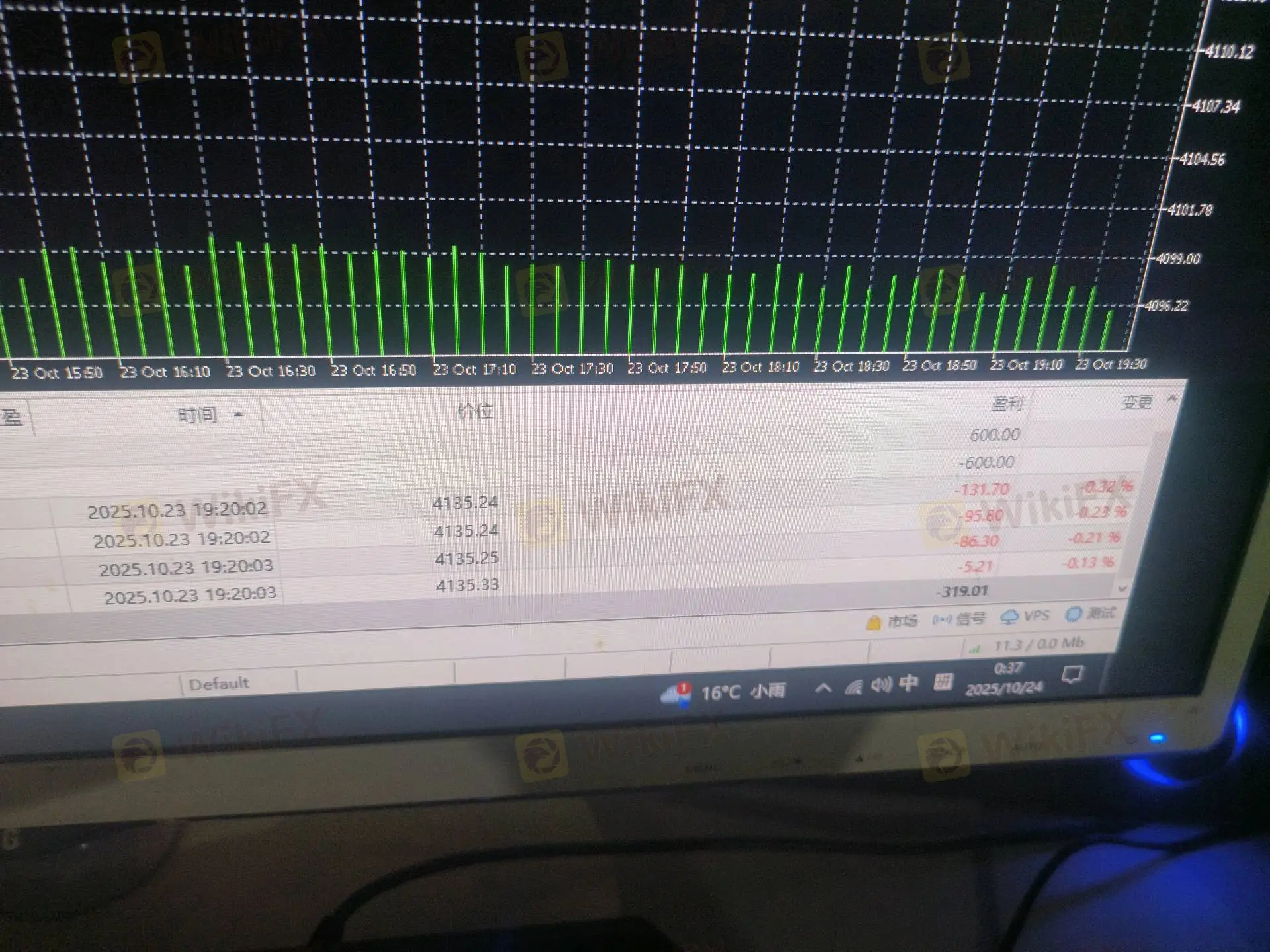
The most alarming case currently under investigation involves an investor who managed to generate a profit of approximately $5,000. According to the records, the trading environment seemed normal until the moment the user requested a payout.
Instead of processing the withdrawal, Trive allegedly canceled the profits and accused the user of “trading abuse.” When the investor requested specific details—evidence of what trade violated which rule—the broker reportedly refused to provide any data, simply citing a violation of terms.
This is a critical red flag known as “The Black Box Rejection.” Legitimate brokers will point to specific timestamps or arbitrage patterns if terms are violated. When a broker withholds funds but refuses to show evidence of the violation, it suggests the “abuse” may simply be that the trader was too profitable.

The Bonus Trap
Another investor reported a sophisticated issue involving trading bonuses. Bonuses are often used as marketing tools to attract African investors looking to boost their margin. However, this user reported that the “bonus” was effectively a trap.
The complaint details that the platform used the terms of the bonus to aggressively close out positions—likely a “stop-out” manipulation where the bonus funds are removed during a drawdown, causing the user's own capital to be liquidated immediately. The user described the bonus as “fake,” noting that it served only to accelerate the loss of their principal investment rather than support their trading.
Regulatory Reality Check: The License Isn't Always Enough
Why would a broker with a 7.91 score and an FSCA license engage in this behavior? The answer often lies in Jurisdiction Arbitrage.
While Trive holds a license in South Africa (which provides comfort to African investors), it also operates through offshore entities. When you sign up, your account may not be contracted with the highly regulated South African entity, but rather with the entity in the Virgin Islands, where protections are significantly weaker.
Here is the full regulatory breakdown of Trive, based on WikiFX's database:
| Regulatory Body | Country/Region | License Status | Meaning for Investors |
|---|---|---|---|
| FSCA (Financial Sector Conduct Authority) | South Africa | Regulated | High safety for SA residents. This is a legitimate, strong license. |
| ASIC (Australian Securities & Investments Commission) | Australia | Regulated | Top-tier regulation. Very strict protections. |
| FSC (Financial Services Commission) | Virgin Islands | Offshore | Lower Protection. This is a common jurisdiction for global clients. Regulations here are looser regarding dispute resolution. |
| MFSA (Malta Financial Services Authority) | Malta | Regulated | Specific to European operations. |
| FCA (Financial Conduct Authority) | United Kingdom | Unverified | High Risk. The broker fails to verify a valid status here, despite the UK being a major financial hub. |
| BAPPEBTI | Indonesia | Unverified | High Risk. The broker does not appear to hold valid authority in this region. |
The Critical Disconnect:
The presence of “Unverified” statuses alongside “Regulated” ones creates a confusing environment.
- The FCA Red Flag: The WikiFX system marks the UK FCA status as Unverified. The FCA is one of the world's strictest regulators. If a broker claims or implies a connection to the UK markets without a verified license, it casts doubt on their overall transparency.
- The Offshore Loophole: The complaints we are seeing likely stem from accounts registered under the Virgin Islands (FSC) license. While legal, this jurisdiction allows brokers more leeway to enforce “Abuse Clauses” that would never hold up under FSCA or ASIC supervision.
Analyzing the “Abuse” Tactic
The $5,000 case mentioned earlier highlights a growing trend in the industry: Generic Abuse Clauses.
In the Terms and Conditions of many brokers, there are vague clauses prohibiting “abusive trading strategies.” Legitimate brokers use this to stop latency arbitrage (cheating the system speed). However, high-risk brokers use these clauses to cancel profits from:
- News trading (profiting from major economic announcements).
- Scalping (holding trades for short periods).
- High-leverage trading that results in a quick win.
If you are an African investor asking “Is Trive safe?”, you must ask yourself: Does my trading style fall into a category they might cancel? The evidence suggests that if you win too quickly or too much, Trive may invoke these clauses to invalidate your success.
WikiFX Intervention
Upon receiving these serious complaints regarding withdrawal problems and fund withholding, the WikiFX exposure team attempted to reach out to Trive's representatives through the contact channels listed (including their South African and UK lines).
Status: No verifiable resolution has been provided for the $5,000 withholding case at the time of writing. The broker has not publicly addressed why the specific evidence of “abuse” was not shared with the client.
Final Verdict: High Score, Hidden Risk
Trive presents a complex case for the African investor. On paper, they appear robust—operating since 2013, offering MT4/MT5 platforms, and holding an FSCA license. This explains their high WikiFX score of 7.91.
However, a high score is based on verified data, not future intentions. The recent influx of complaints regarding profit cancellation indicates a shift in operational behavior.
WikiFX advises the following caution:
- Check your Entity: If you trade with Trive, ensure your account is registered under the South African (FSCA) entity, not the Virgin Islands entity. You have significantly more legal recourse in South Africa.
- Document Everything: If you are profitable, take screenshots of your trade execution times and the charts. If you are accused of abuse, you will need this evidence.
- Test Withdrawals: Do not let profits accumulate. Withdraw frequently to ensure liquidity channels remain open.
While Trive is not an unregulated platform, the user experiences suggest that for profitable traders, the risks may currently outweigh the benefits of their regulatory status.
WikiFX Risk Warning
Forex and CFD trading involve a high level of risk and may not be suitable for all investors. The leverage associated with these instruments can work against you as well as for you. Before deciding to trade, you should carefully consider your investment objectives, level of experience, and risk appetite. There is a possibility that you could sustain a loss of some or all of your initial investment. WikiFX provides broker information for reference purposes only and does not constitute financial advice.

Read more
BlackBull Markets User Reputation: Looking at Real User Reviews and Common Problems to Judge Trust
When traders ask, "Is BlackBull Markets safe or a scam?", they want a simple answer to a hard question. The facts show two different sides. The broker began operating in 2014 and has a strong license from New Zealand's Financial Markets Authority (FMA). It also has an "Excellent" rating on review sites such as Trustpilot. But when searching for "BlackBull Markets complaints," you find many negative user stories, including withdrawal issues and poor trading conditions. This article goes beyond simple "safe" or "scam" labels. We want to carefully look at both the good reviews and common problems, comparing them with how the broker actually works and its licenses. This fact-based approach will give you the full picture of its user reputation, helping you make your own smart decision.

Is BlackBull Markets Legit? An Unbiased 2026 Review for Traders
Is BlackBull Markets legit? Are the "BlackBull Markets scam" rumors you see online actually true? These are the important questions every smart trader should ask before exposing capital to markets. The quick answer isn't just yes or no. Instead, we need to look at the facts carefully. Our goal in this review is to go beyond fancy marketing promises and do a complete legitimacy check. We will examine the broker's rules and regulations, look at its business history, break down common user complaints, and check out its trading technology. This step-by-step analysis will give you the facts you need to make your own smart decision about whether BlackBull Markets is a good and safe trading partner for you.
A Clear BlackBull Markets Review: Trading Conditions, Fees & Platforms Explained
This article gives you a detailed, fair look at BlackBull Markets for 2026. It's written for traders who have some experience and are looking for their next broker. Our goal is to break down what this broker offers and give you facts without taking sides. We'll look at the important things that serious traders care about: how well they're regulated, what trading actually costs, what types of accounts you can get, and how good their technology is. We're not here to tell you to use this broker - we want to give you the facts so that you can decide if it fits your trading style and how much risk you're comfortable with. Making a smart choice means checking things yourself. Before you pick any broker, you need to do your own research. We suggest using websites, such as WikiFX, to check if a broker is properly regulated and see what other users say about it.
SGFX User Reputation: Is it Safe or a Scam? A Detailed Look at User Complaints
The most important question any trader can ask is whether a broker is legitimate. Recently, SGFX, also called Spectra Global, has been mentioned more often, leading to many questions: Is SGFX Safe or Scam? Is it a safe platform for your capital, or is it another clever online scam? This article will give you a clear, fact-based answer to that question. Read on!
WikiFX Broker
Latest News
Bull Waves Regulation Uncovered: A Deep Look into Their FSA License and Safety
 WikiFX
OPEC+ Stands Pat: Output Steady Amidst Geopolitical Storm
WikiFXXTRADE Broker Analysis: Understanding XTRADE Regulation & Verified XTRADE Review
WikiFXOil Markets on Edge: OPEC+ Holds Firm Amid Venezuelan Turmoil
WikiFXGeopolitical Shock: Trump's Venezuela Raid Sparks Oil Volatility & Impeachment Threats
WikiFXOne Click, RM1 Million Gone: Penang Retiree’s Social Media Scam Nightmare
WikiFXFed Watch: Paulson See 'Bending' Jobs Market; Yellen Warns of Debt Spirals
WikiFXGlobal Crypto Launch Tax Network to 48 Nations
WikiFXSpanish Regulator Raises Concerns Over Unlicensed Trading Platforms and Messaging-Based Apps
WikiFXOneRoyal Review: A Complete Look at How This Broker Performs
WikiFXRate Calc

