Fidelity Launches Strategic US Small-Cap Fund
Abstract:Fidelity International unveils the US Smaller Companies Fund, targeting domestic small-cap opportunities through a risk-managed equity strategy with growth potential beyond large technology.

Fidelity International has introduced the Fidelity Funds 2 - US Smaller Companies Fund, marking a strategic expansion into the under-analyzed domestic US market exposure segment. The UCITS Luxembourg SICAV targets long-term capital appreciation through concentrated investments in US small companies demonstrating superior financial characteristics and attractive valuations.
Investment Strategy and Structure
The fund employs a risk-managed equity strategy designed to capture upside potential while maintaining valuation discipline during market downturns. Portfolio manager Forrest St. Clair leads the investment approach, supported by Fidelity Investments' extensive research capabilities and analytical framework. The strategy allocates at least 70% of assets to equities of companies listed, headquartered, or conducting primary business operations within the United States.
Sub-managed by Fidelity Investments under Fidelity International's management structure, the fund leverages the independent US company's specialized expertise in domestic market-oriented businesses. This collaborative approach combines institutional research depth with focused portfolio construction targeting overlooked small-cap opportunities in the American equity landscape.
Market Positioning and Diversification
The fund addresses concentration risk prevalent in large-cap tech sectors by providing diversification beyond technology-heavy market segments. US small-cap stocks represent an under-analyzed investment universe offering potential alpha generation through the identification of underestimated growth situations. Dennis Pellerito, head of wholesale UK at Fidelity International, emphasizes the fund's role in enhancing risk-adjusted returns through complementary exposure to large-cap investments.
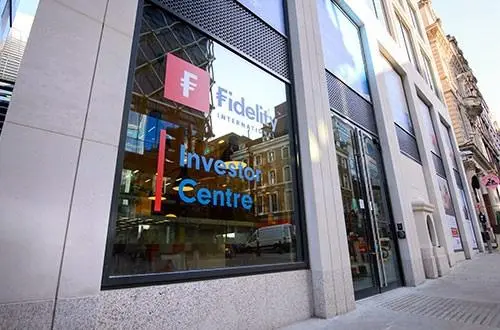
Domestic US market exposure particularly benefits from the current trade policy environment, which favors shorter supply chains and reduced international dependencies. The fund targets companies positioned to capitalize on America-first policies and increased domestic production incentives emerging under the current presidential administration.
Manager Expertise and Track Record
Forrest St. Clair brings over 25 years of investment experience to the fund management role, having overseen the small company strategy since 2009. His background includes co-founding Skystone Capital Management and holding various portfolio management positions within Fidelity's institutional framework. St. Clair earned his Bachelor of Arts in biology from Williams College and currently manages multiple small-cap discovery funds within Fidelity's Global Institutional Solutions group.
The portfolio manager operates within Fidelity's Asset Management Solutions division, which specializes in meeting institutional marketplace requirements through integrated investment and client service capabilities. His tenure includes primary management responsibilities for the Fidelity Small Cap Discovery Fund and Series Small Cap Discovery Fund since 2023.
Market Outlook and Opportunity
Current market conditions present compelling fundamentals for US small-cap investment strategies heading into 2025 and beyond. Historical data indicate small-cap stocks typically outperform large-caps by over 6 percentage points during Federal Reserve rate-cutting cycles, with benefits stemming from lower interest coverage ratios and floating-rate debt exposure. Year-over-year earnings growth projections for the Russell 2000 Index exceed 20% through mid-2026, potentially providing fundamental catalysts for sustained performance.
Valuation discipline in downturns becomes particularly relevant given current market dynamics, where small-cap stocks trade at significant discounts compared to large-cap counterparts. Merger and acquisition activity acceleration historically correlates with small-cap gains approaching 16%, a trend beginning to emerge in 2025 market conditions.
About Fidelity International: Fidelity International offers investment solutions and retirement expertise to institutions, individuals, and advisers globally, managing $862 billion in client assets across 25+ countries as a privately-held, employee-owned company with 50+ years of heritage.


Read more

Score Capital Markets Ltd 2026 Review: Gateway or Trap?
Comprehensive 2026 review of Score Capital Markets Ltd forex broker (scorecm.com): An in-depth analysis of offshore regulatory risks, WikiFX safety scores, trading conditions, and South Asian investor security.

Client Saved via WikiFX Exposure ! Is slay4x Considered a Safe Broker or a Scam in Q4 2026?
Is slay4x Considered a Safe Broker or Suspected of Being a Scam in Q4 2026? Read our detailed analysis on withdrawal delays, regulatory risks, and South Asian trader reviews.

Bangladesh's BICM Hosts World Investor Week Seminar on Fraud Prevention
The Bangladesh Institute of Capital Market (BICM) marked World Investor Week with a seminar on investor awareness and fraud prevention, where speakers urged investors to make informed, self-directed decisions and to treat the capital market as a place for long-term investment. The event was reported by The Business Standard on 11 October 2026, citing a press release.

Indian Police Arrest Two in Alleged ₹10 Crore Crypto Investment Fraud
Police in Adilabad, in the southern Indian state of Telangana, have arrested two men in connection with an alleged cryptocurrency investment fraud that investigators say cheated around 500 people across Telangana and Andhra Pradesh of roughly ₹10 crore. The Adilabad One Town police said the arrests were made on Sunday, October 11, 2026, and that two mobile phones and documents relating to two properties allegedly linked to the accused were seized.
WikiFX Broker
Latest News
CMC Markets Secures LSEG Data Deal to Accelerate Global Expansion
 WikiFX
First Light News: US CPI, Aussie Jobs and Bank Earnings in Focus
WikiFXU.S. Dollar Pulls Back From Yearly Highs: Analysis For EUR/USD, GBP/USD, USD/CAD, USD/JPY
WikiFXIndian Police Arrest Two in Alleged ₹10 Crore Crypto Investment Fraud
WikiFXED Files Charge Sheet in Nexa Evergreen Investment Case Involving Rs 2,676 Crore
WikiFXUS Dollar Price Forecast: DXY Eyes 102.49, Can EUR/USD Hold 1.1180 Ahead of CPI?
WikiFXScore Capital Markets Ltd 2026 Review: Gateway or Trap?
WikiFXFirst Light News: Chip Rout Rattles Equities as Q3 Earnings Season Kicks Off
WikiFXClient Saved via WikiFX Exposure ! Is slay4x Considered a Safe Broker or a Scam in Q4 2026?
WikiFXRM12.47 Million in Cryptocurrency Vanishes From Malaysian Man’s Wallet
WikiFXRate Calc
