No Regulation, Revoked Licence: Is Tradehall Safe to Use?
Abstract:In the fast-growing world of online trading, safety and regulation must always come first. Traders need to choose brokers that are properly licensed and follow the rules. Sadly, not all brokers meet these standards, and Tradehall is a clear example of this.
In the fast-growing world of online trading, safety and regulation must always come first. Traders need to choose brokers that are properly licensed and follow the rules. Sadly, not all brokers meet these standards, and Tradehall is a clear example of this.
According to WikiFX, a global platform that checks brokers and their regulatory status, Tradehall has a very low WikiScore of just 2.17 out of 10. This score reflects serious concerns about how the broker operates, and it should not be ignored by anyone thinking about using their services.
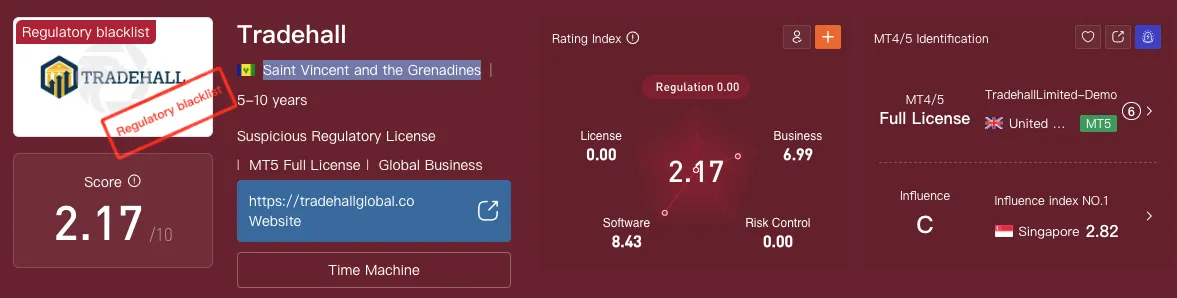
Tradehall is registered in Saint Vincent and the Grenadines, a location known for having no clear financial regulation for forex or trading brokers. While its legal to register a company there, being based in such a location usually means the broker is not properly supervised. This raises a major red flag for potential traders.
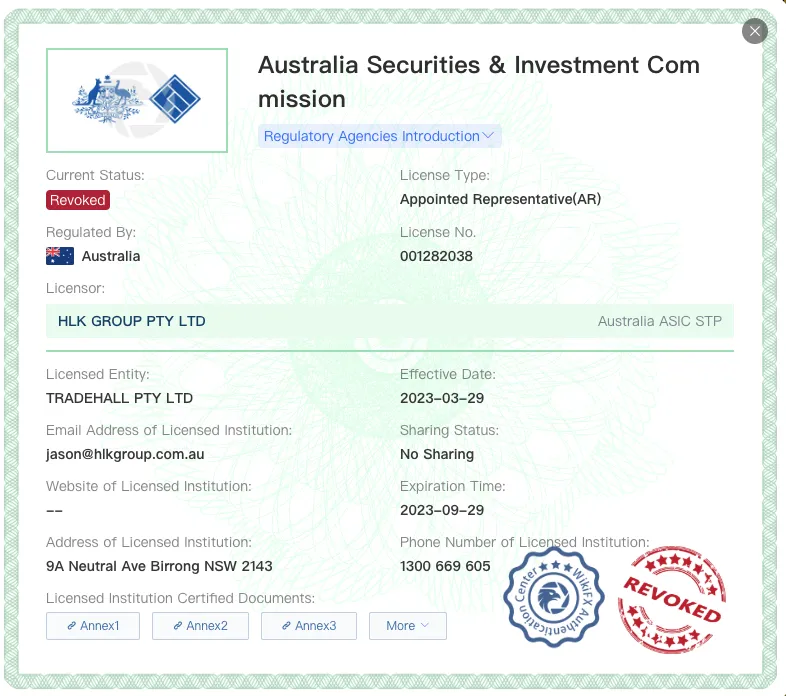
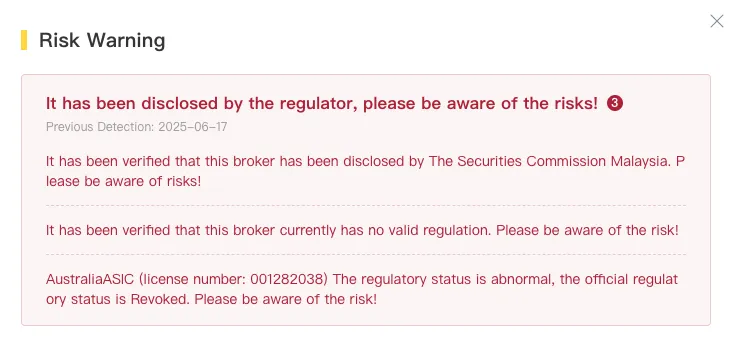
Even more worrying is the broker‘s licence history in Australia. Tradehall was previously listed under the Australian Securities and Investments Commission (ASIC) with licence number 001282038. However, this licence has now been revoked. This means the broker is no longer authorised to operate under Australia’s financial laws, which are known for being strict and protective of clients.
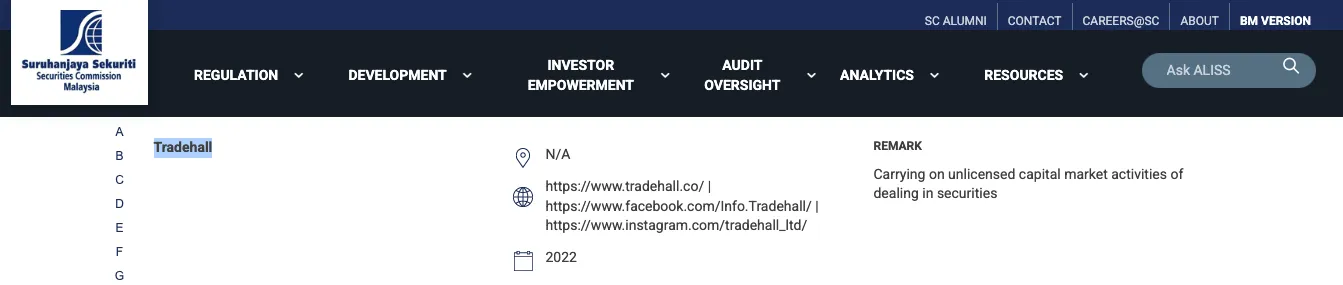
Adding to the concerns, the Securities Commission of Malaysia has also issued a warning about Tradehall. This means the broker has been flagged by another national authority, again urging the public to be careful.
Importantly, it has been confirmed that Tradehall currently holds no valid licence with any recognised financial authority. Without a licence, there is no legal guarantee that the broker follows fair trading practices or keeps client funds safe. Traders who use such brokers face much higher risks, including fraud, unfair pricing, or losing access to their money.
This situation should act as a clear reminder: just because a broker has a website or offers a trading platform doesn‘t mean it’s safe. Always check where a broker is registered, what licences it holds, and whether those licences are still active.
To sum up, Tradehall shows multiple warning signs, including a revoked licence, registration in an unregulated country, and official warnings from regulators. Traders should stay away from brokers with these kinds of issues. Do not take these red flags lightly. Your money and your safety depend on it.
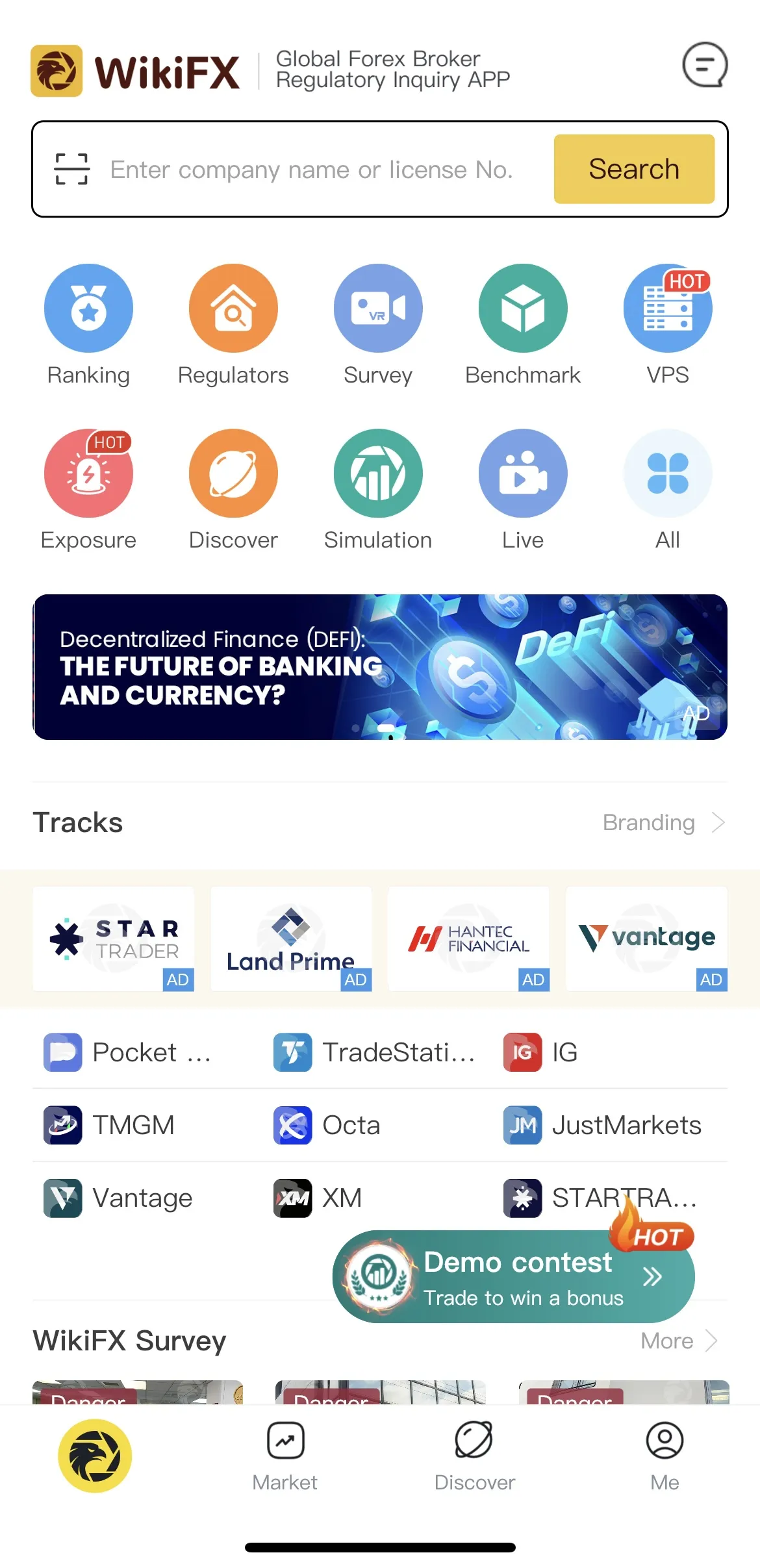
Traders and investors can also use a free mobile application called WikiFX, which plays a crucial role in verifying the legitimacy of brokers and financial platforms. WikiFX provides an extensive database of global broker profiles, regulatory status updates, and user reviews, enabling users to make informed decisions before committing to any financial investment. Its risk ratings and alerts for unlicensed or suspicious entities help investors identify red flags and avoid potential scams. By leveraging tools like WikiFX to research a brokers background, individuals can safeguard their savings and minimise the risk of falling victim to fraudulent schemes.


Read more
capital.com Review 2026: Traders Report Alleged Trade Manipulation & Withdrawal Concerns
Did you have to pay extra fees to recover your deposited funds on capital.com, a Bahamas-based brokerage entity? Were you denied withdrawals in the name of an invalid account? Did the broker fail to respond to your withdrawal requests for weeks? Faced losses due to alleged slippage and stop-loss errors? This capital.com review investigates user allegations and shares how the broker's regulatory structure appears.
One X Post, 12 Likes: A Trump Tariff Warning Aimed at Indian Markets
A vital post contains three separate assertions, and only the first is about trade policy. One, that Trump will impose large tariffs on India over Russian crude purchases. Two, that the H-1B visa action taken on the day of the post is the first in a sequence. Three, that Indian equities and the rupee are exposed to both. There is no figure attached to "large," no indication of which Indian exports would be covered, and no timeline other than the 3 November election date the post itself cites. The H-1B reference is equally bare.
FBS Regulation Checks Before Choosing the Company Behind an Account
FBS regulation should be checked against the company named in an account agreement, not a brand-level statement alone. The FBS About page archived on 24 September 2026 describes operations under several local licences. That statement does not identify the provider for every applicant in South Asia. Before using an FBS login link to apply or submit documents, establish which company would contract with you and what the relevant authorisation covers.
RBI Vows to Steady 'Undervalued' Rupee After It Hits Five-Month Low
The Reserve Bank of India (RBI) said on Wednesday it would ensure that the "undervalued" rupee finds its correct level, after the currency slid to a five-month low of 96.8450 per dollar. The central bank also raised its policy rate by 25 basis points, its first tightening since February 2023, but the rupee still weakened as foreign capital flowed out of Indian markets.
WikiFX Broker
Latest News
Sri Lanka's NDB Bank Fraud Losses Rise to Rs. 13.6 Billion as Final Audit Flags Governance Failures
 WikiFX
Doctor Loses RM300,000 in an Investment That Promised 10% Monthly Returns
WikiFXOil Turned on Its Vertex Day: What It Means for Gold
WikiFXShareflo Finds 33,675 UK Companies Behind on Filings as Director ID Checks Take Effect
WikiFXFBS Regulation Checks Before Choosing the Company Behind an Account
WikiFXGold and Silver Bounce After Trump Rules Out Pre-Election Strikes
WikiFXLuxury Brand Owner Shot Dead After Losing US$100 Million in Trading Last Month
WikiFXOil, Yields and French Debt Keep Global Markets Under Pressure
WikiFXTag Markets Broker Review: Regulated but Is It Safe for Traders?
WikiFXInflation fears on the rise as one-year outlook in Fed survey hits highest level since May 2023
WikiFXRate Calc
