NVIDIA Earnings Incoming: Alpari’s Insights Ahead of the Curve
Abstract:As NVIDIA’s earnings approach, Alpari offers its forecast on potential market reactions, suggesting that this event could be a key variable in moving U.S. equity markets.

About Alpari
Founded in 1998, Alpari is one of the worlds most recognized forex and CFD brokers, having served over 2 million clients globally. The platform offers a diverse range of trading instruments, including forex, indices, commodities, cryptocurrencies, and U.S. stock CFDs. Backed by years of experience in financial services and data analytics, Alpari is committed not only to providing traders with a wide array of tools, but also to offering forward-looking research through its dedicated market analysis team.
Amid the global AI boom, Alpari pays close attention to developments among leading tech companies. NVIDIA, as a major player in the sector, remains under Alparis close watch, especially regarding its earnings, technological updates, and the broader macroeconomic landscape.
Alpari‘s Expectations for NVIDIA’s Earnings
Alpari‘s research team believes NVIDIA’s upcoming FY2026 Q1 earnings release is a pivotal event for global investors. Current consensus estimates suggest that NVIDIA may post $43.3 billion in quarterly revenue, representing a 66.3% year-on-year increase.
However, despite the impressive figures, Alpari flags a noteworthy concern: this could be NVIDIAs slowest revenue growth in nearly two years. While net profit is expected to hit $23.17 billion and EPS $0.88—both remaining at high levels—growth momentum has clearly begun to moderate compared to recent quarters.
Alpari emphasizes that investors are shifting their focus from “how big the numbers are” to “how fast growth is slowing.” Especially with AI hardware demand potentially entering a more stable phase, the forward guidance in this earnings report may matter more than ever before.
Alparis Forecast for NVIDIA Stock
From a technical perspective, Alpari notes that NVIDIA has rebounded strongly since early April, gaining over 58% and breaking above its prior downtrend line. With a current market cap of $3.3 trillion, the stock is once again in a bullish structure.
However, Alpari cautions that the current lofty valuation reflects extremely high market expectations. If earnings fail to surpass estimates or forward guidance turns cautious, it could trigger short-term profit-taking.
Based on implied volatility in the options market, Alpari anticipates a post-earnings price move of around 6.8%. Two core scenarios are highlighted: if earnings and guidance exceed expectations, the stock may break past its 2024 high of $144, opening further upside potential. Conversely, if results disappoint or geopolitical risks remain a concern, the price could retest $126, potentially dragging down broader tech indices.
What Should Investors Make of This?
Alpari advises investors to take a well-rounded view when analyzing this earnings report, focusing not only on revenue and profit figures, but also on two critical factors:
Is growth deceleration continuing? The AI industry is transitioning from explosive expansion to a more stable phase. Any signs that demand is peaking could prompt capital rotation.
Performance in overseas markets and expansion strategy: Particularly in Asia, NVIDIAs shipment performance and future plans will offer insight into its global strategy.
In the short term, investors can leverage Alpari‘s technical insights and options-based volatility projections to set clear stop-loss and take-profit levels in preparation for potential post-earnings volatility. Long-term investors, meanwhile, should focus more on NVIDIA’s prospects in AI hardware, software ecosystems, and strategic partnerships with major global data centers.
Why Do Earnings Reports Move Markets?
Earnings season is a sensitive time for financial markets. For investors, earnings reports are not just quarterly scorecards—they're critical for forecasting future trends. Reports from major tech companies like NVIDIA, Apple, and Microsoft often serve as barometers for their sectors and even the broader market.
First, earnings reveal the health of a companys fundamentals. Key metrics such as revenue, net income, gross margin, and EPS help assess how a business is performing under current economic conditions. Results that beat expectations usually lift stock prices, while misses can prompt institutional rebalancing and market turbulence.
Second, forward-looking commentary from company executives is closely watched. Even strong current results may not satisfy markets if guidance is cautious. Thats because investors care more about the sustainability of growth than any one quarter's performance.
Third, the earnings of industry leaders can have systemic effects. As the dominant AI hardware provider, NVIDIAs results often influence related sectors—like chipmakers, server manufacturers, and data center operators. Disappointing numbers can trigger sector-wide pullbacks and weigh on tech-heavy indexes like the Nasdaq 100.
Finally, institutional investors often rotate capital during earnings season, making it a crucial moment for shifts in fund flows. A miss on EPS might lead to immediate selling by funds, while stronger-than-expected results could attract fresh capital.
In this context, understanding earnings data and reading between the lines of market expectations is an essential skill for modern investors. Brokers like Alpari play a vital role by offering clear, data-driven insights to help clients navigate the information-heavy earnings season.
For more information on brokers, feel free to visit our official website (https://www.WikiFX.com/en) or download the WikiFX App to help you find the most trustworthy broker and ensure your trading experience is safer and more reliable.


Read more
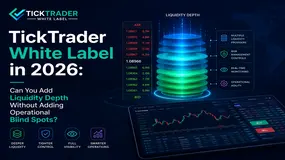
TickTrader White Label in 2026: Can You Add Liquidity Depth Without Adding Operational Blind Spots?
A TickTrader white label can look like the fastest route to a modern branded trading environment, but a fast launch is not the same as a controlled launch. This 2026 broker guide explains what the TickTrader platform is, where a Soft-FX broker solution can sit in a wider operating stack, and how to evaluate the difference between a white label, a server licence, and a connected CRM or Client Office setup. It also unpacks TickTrader cost beyond the monthly headline, including implementation, integration, support, data, governance, migration, and exit assumptions. Use the practical questions, workflow tests, comparison table, and launch checklist to assess a Soft-FX TickTrader provider without mistaking a feature demo for evidence that your brokerage can run the service safely at scale.
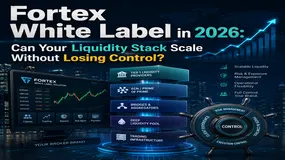
Fortex White Label in 2026: Can Your Liquidity Stack Scale Without Losing Control?
A Fortex white label can look like the fastest route to a modern branded trading environment, but a fast launch is not the same as a controlled launch. This 2026 broker guide explains what the Fortex platform is, where a Fortex broker solution can sit in a wider operating stack, and how to evaluate the difference between a white label, a server licence, and a connected CRM or Client Office setup. It also unpacks Fortex cost beyond the monthly headline, including implementation, integration, support, data, governance, migration, and exit assumptions. Use the practical questions, workflow tests, comparison table, and launch checklist to assess a Fortex provider without mistaking a feature demo for evidence that your brokerage can run the service safely at scale.

Perry Warjiyo Resigns: Why the Rupiah Moved Above Rp18,000 per US Dollar
Perry Warjiyo resigned as Bank Indonesia governor, Destry Damayanti became acting governor, and the rupiah traded above Rp18,000. Here is what forex traders should monitor next.
MT4 White Label Cost in 2026: What Brokers Must Budget Beyond the Platform Fee
The visible fee in an MT4 white label proposal is rarely the real cost of operating it. For an existing broker, the decision is not simply whether an MT4 white label platform is “cheap” or “expensive.” The real question is whether the commercial model remains viable after integration, support, data, client migration, compliance, and exit costs are included. That is why an MT4 white label cost review should be built as a 24- to 36-month operating case. It should compare three credible choices: 1. Keep the present MT4 setup and improve its weakest controls. 2. Replace the MT4 white label provider but retain the client proposition. 3. Migrate selected clients or products to another platform while running MT4 in parallel. This guide explains how to build that case without relying on headline prices or generic vendor claims.
WikiFX Broker
Latest News
57 Booked in Pune Forex Scam Probe: The Fake Trading App Checklist Every Indian Investor Needs
 WikiFX
FxPro Review: Is This 1.80-Rated Broker Safe for Your Funds?
WikiFXRazor Markets Review: What Traders Should Know Before Depositing
WikiFXAGILE GLOBAL LIMITED Review: What Traders Should Know Before Depositing
WikiFXMASTER MIND CAPITALS Review: Withdrawal Complaints Pile Up Against This Unregulated Broker
WikiFXMangaluru Woman, 61, Loses Rs 16.2 Lakh in Facebook Scheme
WikiFXATFX Trading Volumes Drop 29% After Record Q1
WikiFXWhy a 90% Win Rate Can Still Lose You Money
WikiFXAI GOLD Review: Is Your Deposit Safe?
WikiFXFD Review: What Traders Should Know Before Depositing
WikiFXRate Calc

