Fortuno Markets Exposed: Unregulated Broker Engaging in Fraud
Abstract:Fortuno Markets falsely claims NFA regulation. Unlicensed, with no physical offices found. Traders report scams, vanished funds, and withdrawal issues.
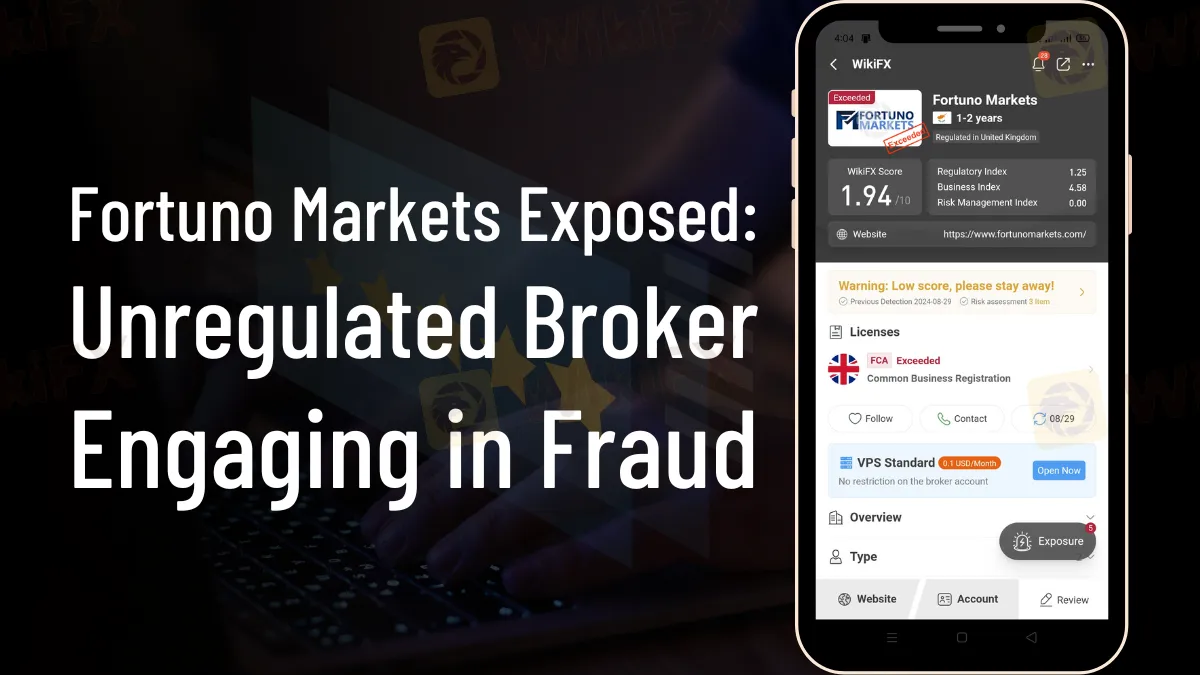
Fortuno Markets, a broker that claims to offer a wide array of trading instruments, including Forex, Metals, Indices, and Cryptos, has recently come under scrutiny for its dubious operations. Despite its bold claims of being regulated by the National Futures Association (NFA), a simple search on the NFAs official website reveals no records of this broker. This blatant misrepresentation is just the beginning of a series of red flags that potential investors should be aware of.
False Regulatory Claims and Nonexistent Offices
Fortuno Markets touts itself as a trustworthy entity, boasting of regulatory oversight and two registered offices—one in Saint Lucia and another in the United Kingdom. However, upon closer investigation, it appears these offices are nothing more than paper entities. The WikiFX Survey team found no physical presence at either of these locations, further suggesting that Fortuno Markets operates without any genuine infrastructure.

Dysfunctional Website and Unresponsive Support
Another glaring issue with Fortuno Markets is its poorly maintained website. Key navigational elements need to be more functional, indicating a lack of professionalism and possibly a tactic to avoid scrutiny. For a company that supposedly handles significant financial transactions, this is a major red flag.
Alarming Customer Feedback: Fraud and Vanishing Funds
The most concerning aspect of Fortuno Markets is the feedback from traders who have used their platform. Reports to WikiFX support describe instances of disappearing funds and the inability to withdraw money. These experiences are not isolated; multiple traders have reported similar issues, suggesting a pattern of fraudulent activity designed to exploit unsuspecting investors.

Fortuno Markets presents itself as a reliable broker with a diverse portfolio of trading instruments, but the reality appears to be far more sinister. Unregulated, unlicensed, and with no legitimate offices, the broker is likely engaging in fraudulent activities. Potential investors should steer clear of Fortuno Markets to avoid falling victim to their schemes.
Expose the corrupt actions of Fortuno Markets that have duped countless traders. Visit the Fortuno Markets page on WikiFX to reveal the full scope of their fraud.


Read more
Is TradingPRO Safe? FCA Warning, Indonesia Blocklist Evidence, and 7 Checks Before You Deposit
This Trading Pro broker review checks the FCA warning, Indonesia blocklist evidence, licence claims, and what South Asian users should verify before depositing.
MT4 White Label Cost in 2026: What Brokers Must Budget Beyond the Platform Fee
The visible fee in an MT4 white label proposal is rarely the real cost of operating it. For an existing broker, the decision is not simply whether an MT4 white label platform is “cheap” or “expensive.” The real question is whether the commercial model remains viable after integration, support, data, client migration, compliance, and exit costs are included. That is why an MT4 white label cost review should be built as a 24- to 36-month operating case. It should compare three credible choices: 1. Keep the present MT4 setup and improve its weakest controls. 2. Replace the MT4 white label provider but retain the client proposition. 3. Migrate selected clients or products to another platform while running MT4 in parallel. This guide explains how to build that case without relying on headline prices or generic vendor claims.

The Rise of Deepfake Investment Scams: ASIC Shares Key Warning Signs
Artificial Intelligence (AI) has grown remarkably recently. However, it has also amplified the scope for financial fraud. One such is the rapid use of deepfake technology involving AI-generated videos, images and audio clips imitating real people. Fraudsters are leveraging these technologies to impersonate financial advisers, celebrities, business leaders and government officials to lure victims into fake investment schemes. Understanding the emerging implications, the Australian Securities and Investments Commission (ASIC) has cautioned investors of investment avenues promoted through convincing AI-generated content. Seemingly authentic, deepfakes are designed to manipulate trust and make people transfer funds before authenticating the investment’s legitimacy.

Best White Label Trading Platform 2026
The decision to switch white label providers or migrate to a modern white label trading platform is no longer a luxury for growth-minded brokers—it's a strategic necessity for survival in 2026. The convergence of technological stagnation, regulatory evolution, and shifting client expectations has created a perfect storm.
WikiFX Broker
Latest News
Alpari Review 2026: Official Warnings and High Complaint Patterns
 WikiFX
M4Markets Broker Review: Regulation, Licenses and WikiScore Analysis
WikiFXTHINK MARKETS Broker Might Not Want You To See This
WikiFXFBS Review: Is Your Deposit Safe?
WikiFXPocket Broker Review: Can You Actually Withdraw Your Money?
WikiFXThe broker test: What black swans teach about real risk control
WikiFXHow to Lock In Profits and Create a Zero-Risk Trade
WikiFXIG Review: Broker Complaints Collide With Mixed Regulation Signals
WikiFXHow to Spot Your First Trial Short on H1 After a Break
WikiFXSTARTRADER Adds SK Hynix CFD Days After $26.5B US Listing
WikiFXRate Calc

