TradeZero America Fined $250K by FINRA for Rule Violations
Abstract:TradeZero America faces a $250K fine from FINRA for improper social media promotions, inadequate supervision, and misleading privacy notices.
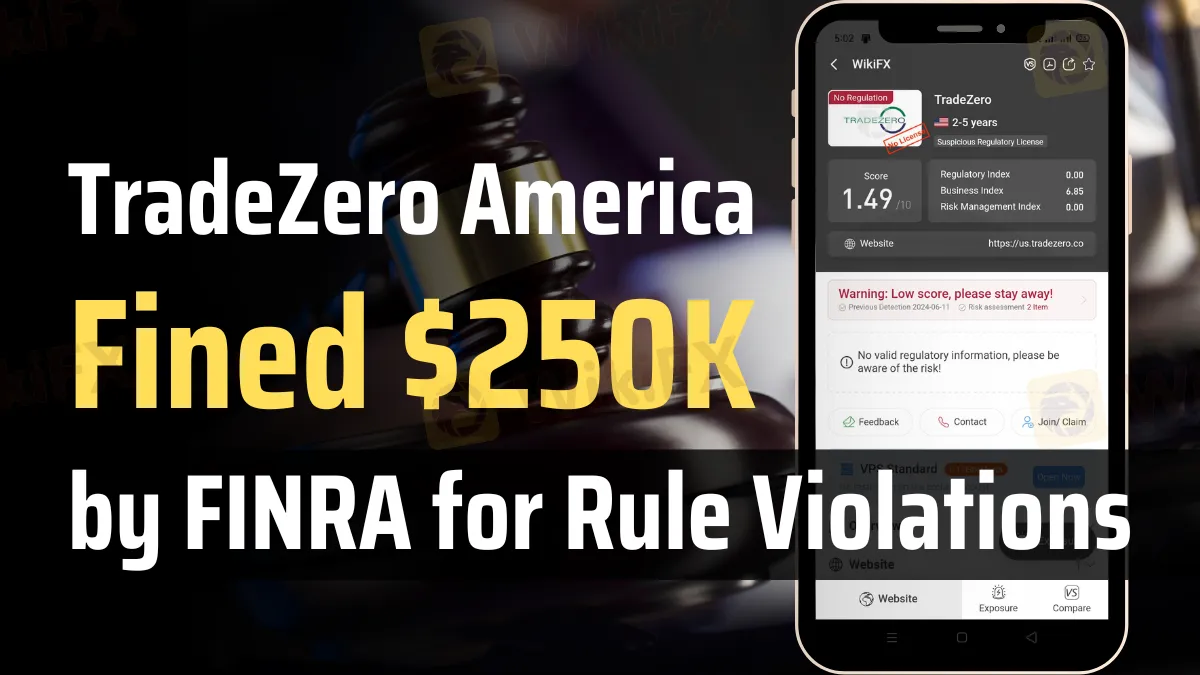
The Financial Industry Regulatory Authority (FINRA) fined TradeZero America, Inc. $250,000 for many regulatory violations. Infractions involving the company's use of social media influencers to market its services occurred between July 2020 and October 2022.
At the time, TradeZero America was paying popular people on social media to promote their business. Nevertheless, these advertisements often included inflated claims and lacked objectivity. Not following FINRA Rules 2210(d)(1) and 2010 brought attention to major supervision issues at the company.
Worse still, neither did TradeZero America evaluate nor save the influencers' films prior to their online release, and neither did it keep tabs on nor save any posts made in participatory online forums. This oversight violated the firm's responsibilities as outlined in Section 17(a) of the Securities Exchange Act of 1934, Exchange Act Rule 17a-4(b)(4), and many FINRA rules, such as 2210(b), 4511, 3110, and 2010.
In addition, tradeZero America sent out misleading privacy alerts to clients in 2020 and 2022 about the use of nonpublic personal information. The Securities Exchange Act of 1934's Regulation S-P, Rule 4 (17 CFR § 248.4) and FINRA Rule 2010 were also violated by this misstatement.

These infractions occurred because the company failed to properly design and enforce supervisory procedures for retail communications. These compliance failures were so serious that FINRA censured the company and fined them $250,000.
Without accepting or rejecting the conclusions, TradeZero America has agreed to the censure and penalties as components of the settlement. This resolution highlights the significance of strict regulation and compliance in the financial services industry, especially with regard to contemporary advertising platforms such as social media.
The regulatory body's decision to take action against TradeZero America should serve as a strong warning to other companies about the significance of following the laws in order to keep public communications fair and open.
About FINRA
A non-governmental agency known as the Financial Industry Regulatory Authority (FINRA) is responsible for overseeing broker-dealers in the United States. Under the auspices of the SEC, FINRA has been in operation since 2007 with the goals of safeguarding investors and maintaining honest markets. Registration and education of industry participants, compliance examinations of businesses, enforcement of rules and securities laws, and monitoring of trading activity are FINRA's primary tasks. The goal of FINRA's rule enforcement and transparency initiatives is to increase public confidence in the financial markets. Investors and brokers may take use of the organization's arbitration and mediation services to settle issues.
You may also access the latest news in the financial market here.


Read more
KAMA Capital Review: Do Traders Lose Due to Slippage & Inappropriate Liquidation?
Looking to trade through KAMA Capital, a Mauritius-based forex broker? You must read user reviews concerning fund safety with this brokerage entity. The company, which has been around for two-five years, has received some negative reviews recently for its several trading activities. Users have reported these experiences on broker review platforms such as WikiFX. The negative KAMA Capital reviews highlight serious slippage issues, coupled with inappropriate liquidation issues. The article aims to provide a clear picture of these user allegations along with a regulatory overview of the broker. This will help you make an informed trading decision. Read on!
MTRADING User Reputation: A Deep Look into Real Complaints and Warning Signs
When traders look for information about a broker, their biggest worry is always capital safety. The question, "Is MTRADING safe or scam?" gets right to the point. Based on checkable information from worldwide broker regulatory websites, the answer comes with serious warnings. MTRADING operates with major warning signs, especially a status of "No Regulation" and a very low trust score. WikiFX, a third-party checking service, gives the broker an extremely low rating and clearly warns of "High potential risk". This article will break down the proof behind this conclusion. We will look at MTRADING's regulatory status, examine real user complaints recorded on public websites, and check its platform features to give a clear, fact-based view for any potential user.
MTRADING Legitimacy Check: Is This a Fake Broker or a Legitimate Trading Partner?
You're asking 'Is MTRADING legit?' or worried about an 'MTRADING scam', and that's the right question to ask before risking your funds. A deep look into MTRADING's background shows major warning signs that should make you very careful. This isn't a simple yes or no answer; it's a fact-based review of the risks. Our research, using data from independent broker checking websites like WikiFX, shows MTRADING has a very low score, which means there are serious problems. The main worries are about whether it's properly regulated and the troubling number of customer complaints.
Core Prime Withdrawal & Deposit: What You MUST Know Before Funding Your Account
For any trader, understanding how to move funds is extremely important. How you add funds to your account and, more importantly, how you take them out, including the profits earned on the platform, can shape your entire trading experience. You are likely here looking for specific information about Core Prime deposit and Core Prime withdrawal methods. This guide will explain the payment options the broker claims to offer. However, knowing the process is only part of the story. The other, more important part involves understanding the risks and whether the broker can be trusted. A nice-looking website and many payment options mean nothing if your capital is not safe. The main question we need to ask is not just *how* you can withdraw funds, but *if* you can. Can you trust that your funds will be safe and your withdrawal requests will be processed? Let's look at the facts.
WikiFX Broker
Latest News
MTRADING Legitimacy Check: Is This a Fake Broker or a Legitimate Trading Partner?
 WikiFX
Trilt Review 2025: Is This Forex Broker Safe?
WikiFX225 People Investigated as Singapore Losses Exceed S$4.8 Million
WikiFXLuxury Villas in Sabah Raided, 28 Foreign Suspects Arrested
WikiFXWhy Smart Beginners Keep Blowing Up Their Forex Accounts
WikiFX中海寰球 Review 2026: Severe Risk Signals and Unregulated Status
WikiFXXTRADE Review 2025: Is This Forex Broker Safe?
WikiFXKAMA Capital Review: Do Traders Lose Due to Slippage & Inappropriate Liquidation?
WikiFXTradeZero Review 2026: Should You Trade With This Broker?
WikiFXCryptomaxtrade Review 2026: Unregulated Status, Low Score, and Key Warnings
WikiFXRate Calc

