TradeStation Securities Pays $700K Fine for AML Oversight Failures
Abstract:TradeStation Securities fined $700K by FINRA for AML program failures from 2016-2022, highlighting the need for robust compliance in financial trading.
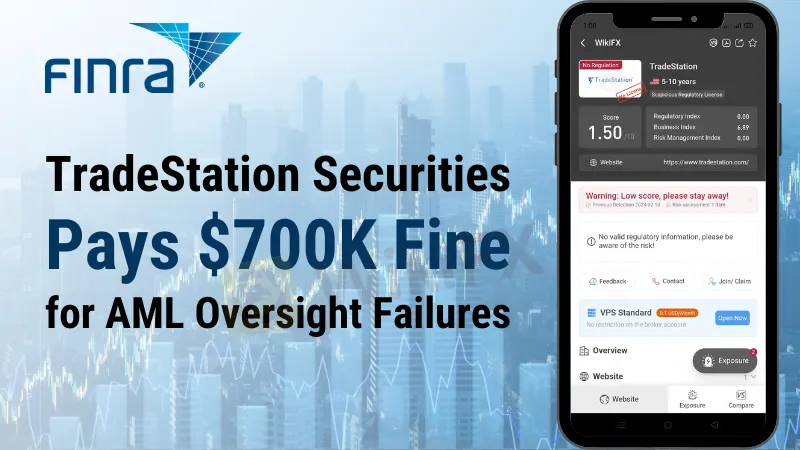
TradeStation Securities, Inc. agreed to pay a $700,000 fine after a settlement agreement with the Financial Industry Regulatory Authority (FINRA). The outcome of the decision is the comprehensive review of the firm's Anti-Money Laundering (AML) practices, which lasted from January 2016 to March 2022.
The main issue in this settlement was TradeStation's failure to design and properly run an AML program capable of detecting illicit trading activity by its clients. Initially, a third-party vendor's automated monitoring system relied heavily on the firm. Between 2016 and 2019, this algorithm generated over 100,000 transaction notifications, averaging 100 alerts each trading day. The enormous number of false positives among these warnings posed a considerable barrier to recognizing true suspicious actions.
The lack of workers designated to monitor these notifications exacerbated the issue. Only two to three compliance analysts, already overburdened with other responsibilities, were entrusted with reviewing these notifications. Their responses to the notifications varied with choices such as rejecting them without further action, giving cautions to customers, banning trading in certain assets, or even canceling customer accounts. However, a fundamental flaw in their methodology was the uneven documentation of their results and conclusions, which proved to be a crucial omission.
Recognizing the need for improvement, TradeStation switched vendors in 2019, seeking to achieve better outcomes. The new strategy reduced false positive alarms, making it more successful. Furthermore, in 2020, in tandem with its business expansion, the company increased its workforce by hiring three additional analysts to help with alert evaluations.

Despite these improvements, the firm's experts did not always flag possibly suspicious trades for additional inquiry. This contradiction was a major vulnerability in TradeStation's AML software. Annual independent AML testing reports in 2016 and 2017 have previously identified these flaws, underscoring the need for better documentation and monitoring of escalated concerns. However, it was not until March 2022 that the firm fully integrated these recommendations into its systems.
TradeStation violated many FINRA standards by failing to consistently escalate certain potentially suspicious trading operations for inspection and by failing to have a well-designed process in place to oversee the evaluation and resolution of alarms. The business specifically breached Rule 3310(a), which governs the implementation of AML systems, as well as Rule 2010, which governs the maintenance of high standards of commercial honor and equitable trading practices. The company also violated FINRA Rule 3110 by failing to create written supervisory procedures (WSPs) for accepting and reselling low-priced securities.
As a result of these findings, TradeStation has accepted a reprimand as well as a substantial $700,000 punishment. This episode emphasizes the vital need for comprehensive and timely AML processes in the financial industry. The intricacies and changing nature of financial trading require ongoing monitoring and agility in compliance processes.
TradeStation's case serves as a strong reminder to other financial institutions of the necessity of complying with regulatory requirements and the need for continual improvements in their AML procedures to maintain the integrity of financial markets and prevent illegal activity.
For more details on this story and daily updates on financial market news, visit WikiFX's news section at https://www.wikifx.com/en/news.html. Stay informed!


Read more
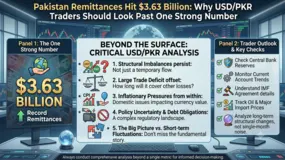
Pakistan Remittances Hit $3.63 Billion: Why USD/PKR Traders Should Look Past One Strong Number
Pakistan remittances reached $3.631 billion in July 2026, up 13% year on year and 4.5% from June, according to the latest State Bank of Pakistan data release. The SBP remittances update is a useful external-sector input, but it is not a currency forecast. This guide explains what the inflow can mean for the Pakistan forex market and USD PKR, and what it cannot prove about the next Pakistan rupee move.
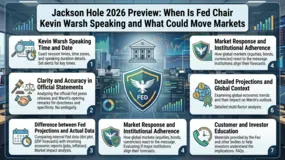
Jackson Hole 2026 Preview: When Is Fed Chair Kevin Warsh Speaking and What Could Move Markets
Fed Chair Kevin Warsh is listed to deliver Jackson Hole keynote remarks on 28 August 2026. See the schedule, market scenarios and USD-gold watchlist.
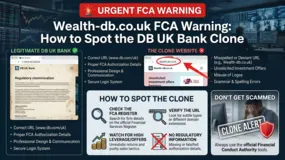
Wealth-db.co.uk FCA Warning: How to Spot the DB UK Bank Clone
The FCA says wealth-db.co.uk is a clone of DB UK Bank Limited. Compare the fake contact details, genuine FRN, website, and seven checks before paying.
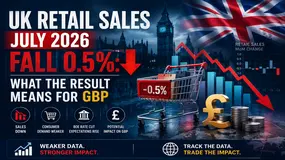
UK Retail Sales July 2026 Fall 0.5%: What the Result Means for GBP
UK retail sales fell 0.5% in July 2026, while the three-month measure rose 1.1%. See the ONS details and what the mixed result may mean for GBP.
WikiFX Broker
Latest News
Dow Jones Industrial Average round-trips a Fed that promised nothing
 WikiFX
Silver Price Forecast: False breakout and hawkish Fed sink XAG
WikiFXSouth Korean Won: BoK tightening supports KRW against US Dollar – Commerzbank
WikiFXOEXN Broker Review: Regulated but is it Safe for Traders?
WikiFXUSDCHF: Rising Channel Continuation Toward the Target Zone
WikiFXJapanese Yen dips further despite hotter inflation, upbeat employment data
WikiFXPoland: Growth supported by investment rebound – ING
WikiFXBreaking: Nonfarm Payrolls benchmark revision to lower US employment by 79,000 through March 2026
WikiFXMexican Peso tumbles as Warsh embarks on inflation fight
WikiFXEURUSD - BULLISH BIAS
WikiFXRate Calc

