NZD/USD remains depressed blow 0.5900 mark, seems vulnerable near one-week low
Abstract:The NZD/USD pair lures in new sellers after climbing to the 0.5935-0.5940 area earlier in the day. It subsequently declines to a level not seen in over a week during Friday's Asian session. Nevertheless, spot prices undergo a slight recovery in the last hour, and they are presently trading slightly below the 0.5900 mark, marking a decrease of approximately 0.15% for the day.

• NZD/USD drifts lower for the fifth straight day and drops to over a one-week low on Friday.
• The disappointing domestic data and Chinas economic woes exert pressure on the Kiwi.
• Bets that the Fed is not done raising rates underpin the USD and contribute to the decline.
The NZD/USD pair lures in new sellers after climbing to the 0.5935-0.5940 area earlier in the day. It subsequently declines to a level not seen in over a week during Friday's Asian session. Nevertheless, spot prices undergo a slight recovery in the last hour, and they are presently trading slightly below the 0.5900 mark, marking a decrease of approximately 0.15% for the day.
The New Zealand Dollar (NZD) meets with some supply in reaction to the dismal domestic data, which showed that business activity in the manufacturing sector contracted further in October. The latest Business NZ Performance of Manufacturing Index (PMI) fell significantly from 45.1 in September to 42.5 – marking the lowest level of activity for a non-COVID-affected month since May 2009. The data reaffirmed expectations that the Reserve Bank of New Zealand (RBNZ) will keep its policy rate unchanged in November. Apart from this, persistent worries about the worsening economic conditions in China exert additional pressure on antipodean currencies, including the Kiwi.
The US Dollar (USD), on the other hand, holds steady near the weekly high touched on Thursday and remains well supported by reviving bets for at least one more interest rate hike by the Federal Reserve (Fed). The bets were lifted by the recent hawkish comments by several Fed officials, acknowledging the US economic resilience. Adding to this, Fed Chair Jerome Powell noted that policymakers are encouraged by the slowing pace of inflation but are not sure that the monetary policy is sufficiently restrictive to keep the momentum going. This, along with a weak auction of 30-year Treasury bonds, continues to push yields higher across all maturities and underpins the buck.
Apart from this, a generally softer tone around the equity markets turns out to be another factor benefitting the safe-haven buck and contributing to driving flows away from the perceived riskier Kiwi. This, in turn, suggests that the path of least resistance for the NZD/USD pair is to the downside and supports prospects for an extension of this week's rejection slide from the 0.6000 psychological mark, or over a three-week high touched on Monday. Traders now look to the release of the Michigan Consumer Sentiment Index for some impetus later during the North American session.


Read more

One Lot Size Mistake Can Cost You Thousands—Here's Where the 1% Rule Helps
Switched from one trading strategy to another but could not avert heavy losses? Wondering what went wrong despite your market analysis being spot on? It may not be a strategic issue then. It may just be that you chose the wrong lot size. Yes, a single oversized position can get your account exposed to far greater risks than you may imagine. You may be moved by the impressive profits with increasing lot sizes. But by doing so, you also invite a proportionate rise in losses. This is where you need to apply the essential 1% risk management principle. This rule helps you assess how much you can afford to lose if a trade does not go as planned.

HIJA MARKETS Review 2026: I Was Told to Pay $3,000 to Receive My Profits, But I Found It Suspicious
HIJA MARKETS, a Saint Lucia-based brokerage entity, is dealing with multiple trading complaints from users worldwide. Among the complaints, what captured our imagination was the $3,000 fee demand for the unfreezing of profits on the broker’s platform. Such a payment demand immediately raises legitimacy concerns regarding the brokerage firm. Complaints do not stop here; in fact, they suggest a pattern of disappearing funds and endless withdrawal denials. Many traders have accused the broker of carrying out illicit trading activities online. In this HIJA MARKETS review 2026, we have examined every user allegation against the brokerage firm. To give you more means to assess its legitimacy, we have given a thorough look into its regulatory framework.

Rupee Climbs to a Six-week High Today - Is the Bad Time for the Currency OVER?
The rupee, which has been falling against major global currencies, including the US dollar, is finally back on the path to recovery. As per the initial trade, the rupee touched a six-week high of 94.43 against the USD on June 17, 2026, tracking a plunge in crude oil prices following the interim peace deal agreed upon between the United States of America and Iran. Brent crude oil price slipped to around $78 per barrel, which has not been the case for three straight months following the war. The surging crude oil prices further caused pressure on the rupee, which was already falling apart.
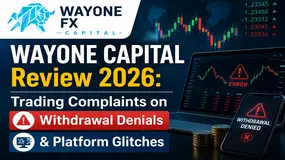
WAYONE CAPITAL Review 2026: Trading Complaints on Withdrawal Denials & Platform Glitches
WAYONE CAPITAL, a Saint Lucia-based forex broker, is reportedly facing allegations from users worldwide. Most users allege that the brokerage entity does not comply with fund withdrawal norms and gives petty excuses for not releasing funds on time. Additionally, users have complained about the reflection of the wrong trading account balance while accessing the WAYONE CAPITAL login. If you have faced similar concerns with this broker, you are at the right place! This 2026 WAYONE CAPITAL review article examines user allegations and gives an update on the broker’s regulatory status.
WikiFX Broker
Latest News
Alpari Review 2026: Official Warnings and High Complaint Patterns
 WikiFX
M4Markets Broker Review: Regulation, Licenses and WikiScore Analysis
WikiFXTHINK MARKETS Broker Might Not Want You To See This
WikiFXFBS Review: Is Your Deposit Safe?
WikiFXPocket Broker Review: Can You Actually Withdraw Your Money?
WikiFXThe broker test: What black swans teach about real risk control
WikiFXHow to Lock In Profits and Create a Zero-Risk Trade
WikiFXIG Review: Broker Complaints Collide With Mixed Regulation Signals
WikiFXHow to Spot Your First Trial Short on H1 After a Break
WikiFXSTARTRADER Adds SK Hynix CFD Days After $26.5B US Listing
WikiFXRate Calc

