FX Analysis – Falling Yields Pressure USD, the Key Levels to Watch
Abstract:Recent US figures have seen a rout in treasury yields with the flagship 10-year now yielding 4.435% after starting November at 16-year highs north of 5% and in a seemingly unstoppable uptrend. A cooler CPI and PPI showing inflation is decelerating at a faster pace than the market anticipated, along with weaker employment and industrial production figures have traders re-adjusting for a less hawkish Fed and bringing their timing forward for the pricing in of rate cuts.

Recent US figures have seen a rout in treasury yields with the flagship 10-year now yielding 4.435% after starting November at 16-year highs north of 5% and in a seemingly unstoppable uptrend. A cooler CPI and PPI showing inflation is decelerating at a faster pace than the market anticipated, along with weaker employment and industrial production figures have traders re-adjusting for a less hawkish Fed and bringing their timing forward for the pricing in of rate cuts.
Why this is important to serious FX traders is because rates and FX have a high correlation, even more in the post pandemic period of cuts, hikes and peak rates and maybe cuts again, big FX traders look for yield and that can be used as important information for smaller players to position themselves to take advantage of that. An example of this relationship can be seen on the weekly chart of the US Dollar index below.
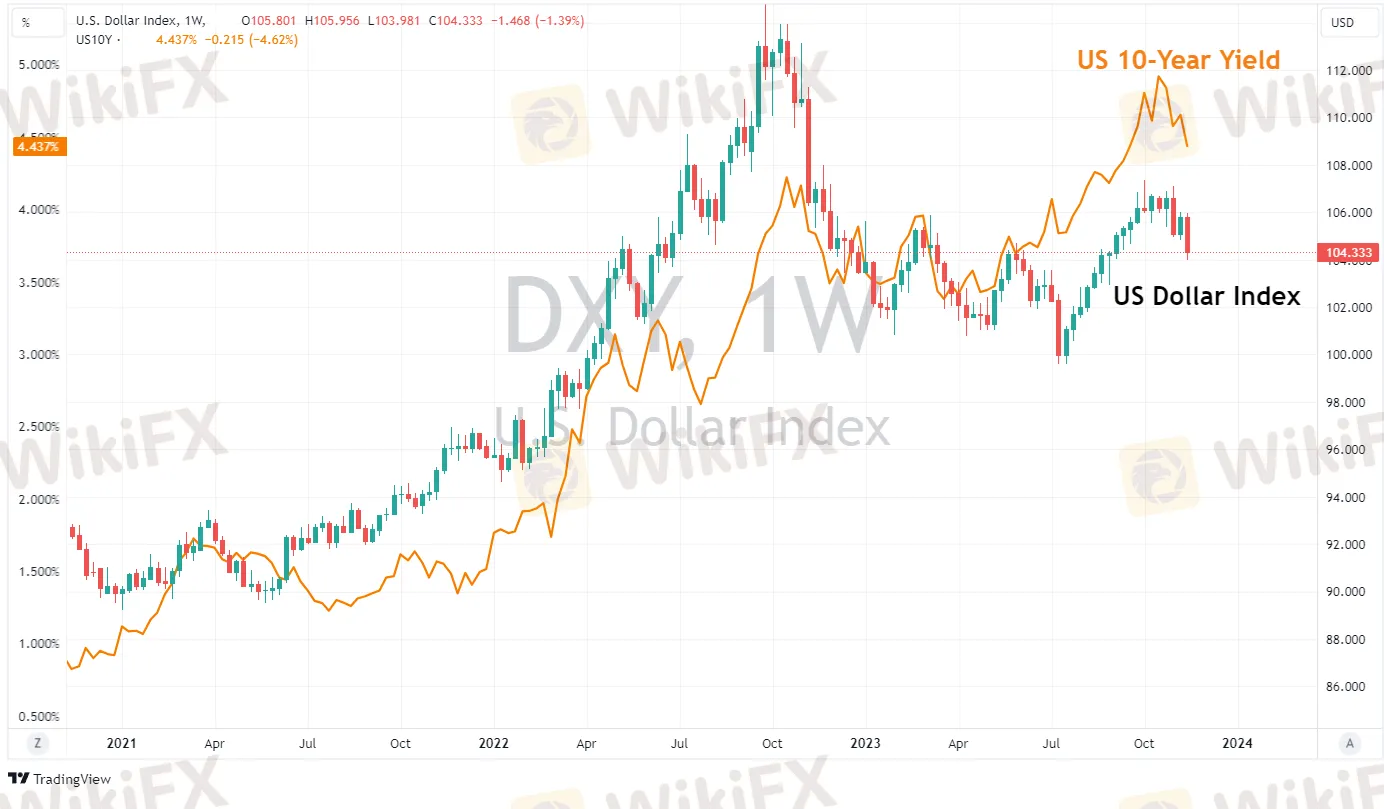
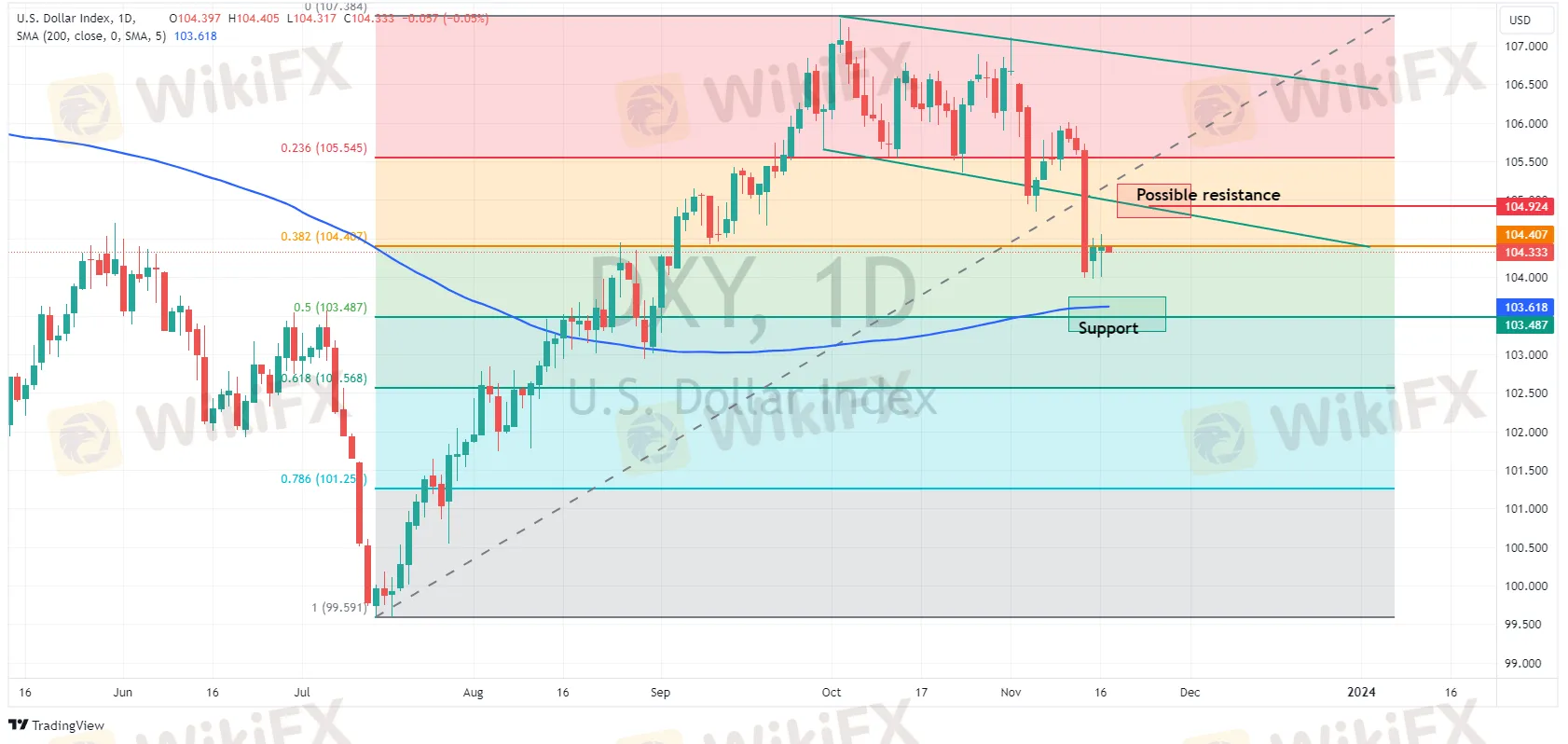
The US dollar Index has fallen 2.5% so far in November, a move first started with the big miss in NFP which saw support at the 23.6 Fib level broken, then accelerating this week on a Cooler CPI which saw it take out the 38.2 Fib level support which the price is currently hovering around at 104.41.
This along with the situation in yields will be the level to watch in the short term, if yield and dollar bulls take charge a break and support hold could see USDollar first test the lower trend line resistance, with the next stop from a technical point of view being the 23.6 Fib level resistance at 105.545. To the downside if yields continue their fall the next technical support will be the 50% fib level, paired with the 200-day moving average.
Next week there are a few important data points with FOMC minutes, consumer sentiment and manufacturing figures all scheduled. For FX traders they will be worth watching for any further clues as to yields and where traders think they will go as they work to front run the Fed.


Read more
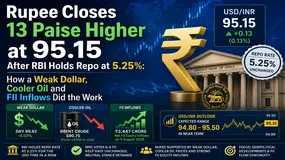
Rupee Ends 13 Paise Up at 95.15 After RBI Holds Repo at 5.25%: The Effect of a Weak USD, Cooler Oil
The Indian rupee settled at 95.15 against the US dollar on 5 August 2026, gaining 13 paise after the Reserve Bank of India's Monetary Policy Committee voted 6-0 to keep the repo rate unchanged at 5.25 percent for the third time in a row in FY27. The rupee had opened 46 paise higher, rallied to an intraday strongest of 94.89 ahead of the policy decision, and then drifted back as RBI Governor Sanjay Malhotra noted that the currency 'has not appreciated as intended despite the high flows from foreign shores.' A weak dollar index, a sharp pullback in Brent crude from above USD 100 in July, and net FII equity inflows of Rs 2,447 crore on Tuesday combined to support the rupee. USD-INR is expected to trade in a 94.80-95.50 band in the near term.

TickTrader White Label in 2026: Can You Add Liquidity Depth Without Adding Operational Blind Spots?
A TickTrader white label can look like the fastest route to a modern branded trading environment, but a fast launch is not the same as a controlled launch. This 2026 broker guide explains what the TickTrader platform is, where a Soft-FX broker solution can sit in a wider operating stack, and how to evaluate the difference between a white label, a server licence, and a connected CRM or Client Office setup. It also unpacks TickTrader cost beyond the monthly headline, including implementation, integration, support, data, governance, migration, and exit assumptions. Use the practical questions, workflow tests, comparison table, and launch checklist to assess a Soft-FX TickTrader provider without mistaking a feature demo for evidence that your brokerage can run the service safely at scale.
Fortex White Label in 2026: Can Your Liquidity Stack Scale Without Losing Control?
A Fortex white label can look like the fastest route to a modern branded trading environment, but a fast launch is not the same as a controlled launch. This 2026 broker guide explains what the Fortex platform is, where a Fortex broker solution can sit in a wider operating stack, and how to evaluate the difference between a white label, a server licence, and a connected CRM or Client Office setup. It also unpacks Fortex cost beyond the monthly headline, including implementation, integration, support, data, governance, migration, and exit assumptions. Use the practical questions, workflow tests, comparison table, and launch checklist to assess a Fortex provider without mistaking a feature demo for evidence that your brokerage can run the service safely at scale.

Best White Label Trading Platform 2026
The decision to switch white label providers or migrate to a modern white label trading platform is no longer a luxury for growth-minded brokers—it's a strategic necessity for survival in 2026. The convergence of technological stagnation, regulatory evolution, and shifting client expectations has created a perfect storm.
WikiFX Broker
Latest News
Why You Can’t Generalise Forex Regulation Across Africa
 WikiFX
XM Opens Gold Trading Through the Weekend with GOLD24-7
WikiFXShe Loses RM622,320 After Falling for a Fake Online Stock Investment Scheme
WikiFXATFX Broker Review 2026: Regulated but Is It Really Safe for Traders?
WikiFXForex CRM Software in 2026: How to Choose the Operational Backbone Your Brokerage Can Actually Run o
WikiFXG4Trade Review 2026: Unverified Regulation and Withdrawal Concerns
WikiFXIs Gold Still a Safe Haven in 2026?
WikiFXRinggit Gains vs Majors, Slips vs Dollar in Recurring Trend
WikiFXCourt Ends 28-Year Sh185.5m Battle Against CBK
WikiFXSTMARKET Review: A Cambodia SERC License and a $3,250 Withdrawal That Went Missing
WikiFXRate Calc

