ASIC Suspends JB Markets AFS License
Abstract:The Australian Securities and Investments Commission (ASIC) has suspended JB Markets' Australian Financial Services (AFS) license until April 30, 2024, for non-compliance with financial licensing requirements. This action reflects ASIC's commitment to market integrity and consumer protection. The release also outlines ASIC's role in regulating financial services, highlighting its efforts in enforcing standards within the Australian financial industry.
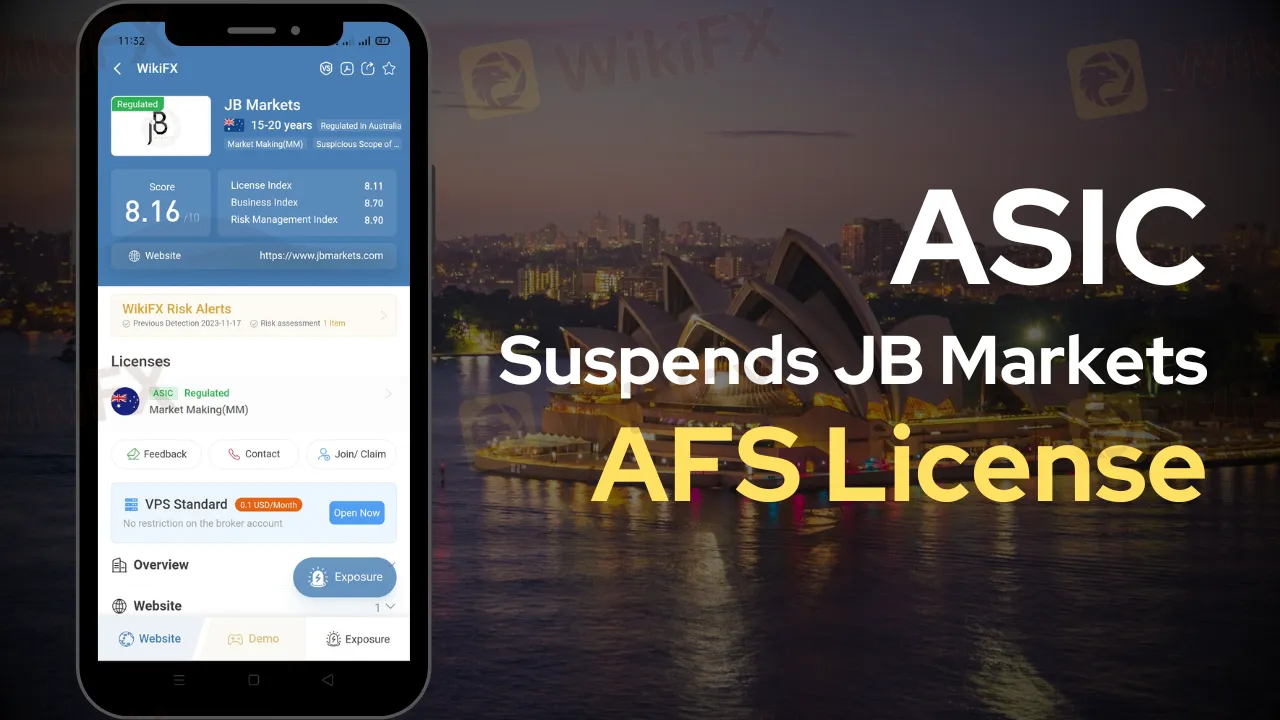
In a significant regulatory move, the Australian Securities and Investments Commission (ASIC) has suspended the Australian Financial Services (AFS) license of JB Markets Pty Ltd. This suspension, effective from November 8, will remain in force until April 30, 2024. This action by ASIC highlights the regulator's commitment to enforcing compliance among financial services providers.
Why Was JB Markets' License Suspended?
ASIC's decision to suspend the AFS license of JB Markets stems from the company's failure to meet essential financial licensing requirements. Crucially, JB Markets did not have adequate resources to offer the financial services stipulated in its license. Additionally, the company was found lacking in implementing appropriate supervisory arrangements.
During the suspension period, JB Markets and its representatives are prohibited from providing financial services. The only exception is services related to concluding existing client arrangements. Despite the suspension, JB Markets, as a member of the Australian Financial Complaints Authority (AFCA), must continue to provide compensation arrangements for its retail clients.
JB Markets' License History
JB Markets has been a holder of the Australian Financial Services Licence No. 323182 since July 8, 2008. This license authorizes the company to offer various financial services, including financial product advice, trading, marketing, and custody or deposit services to both retail and wholesale clients.

Understanding the Role of ASIC
The Australian Securities and Investments Commission (ASIC) plays a pivotal role in Australia's financial market. As the integrated corporate, markets, financial services, and consumer credit regulator, ASIC enforces and regulates company and financial services laws to protect Australian consumers, investors, and creditors. ASIC's actions, such as the suspension of JB Markets' AFS license, are part of its mandate to ensure transparency and integrity in the financial market.

ASIC's responsibilities include licensing and monitoring financial services businesses to ensure they operate efficiently, honestly, and fairly. The regulator also promotes investor and consumer trust and confidence, administers financial literacy programs, and contributes to Australia's economic reputation and well-being.
Related News:

Conclusion
ASIC's decision to suspend JB Markets' AFS license is a reminder of the regulator's active role in maintaining the integrity of Australia's financial markets. Through such enforcement actions, ASIC seeks to protect consumers and investors and uphold the standards of the Australian financial services industry.


Read more
IG Review for India 2026: RBI Alert List, Regulation, Login, and Forex Risk
IG review for India in 2026: see the RBI Alert List entry, overseas regulation, login checks, forex limits, and a clear broker safety checklist.
FCA Warns Swift TradeX on 1 September 2026: 7 Checks Before Paying
FCA warns Swift TradeX in a notice first published and updated on 1 September 2026. The UK Financial Conduct Authority says the firm may be providing or promoting financial services without permission, is not authorised, and may be targeting people in the UK. The notice names the website swifttradexai.com, a Worcester address and a UK telephone number, but also cautions that unauthorised businesses may use incorrect or borrowed contact details. The confirmed issue is authorisation status—not a court finding about every transaction. Anyone considering a payment should stop, verify the firm independently, and avoid using contact information supplied by the platform itself.
ThinkMarkets Review for India 2026: RBI Alert, Regulation, Login, and Forex Risk
ThinkMarkets review for India: check the RBI Alert List, overseas entities, regulation, login security, forex rules, costs, withdrawals, and leverage risk.
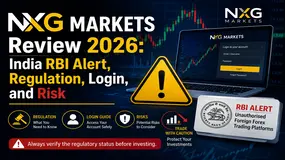
NXG MARKETS Review 2026: India RBI Alert, Regulation, Login, and Risk
People searching NXG MARKETS regulation or regulation NXG MARKETS need to separate an overseas licence from permission in India. The Reserve Bank of India Alert List, updated 19 November 2025, names NXG Markets and nxgmarkets.com. RBI says listed entities are neither authorised to deal in forex under FEMA nor authorised to run an approved forex electronic trading platform. The broker's own site also says it does not serve residents or citizens of India. This NXG MARKETS review found an overseas Mwali licence record, but no RBI authorisation. No cited court ruling proves fraud. For an Indian user, the local warning and service restriction should control the decision.
WikiFX Broker
Latest News
Leading the Transparency Movement: The Trust Dialogue with Nikos Christou from Lirunex
 WikiFX
AUD/JPY Price Forecast: Rebounds above 112.50, while staying constrained below 100-day SMA
WikiFXChinese Yuan: Services PMI rebound keeps PBoC cautious – Commerzbank
WikiFXFCA Warns Against Multiple Unauthorised Forex Brokers
WikiFXEUR/JPY Price Forecast: Trades near 181.50 after rebounding from descending channel bottom
WikiFXUSDCAD H4 | Bearish Rejection — Downside Targets in Focus
WikiFXRM6 Million Crypto Windfall Vanishes In Three Days
WikiFXLOTAS CAPITAL Review 2026: MISA Record Discrepancy and Recent Withdrawal Complaints
WikiFXMalaysian Ringgit: BNM hawkish tilt supports MYR – Commerzbank
WikiFXiFOREX Europe Review 2026: CySEC Regulation and Recent Withdrawal Complaints
WikiFXRate Calc

