UEZ Markets Hacked?! Truth or Cover-up?!
Abstract:Did UEZ Markets really get hacked or is this just an excuse for the company to withhold traders’ funds for an indefinite period of time?!

In the dynamic world of online trading, the choice of a broker can make or break a trader's experience.
Founded in 2020 within the confines of the Cayman Islands, UEZ Markets offers various financial instruments and services, including forex trading, CFD trading, stocks, and commodities. Despite its promise and allure, the broker's regulatory status has come into question, casting a shadow over its operations.
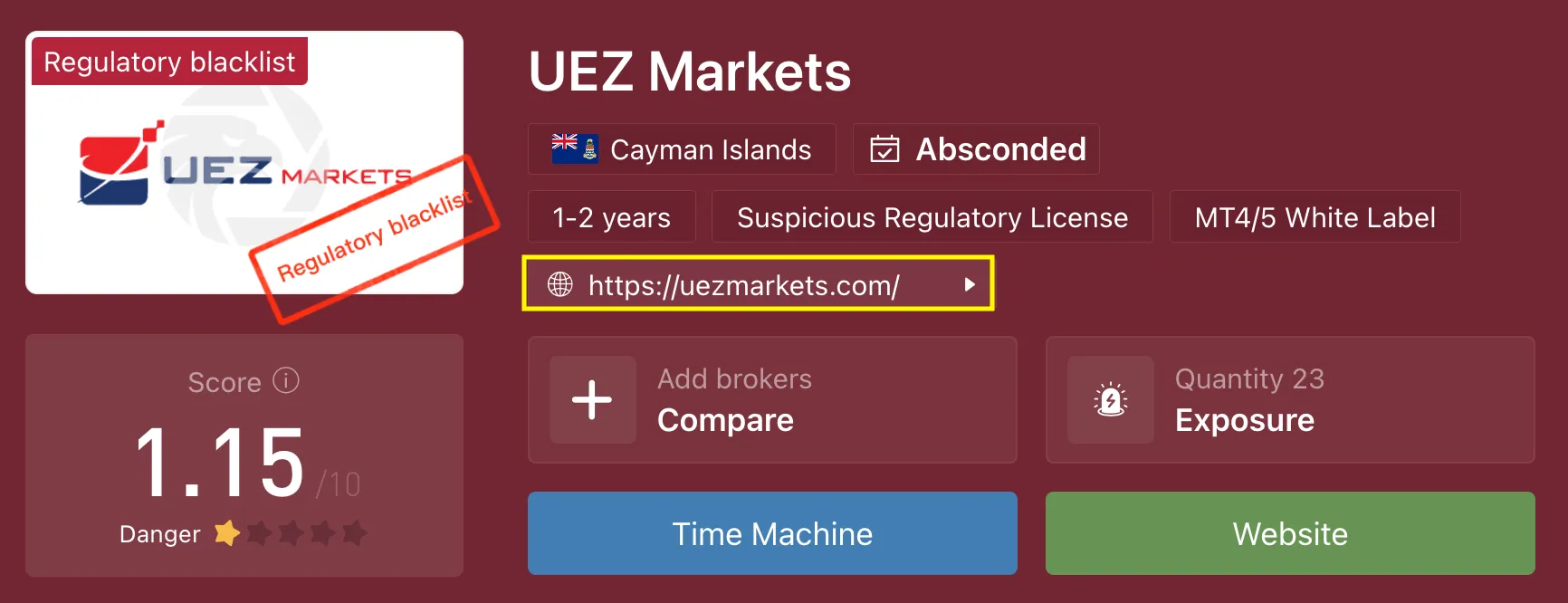
The official website of UEZ Markets, accessible at https://uezmarkets.com/, claims that the broker is regulated by two reputable authorities: Australia‘s ASIC and the United States’ NFA. However, a meticulous investigation by WikiFX has revealed a starkly different narrative. UEZ Markets has earned an abysmally low WikiFX score, further eroding confidence in its reputation and ethical standing.
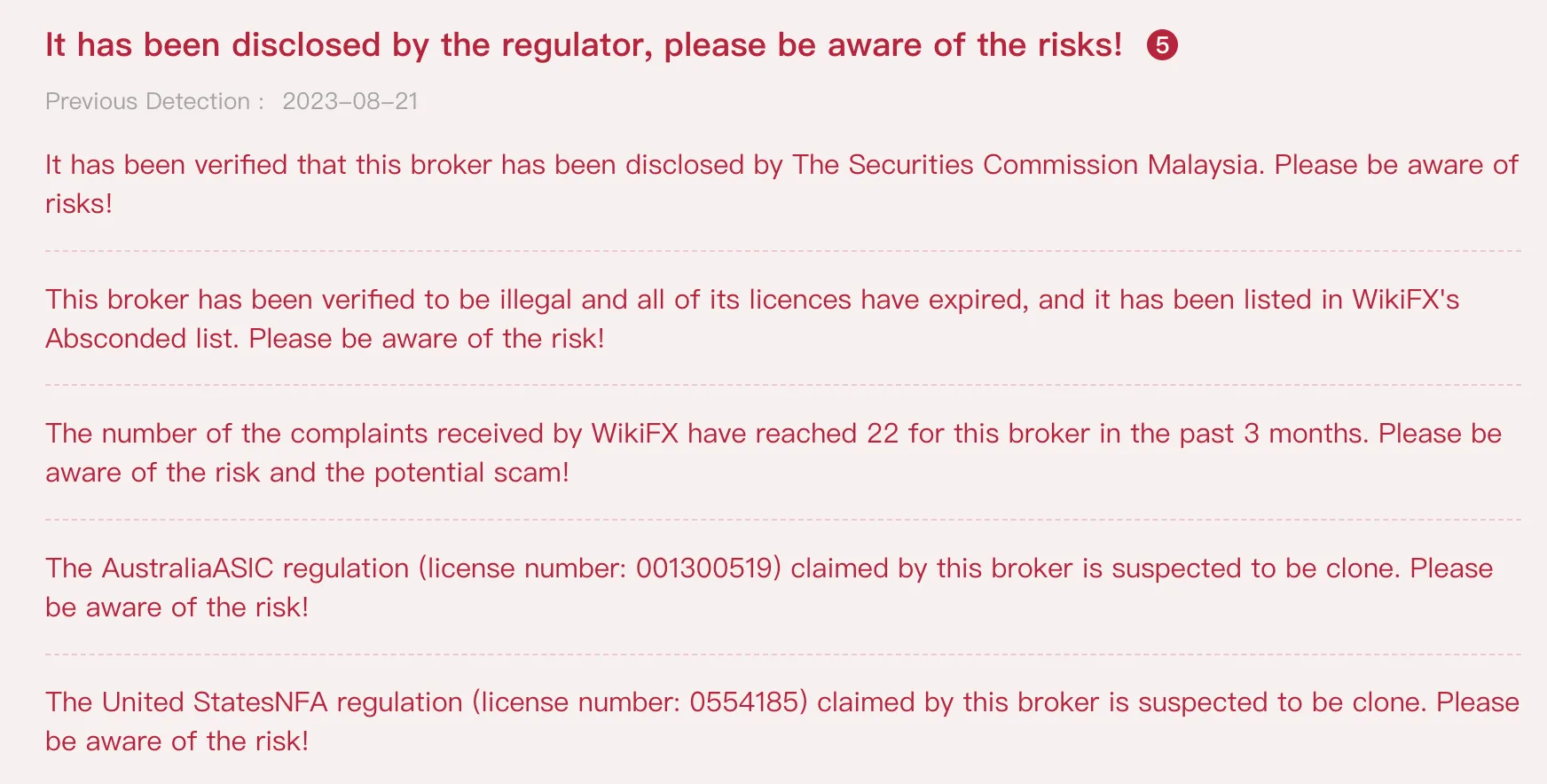
WikiFX, renowned for its in-depth evaluation of brokers, is pivotal in guiding traders toward informed decisions. A broker's WikiFX score reflects compliance with industry standards, regulatory oversight, and overall client satisfaction. The dissonance between UEZ Markets' alleged regulatory affiliations and its subpar WikiFX score raises alarm bells, leaving traders questioning the legitimacy of the broker's claims.
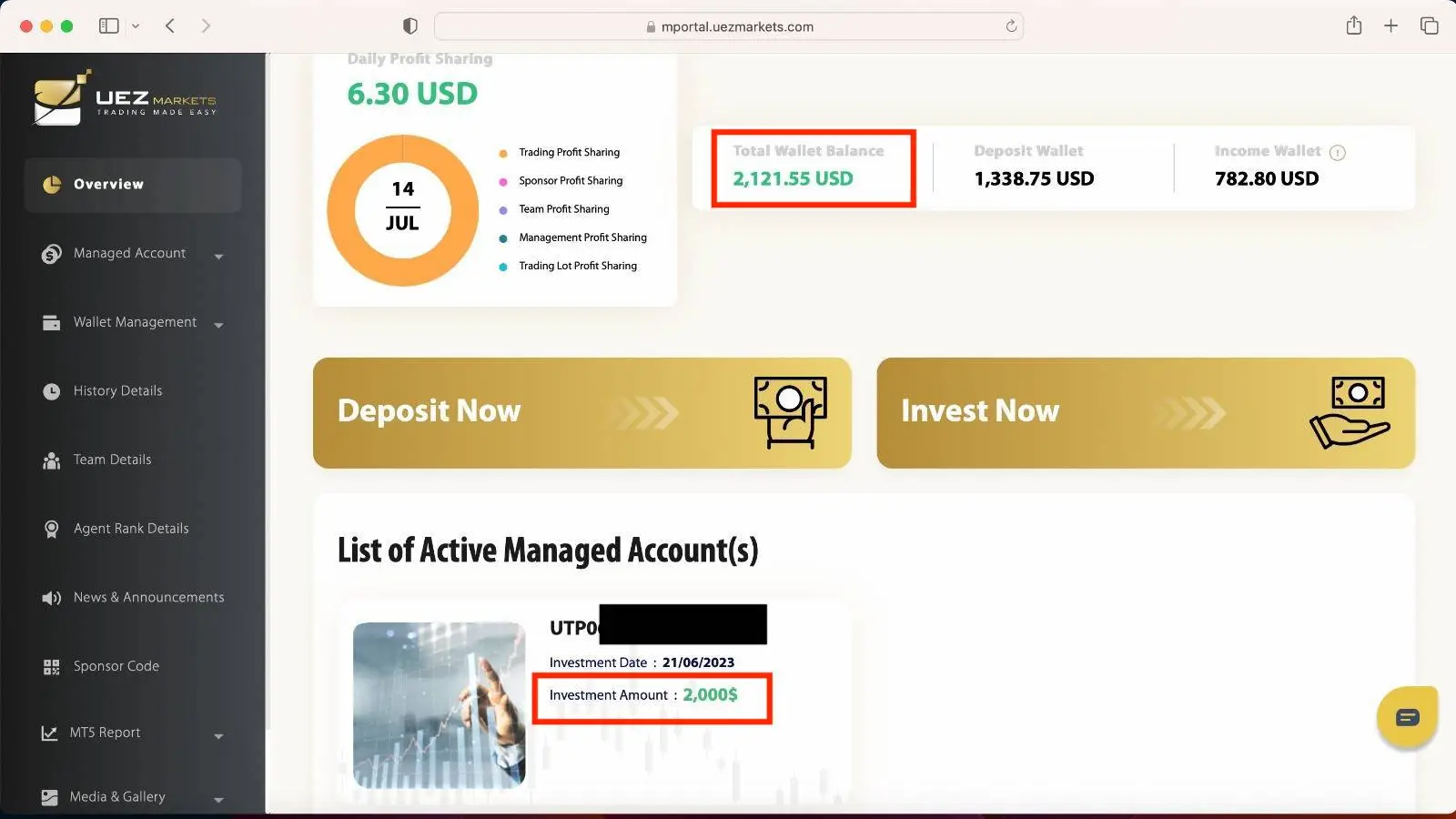
Adding to the scepticism, a disgruntled user recently voiced his concerns regarding his experience with UEZ Markets. Having initially invested $2000 into his trading account, his anxieties deepened when he attempted to initiate a withdrawal and found himself unable to do so. The situation left him in a state of panic, questioning the reliability of the broker he had entrusted with his funds.
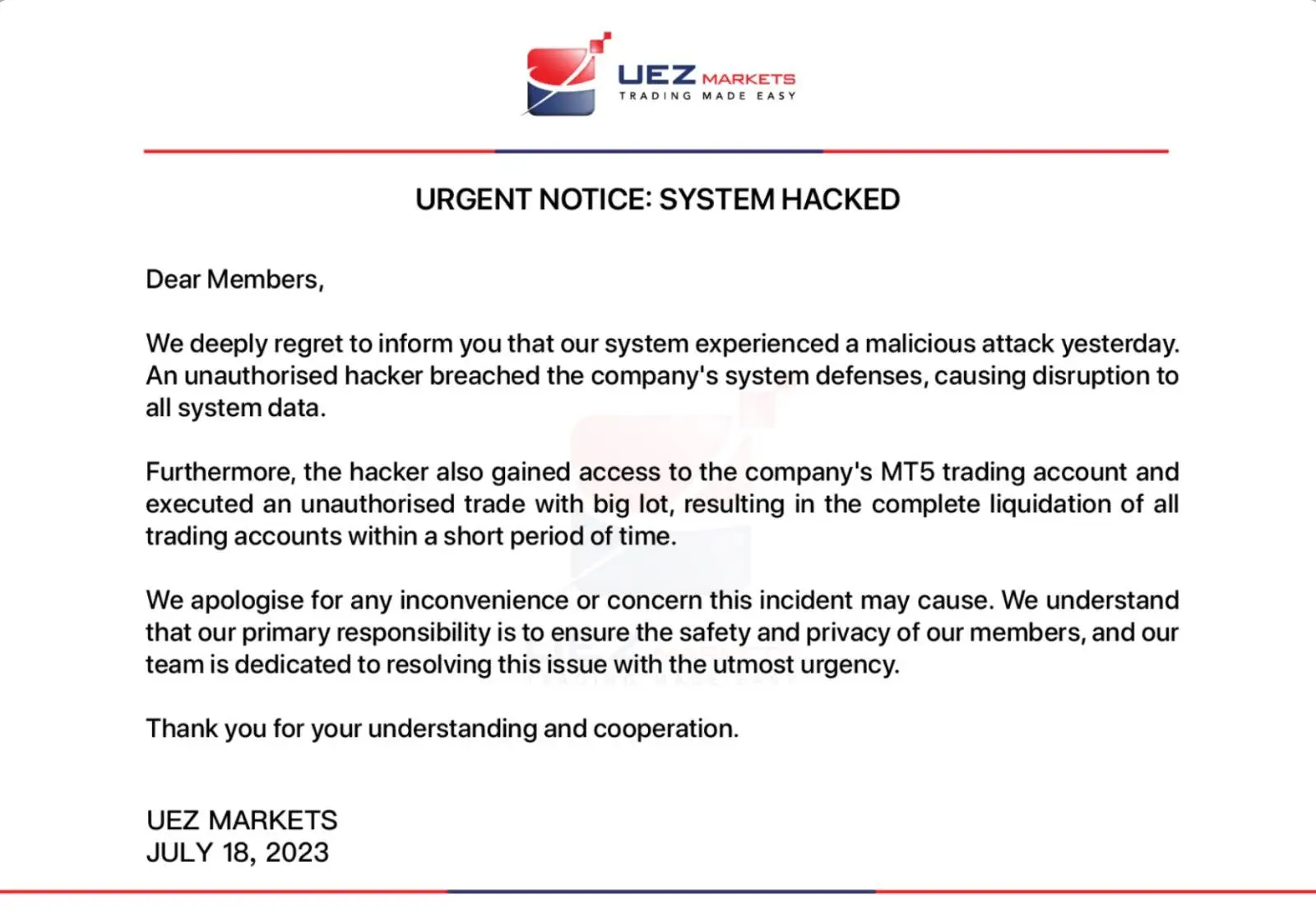
UEZ Markets provided an explanation that raises even more doubts. The broker claimed that its system had fallen victim to hacking, resulting in erroneous figures on its platform, including investment amounts and trades. The puzzling revelation that a substantial trade had been liquidated, as per MT5 records, only fueled suspicions. The lack of solid evidence to corroborate such a significant event and the absence of contingency measures like backup servers has left traders questioning the integrity of UEZ Markets' explanation.
In conclusion, UEZ Markets' unregulated status and low WikiFX score have overshadowed its credibility within the online trading community. The discrepancy between its claimed regulatory oversight and the reality of its WikiFX score underscores the importance of rigorous due diligence for traders. This victim's unfortunate experience serves as a stark reminder that choosing a broker demands careful consideration, and traders must remain vigilant to safeguard their investments in the tumultuous landscape of online trading.


Read more

capital.com Review 2026: Traders Report Alleged Trade Manipulation & Withdrawal Concerns
Did you have to pay extra fees to recover your deposited funds on capital.com, a Bahamas-based brokerage entity? Were you denied withdrawals in the name of an invalid account? Did the broker fail to respond to your withdrawal requests for weeks? Faced losses due to alleged slippage and stop-loss errors? This capital.com review investigates user allegations and shares how the broker's regulatory structure appears.

FBS Regulation Checks Before Choosing the Company Behind an Account
FBS regulation should be checked against the company named in an account agreement, not a brand-level statement alone. The FBS About page archived on 24 September 2026 describes operations under several local licences. That statement does not identify the provider for every applicant in South Asia. Before using an FBS login link to apply or submit documents, establish which company would contract with you and what the relevant authorisation covers.
RBI Vows to Steady 'Undervalued' Rupee After It Hits Five-Month Low
The Reserve Bank of India (RBI) said on Wednesday it would ensure that the "undervalued" rupee finds its correct level, after the currency slid to a five-month low of 96.8450 per dollar. The central bank also raised its policy rate by 25 basis points, its first tightening since February 2023, but the rupee still weakened as foreign capital flowed out of Indian markets.

India's Forex Reserves Fall to $747.56 Billion in Week Ended September 25
India's foreign exchange reserves stood at $747.56 billion in the week ended September 25, according to The Economic Times, which reported the figure alongside a headline decline of $18.34 billion. The same report said the fall was driven mainly by a reduction in foreign currency assets, the largest component of the reserves.
WikiFX Broker
Latest News
Sri Lanka's NDB Bank Fraud Losses Rise to Rs. 13.6 Billion as Final Audit Flags Governance Failures
 WikiFX
Oil Turned on Its Vertex Day: What It Means for Gold
WikiFXShareflo Finds 33,675 UK Companies Behind on Filings as Director ID Checks Take Effect
WikiFXGold and Silver Bounce After Trump Rules Out Pre-Election Strikes
WikiFXLuxury Brand Owner Shot Dead After Losing US$100 Million in Trading Last Month
WikiFXTag Markets Broker Review: Regulated but Is It Safe for Traders?
WikiFXSingaporean Man Arrested Over Gambling Investment Scam Linked to S$2.2 Million in Losses
WikiFXGold Near Nine Week Low as Fed Rate Fears Intensify
WikiFXOil, Yields and French Debt Keep Global Markets Under Pressure
WikiFXInflation fears on the rise as one-year outlook in Fed survey hits highest level since May 2023
WikiFXRate Calc
