Four U.S. Senators Introduce Crypto Anti-Money Laundering Bill
Abstract:On July 19th, a crypto anti-money laundering bill was introduced by a group of four United States senators - Jack Reed, Mike Rounds, Mark Warner, and Mitt Romney, as per the information given in a news release on Senator Reed's official website. This bill was targeted at halting unlawful financial transfers.

On July 19th, a crypto anti-money laundering bill was introduced by a group of four United States senators - Jack Reed, Mike Rounds, Mark Warner, and Mitt Romney, as per the information given in a news release on Senator Reed's official website. This bill was targeted at halting unlawful financial transfers.
The bill end “Crypto-Asset National Security Enhancement and Enforcement (CANSEE) Act (S. 2355)” focuses on money laundering and sanctions evasion involving decentralized finance (DeFi).
The bipartisan bill requires DeFi services to be compliant with similar anti-money laundering (AML) and economic sanctions compliance obligations as other financial firms. This includes centralized crypto trading platforms, casinos, and pawn shops, according to the bill.
Special treatment for DeFi will be eliminated through the application of similar national security laws applicable to banks and securities brokers, casinos and pawn shops, as well as other crypto firms such as centralized trading platforms.
Maintaining AML programs, conducting due diligence on customers, and reporting suspicious transactions to FinCEN will be required for DeFi services.
Crypto ATM operators will be required to improve traceability of funds through the verification of the identities of each counterparty to each transaction.
“The legislation also makes clear that if a sanctioned person, like a Russian oligarch, uses a DeFi service to evade U.S. sanctions, then anyone who controls that project will be liable for facilitating that violation. If nobody controls a DeFi service, then—as a backstop—anyone who invests more than $25 million in developing the project will be responsible for these obligations,” said Reed.


Read more
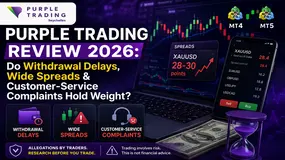
PURPLE TRADING Review: Do Withdrawal Delays, Wide Spreads & Customer-Service Complaints Hold Weight?
PURPLE TRADING, a Seychelles-based forex brokerage entity, is constantly criticized by numerous traders on review platforms such as WikiFX. While withdrawal delays or denials are reportedly a common issue here, there are also complaints about wide spreads and poor customer services. This PURPLE TRADING review examines user-reported allegations against the trading enterprise. Additionally, the article takes a close look at the broker’s regulatory status.
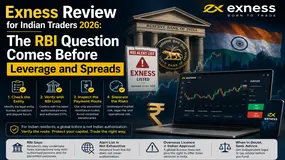
Exness Review for Indian Traders 2026: The RBI Question Comes Before Leverage and Spreads
Exness review for Indian traders in 2026. This guide explains what the RBI Alert List says, what it does not say, why a global license is not Indian authorization, and how to verify permitted forex routes before funding an account.
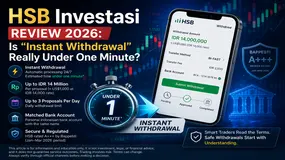
HSB Investasi Review 2026: Is “Instant Withdrawal” Really Under One Minute?
HSB Investasi review 2026: check the Instant Withdrawal claim, the IDR 14 million per-proposal limit, the three-request daily cap, transfer costs, transaction statuses, and what Bappebti data does—and does not—tell traders.

Branded Trading Platform in 2026: When Does Your Brand Become a Real Operating Advantage?
A branded trading platform can look like the fastest route to a modern branded trading environment, but a fast launch is not the same as a controlled launch. This 2026 broker guide explains what the custom trading platform is, where a provider broker solution can sit in a wider operating stack, and how to evaluate the difference between a white label, a server license, and a connected CRM or Client Office setup. It also unpacks proprietary platform costs beyond the monthly headline, including implementation, integration, support, data, governance, migration, and exit assumptions. Use the practical questions, workflow tests, comparison table, and launch checklist to assess a platform provider without mistaking a feature demo for evidence that your brokerage can run the service safely at scale.
WikiFX Broker
Latest News
iFX Brokers Review: Is Your Deposit Safe?
 WikiFX
ONE ROYAL Faces SCM Malaysia Warning , What Traders Should Verify Before Funding an Account
WikiFXASIC Crackdown Hits 5-Year High: 150 Rogue Operators Banned
WikiFXMoneycorp Review: Is This Broker’s License Really Telling the Truth?
WikiFXBYBIT Review: Unregulated Broker Warning After Withdrawal Complaints and Forex Profit Disputes
WikiFXSECP Refers Blink Capital to FIA Over Rs446.6m Alleged Fraud
WikiFXHow to Start a Forex Broker in 2026: Build the Operating Model Before You Buy the Platform
WikiFXEMAR MARKETS Review 2026: Severe Withdrawal Complaints and Risk Signals
WikiFXTrader's Way Review: Trades Vanished Overnight , And There's No Regulator to Call
WikiFXLockwood Review: AMF-Blacklisted Broker with Users Reporting Blocked Withdrawals
WikiFXRate Calc

