FSCA: Beware of Solitix FX (Pty) Ltd
Abstract:The Financial Sector Conduct Authority (FSCA) warns the public about Solitix FX (Pty) Ltd and Mr Kevin Banks, urging caution in engaging with these entities for financial services-related activities due to their unlicensed status.
The Financial Sector Conduct Authority (FSCA) has issued a warning to the public concerning Solitix FX (Pty) Ltd (Solitix FX) and Mr Kevin Banks. Individuals are urged to approach financial services-related activities involving these entities with caution, as cautioned by the regulatory authority.
Recent information received by the FSCA indicates that Solitix FX and Mr Kevin Banks are engaged in providing forex trading services to members of the public. However, it is important to note that in South Africa, entities offering financial product trading services must hold a license from the FSCA.
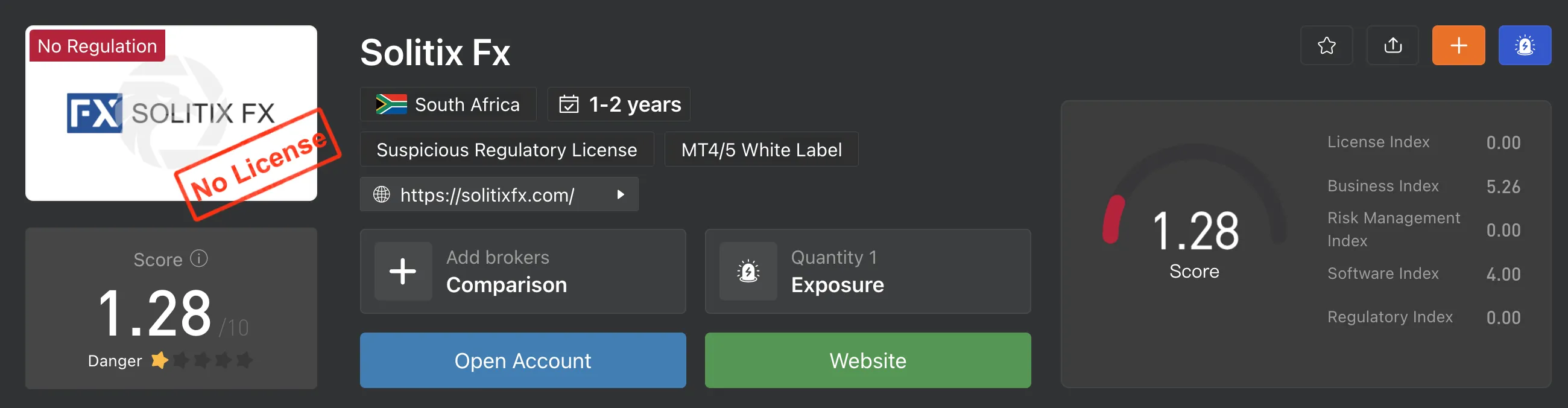
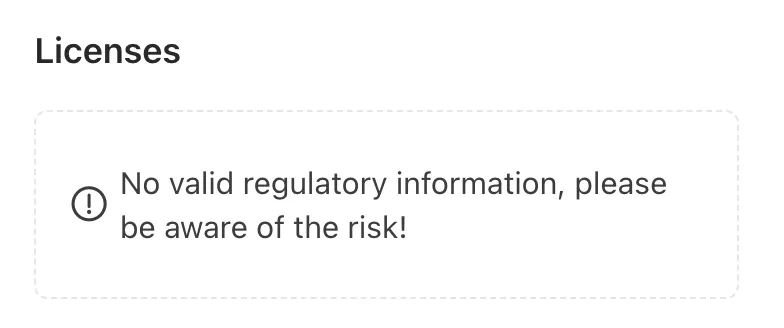
Based on WikiFX's database, we found that Solitix FX is a low-rated broker that does not possess any license.
Therefore, the FSCA advises individuals to exercise vigilance and avoid conducting any financial business with Solitix FX and Mr Kevin Banks until their licensing status has been confirmed. Engaging with unlicensed entities poses substantial risks since there is no regulatory oversight to ensure compliance with the necessary standards and protections.
The FSCA emphasizes that licensed financial service providers are subject to stringent regulations and requirements to safeguard consumers. These regulations encompass robust risk management practices, client fund segregation, and disclosing crucial information to clients.
By conducting business with unlicensed entities, consumers are vulnerable to potential fraud, financial loss, and the inability to seek recourse in cases of malpractice or misconduct. Thus, the FSCA encourages individuals to verify the licensing status of any financial service provider before engaging in transactions or investments.
Playing a crucial role in overseeing South Africa's financial services industry, the FSCA ensures that companies and individuals comply with the necessary regulations and standards. The authority's primary objective is to protect consumers and foster fair and transparent financial markets.
To aid the public in verifying the licensing status of financial service providers, the FSCA provides a comprehensive database on its official website. This database enables individuals to verify whether a particular entity is licensed and authorized to offer financial services in the country.
Furthermore, the FSCA advises the public to exercise due diligence when selecting financial service providers. This includes conducting research and reviewing a company's background, reputation, and track record before entering into any financial agreements or transactions.
The FSCA remains actively monitoring the financial services sector to identify and address potential risks and non-compliance. In cases where unlicensed entities are discovered, the authority takes appropriate enforcement actions, which may involve penalties, fines, or legal proceedings.
Should any member of the public possess information or concerns regarding Solitix FX (Pty) Ltd or Mr Kevin Banks, the FSCA strongly urges them to promptly report it. Such reporting assists the authority in its endeavours to safeguard consumer interests and preserve the integrity of the financial services industry.
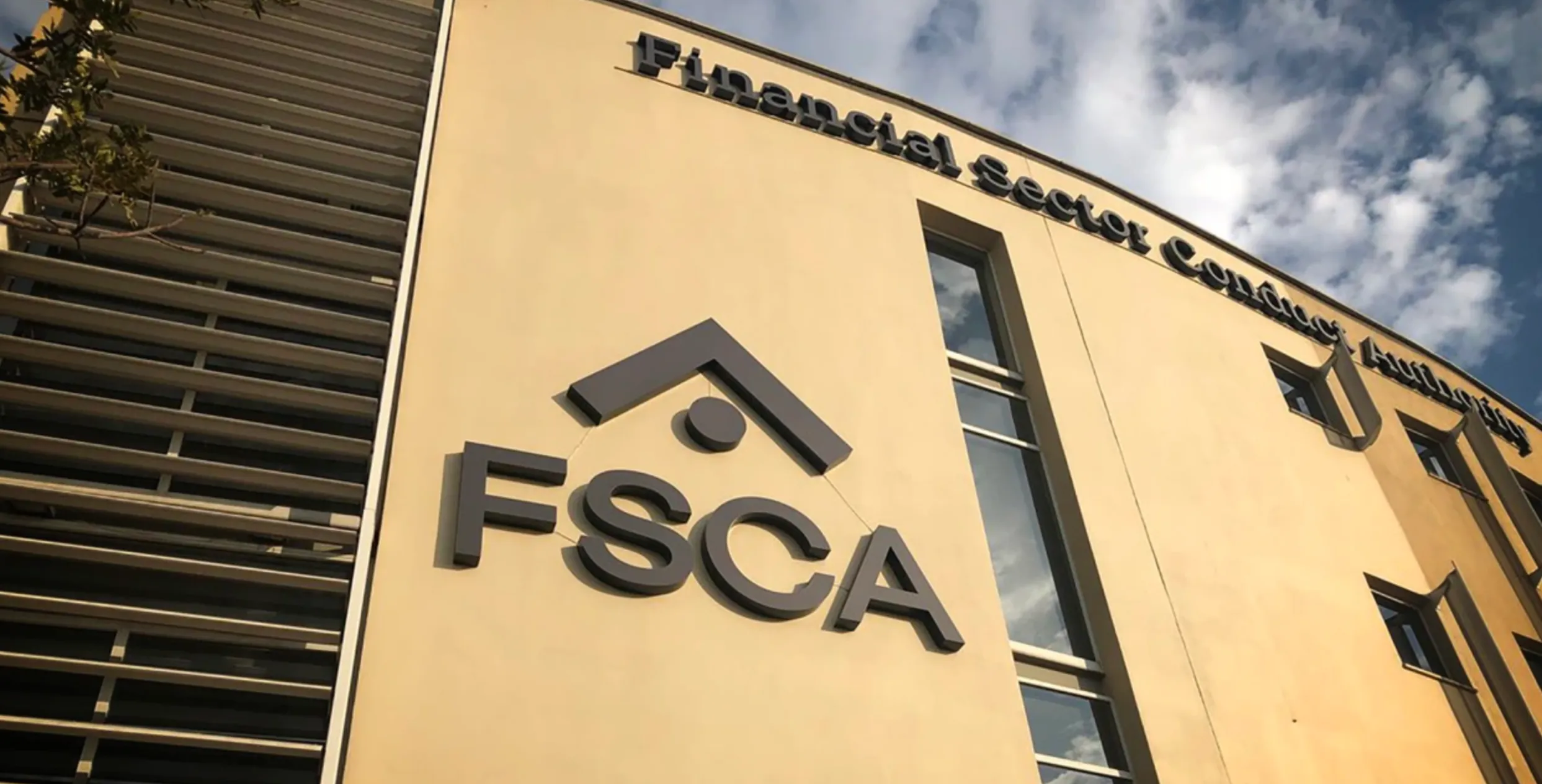
Established in 2018, FSCA is a regulatory watchdog in South Africa tasked with overseeing the financial services industry, enforcing regulations, and safeguarding consumer interests in order to maintain fair and transparent financial markets.
In conclusion, the FSCA advises individuals to exercise caution when participating in financial services-related activities and to be cautious of unlicensed entities that offer forex trading services. By verifying the licensing status of financial service providers and conducting thorough research, individuals can significantly mitigate the risks associated with fraudulent activities or misconduct.


Read more
JustMarkets Review 2026: Withdrawal Delay & Trade Execution Error Complaints Surface
Is your fund with JustMarkets, a Seychelles-based brokerage firm, stuck for weeks due to an unexplained validation reason? Did the broker limit your order entries? Did you see losses on the JustMarkets login due to an abnormal negative slippage on your trade? Did you face an unaccounted fund deduction by the broker? Several users have reported these issues on independent broker verification platforms such as WikiFX. This JustMarkets review examines these reported allegations and provides an overview of its regulatory framework.

FII Exodus: Rupee Depreciation, 5% US yields — Why Foreign Capital Keeps Leaving India
FIIs have been selling Indian equities for six years, and a viral post says the reason is simple: the rupee keeps falling, US yields pay 5%, so why would foreign money stay? Read on more updates.

Azure Markets Review After Its Licence Page Returned 404
This Azure Markets review examines an immediate verification problem: on 23 September 2026, the broker domain's regulations page returned 404, while its homepage showed only a server-status message. An older indexed registration claim and a reported USD84 withdrawal delay provide context, not proof of fraud or current authorisation. For South Asian readers, the practical question is what can still be verified independently.

BazaarFx Review: An FCA Warning and a UK Company Number
Most of what a BazaarFx review turns up online is opinion. Two records are not. The UK Financial Conduct Authority published a warning naming this brand on 13 August 2025, and Companies House holds a registration for a company using the name. Neither record settles the question of BazaarFx regulation in the way marketing pages usually imply, and the two are often mistaken for each other. This check was carried out on 22 September 2026; each record carries its own date.
WikiFX Broker
Latest News
XPO FUND Review After the BVI Statement of 16 March 2026
 WikiFX
U.S. Dollar Moves Higher Despite Oils Pullback: Analysis For EUR/USD, GBP/USD, USD/CAD, USD/JPY
WikiFXSTARTRADER Opens Weekend Trading on Two Chinese AI Stocks
WikiFXAzure Markets Review After Its Licence Page Returned 404
WikiFXRM330,000 Invested, Only RM35,000 Comes Back
WikiFXJustMarkets Review 2026: Withdrawal Delay & Trade Execution Error Complaints Surface
WikiFXWikiFX Wishes You a Happy Mid-Autumn Festival
WikiFXUS Dollar Price Forecast: Fed Rate Path Supports Dollar as EUR/USD and GBP/USD Diverge
WikiFXFundingPips Review: Is This Prop Trading Firm Safe & Trustworthy?
WikiFXNAGA Review 2026: Reported Deductions on Winning Trades and Withdrawal Issues
WikiFXRate Calc
