Beware! Broker “The Traders Domain” is a total scam!
Abstract:In recent times, an online forex broker named "The Traders Domain" has come under intense scrutiny as numerous investors have claimed that the company is engaged in fraudulent activities. Given these alarming claims and the risks associated with investing, WikiFX is warning traders to steer clear of this broker.
Introduction
In recent times, an online forex broker named “The Traders Domain” has come under intense scrutiny as numerous investors have claimed that the company is engaged in fraudulent activities. Investor complaints raise alarming concerns about the potential Ponzi scheme of this broker. With a significant number of negative reviews on Trustpilot and allegations of withheld funds and frozen accounts, serious doubts are being cast on the integrity and reliability of this broker. Additionally, a prominent YouTuber with a substantial following recently released a video accusing The Traders Domain of being involved in a staggering $500 million Ponzi scheme. Given these alarming claims and the risks associated with investing, WikiFX is warning traders to steer clear of this broker.
What is The Traders Domain?
Registered in St. Vincent and the Grenadines, The Traders Domain is an online forex broker. Saint Vincent and the Grenadines is an attractive place for financial companies to operate through an offshore company. There is no sharp regulation or overseeing of the company operation implemented. The SVG broker can run its activity and accept forex payments through credit cards but is not overseen.

(Website of The Traders Domain)
Is it legit?
Traders Domain was registered in St.Vincent and the Grenadines and it is not a regulated broker. It is risky for you to invest in this broker. An unregulated broker can take your money away fraudulently. According to WikiFX, this broker has been rated as 2.02/10. For more details, please check the article via the link below.


Negative Reviews and Withdrawal Issues
As of June 6, 2023, Trustpilot, a popular consumer review platform, features a staggering 430 reviews about The Traders Domain, with a significant majority of them being negative. Multiple investors have reported difficulties in withdrawing their funds, painting a troubling picture of the broker's operations. Some individuals have claimed that their accounts were frozen, leaving them unable to access their invested capital. These reports have sparked widespread concern and prompted a closer examination of The Traders Domain's practices.


As of June 6, 2023, WikiFX has received 8 complaints against this broker within 3 months. See below. The biggest problem of this broker lies in withdrawal rejection.

A Warning from Social Platform
An individual named Mathew Ceddia has taken to Facebook to caution others about The Traders Domain, echoing concerns about the company's dubious practices. While the credibility and expertise of Ceddia are unclear, his claim has garnered attention within social media circles and further fueled the skepticism surrounding the broker's activities. See below.

A Ponzi Scheme
The gravity of the situation escalated when a renowned YouTuber, boasting a subscriber base of over 2 million followers, released a video exposing The Traders Domain as a potential Ponzi scheme. The YouTuber's allegations center around the assertion that the broker is involved in a massive $500 million fraud, suggesting that the company's operations are not legitimate. This revelation has added significant weight to the growing chorus of voices expressing doubts about the broker's trustworthiness.

Conclusion
WikiFX advises potential traders to exercise extreme caution and avoid this broker altogether. Their expert analysis indicates that The Traders Domain may be operating as a Ponzi scheme, a type of fraudulent investment scheme that relies on new investors' funds to pay returns to earlier investors. The inherent risks associated with such schemes make it imperative for traders to steer clear of this broker.
The Traders Domain's credibility and trustworthiness have been called into question due to the overwhelming number of negative reviews and allegations made by investors who claim to have faced difficulties withdrawing their funds. The serious accusation of operating a $500 million Ponzi scheme made by a prominent YouTuber, as well as the warning from WikiFX, further contribute to the growing concerns about this broker. Traders are strongly advised to exercise caution and avoid any engagement with The Traders Domain to protect their investments and financial well-being. WikiFX warns you of the risk of investing in this broker. Investors should stay away from this Ponzi scheme! If you want more information about certain brokers' reliability, you can open our website (https://www.WikiFX.com/en). Or you can download the WikiFX App to find your most trusted broker.


Read more
Maxpro365 Review 2026: Where Is My $23,000? We Investigated User Allegations About Missing Funds
MaxPro365, a Costa Rica-based brokerage entity, is indeed accused of allegations concerning missing funds. The allegations have come specifically from Indian users. One striking claim we came across talked about missing funds worth $23,000. All of these allegations indicate a potential investment scam. In this Maxpro365 review, we have investigated several user allegations and provided an overview of the regulatory framework.
Oron Trade Review 2026: Why Should I Accept Just $100 Out of $15000 Balance? Read Our Investigation!
This is the problem an Indian trader reportedly faced on the Oron Trade platform. The Saint Lucia-based forex broker, despite receiving positive reviews for a low minimum deposit and a 5% monthly withdrawable bonus, continued to be criticized by users for its withdrawal processing. In this Oron Limited review, we have thoroughly investigated user claims and revealed whether this brokerage firm is regulated.
TopFX Review 2026: Profits Earned, Account Terminated, Withdrawal Denied? Check This Investigation
TopFX, a Cyprus-based brokerage entity, continues to face user allegations globally, including those in South Asia. While complaints against the firm are on several issues, the one that is very concerning is the alleged account termination following a withdrawal request by traders upon profit generation on the platform. Traders have even opposed deposit delay and operational glitches concerning leverage. In this TopFX review, we have examined wide-ranging allegations against the broker while also sharing its regulatory framework for an informed decision-making experience.
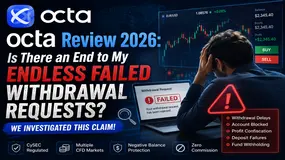
octa Review 2026: Is There an End to My Endless Failed Withdrawal Requests? We Examined This Claim
octa, a Cyprus-based brokerage company, continues to face a common question from traders: when will my withdrawal requests be successfully processed? Maybe not literally, but contextually, it is allegedly the issue many traders have reported on broker review platforms such as WikiFX. Regardless of the trader’s region, be it South Asia, Indonesia, Brazil or any other, most traders have expressed their concerns over the alleged withdrawal delays or denials. In this octa review, we have examined several user allegations concerning withdrawal issues and other problems encountered on the platform.
WikiFX Broker
Latest News
InstaForex Review 2026: Is This Forex Broker Safe?
 WikiFX
SandStoneFX Review 2026: Is This Forex Broker Safe?
WikiFXFake Investment Scam and Human Trafficking Network Busted with 109 Arrested
WikiFXFacing a 20% Floating Loss: How Beginners Can Prevent a Margin Call
WikiFXForex Traders With Day Jobs: The PERKESO Deadline You Cannot Ignore
WikiFXEMAR MARKETS Review 2026: FSCA Regulation, Withdrawal Complaints, and Account Access Risks
WikiFXMalaysia’s Pension Fund (KWAP) Hit by eFishery Fraud Scandal with RM163 Million at Risk
WikiFXMaxpro365 Review 2026: Where Is My $23,000? We Investigated User Allegations About Missing Funds
WikiFXeFishery Founder Jailed Nine Years as KWAP Defends RM163 Million Loss
WikiFXKASPER CAPITAL MARKETS Review 2026: Regulation, Safety, and User Feedback
WikiFXRate Calc

