Forex Today: US Dollar holds firm despite improving risk appetite
Abstract:The US Dollar Index (DXY) rose for the second consecutive week despite improving market sentiment. The debt ceiling drama is set to continue as the deadline approaches, and although there are hopes for a deal, it has not been reached yet. The banking sector remains in the spotlight, particularly after Treasury Secretary Yellen's comments on Friday. Next week, the market will get a glimpse of the performance of the global economy with the preliminary May PMI that will likely weigh on sentiment.

Here is what you need to know for next week:
The US Dollar Index (DXY) rose for the second consecutive week despite improving market sentiment. The debt ceiling drama is set to continue as the deadline approaches, and although there are hopes for a deal, it has not been reached yet. The banking sector remains in the spotlight, particularly after Treasury Secretary Yellen's comments on Friday. Next week, the market will get a glimpse of the performance of the global economy with the preliminary May PMI that will likely weigh on sentiment.
Treasury yields rose sharply during the week, reaching monthly highs. Market participants pared back their bets on Federal Reserve (Fed) rate cuts. On Wednesday, the Fed will release the minutes of its latest Federal Open Market Committee (FOMC) meeting. The key report in the US will be on Friday with the Core Personal Consumption Expenditures Price Index. This inflation indicator will be crucial ahead of the next Fed meeting and critical for markets.
EUR/USD closed the week hovering around the 20-week Simple Moving Average (SMA) near 1.0800. The short-term bias is to the downside, and the price dropped below key daily SMAs. Hawkish talk from European Central Bank (ECB) officials failed to support the Euro.
Analysts at Rabobaknk wrote:
In our view, the market will continue to price out expectations of 2023 rate cut from the Fed which should allow the USD more support in the coming months. Simultaneously it remains our view that EUR long positions will be trimmed as the Eurozone squares up to the risk of stagnation in the second half of this year. We remain of the view that EUR/USD will head to 1.06 in H2 2023.
GBP/USD ended the week hovering around 1.2450, the same level it had a week ago. The pair continues to move with a bearish bias. Next week, the UK will report on inflation with the annual rate of the Consumer Price Index (CPI) expected to rise from 1.0% to 1.4%, adding more pressure to the Bank of England.
The Japanese yen was among the biggest losers despite Friday's recovery. Rising government bond yields in the US and Europe, and improving market sentiment boosted USD/JPY above 138.00, a level not seen since November 2022. Inflation in Japan rebounded unexpectedly in April, as measured by the National CPI. More inflation data is due with the Tokyo CPI on Friday.
AUD/USD finished the week flat after testing 0.6600 following Reserve Bank of Australia (RBA) minutes and employment numbers. The Aussie lagged, with AUD/NZD posting the lowest close since December.
NZD/USD erased last week's losses and climbed towards 0.6300, rising back above the 20-week SMA. The kiwi was among the top performers of the week. On Wednesday, the Reserve Bank of New Zealand (RBNZ) will announce its decision on monetary policy, with a 25 basis points rate hike expected.
TD Securities analysts commented:
After the surprise 50bps hike in Apr, we don't expect another 50bps shocker after the softer Q1 CPI print. However, we do acknowledge the risk of one as the budget update shows more fiscal impulse working through the economy from the cyclone rebuild. Focus turns to the new OCR track and an increase in the terminal rate will lead markets to price in further hikes.
USD/CAD continues to move sideways between 1.33 and 1.36 and is about to post another weekly close near the 20-week SMA at 1.3500. The Loonie outperformed on the back of higher-than-expected Canadian inflation data. Although the market does not expect a rate hike from the Bank of Canada, rate cuts by year-end have been priced out.
Gold dropped significantly but ended far from the lows, offering hope for the bulls. XAU/USD found support at $1,950 and rebounded toward $1,980 after Powell's comments on Friday. Silver posted modest weekly losses, finding support at the 20-week SMA.


Read more

suxxessfx Review 2026: Funds Worth $5K-$42K Reportedly Lost. Check Our Investigation!
suxxessfx, a Seychelles-based brokerage entity, grabbed massive ire from traders on broker review platforms such as WikiFX, a globally recognized forex broker regulation inquiry app. Exposure reports have revealed fund losses worth over $5K-$42K on the broker’s trading platform. This suxxessfx review examines serious user allegations and its regulatory status. Read on!
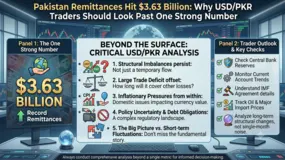
Pakistan Remittances Hit $3.63 Billion: Why USD/PKR Traders Should Look Past One Strong Number
Pakistan remittances reached $3.631 billion in July 2026, up 13% year on year and 4.5% from June, according to the latest State Bank of Pakistan data release. The SBP remittances update is a useful external-sector input, but it is not a currency forecast. This guide explains what the inflow can mean for the Pakistan forex market and USD PKR, and what it cannot prove about the next Pakistan rupee move.
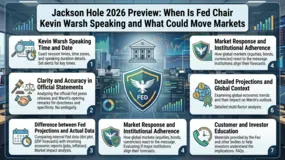
Jackson Hole 2026 Preview: When Is Fed Chair Kevin Warsh Speaking and What Could Move Markets
Fed Chair Kevin Warsh is listed to deliver Jackson Hole keynote remarks on 28 August 2026. See the schedule, market scenarios and USD-gold watchlist.

Sygnum Global FCA Warning: Check sygnumglobal.co Before You Send Money
The FCA warned that Sygnum Global and sygnumglobal.co are unauthorised. Check the phone numbers, consumer protections and payment steps before dealing.
WikiFX Broker
Latest News
What Your Trading Journal Really Reveals About Your Behaviour
 WikiFX
WikiFX Wishes You a Blessed Maulidur Rasul
WikiFXTreasury Buybacks Alter Dollar Liquidity Flows
WikiFXEMIRAX MARKETS Review: Withdrawal Blocks, Suspended Login Access, and a High-Risk Broker Warning
WikiFXFIX API Forex in 2026: The Broker Integration Questions That Matter After the Connection is Live
WikiFXFOMO in Forex: Why a Missed Move Feels Like a Real Loss
WikiFXFASTWIN Review: What Traders Should Know Before Depositing
WikiFXCapital Street FX Review: Is Your Deposit Safe?
WikiFXHe Worked Hard and Saved Money Frugally, Now A Scammer Took It All
WikiFXInteractive Brokers Review 2026: Regulation, Fines and Withdrawal Risks
WikiFXRate Calc

