Gold shines bright as prices skyrocket, but will the Fed douse the glittering flame?
Abstract:Stakes are high at the next Federal Reserve rate meeting, but even more so for gold buyers as XAU/USD rose by 11.17% from March 8 to 20, and the price still lingers around the highs.

Stakes are high at the next Federal Reserve rate meeting, but even more so for gold buyers as XAU/USD rose by 11.17% from March 8 to 20, and the price still lingers around the highs. A sharp drop at the Fed rate meeting could leave traders wishing they had banked their profits. This piece will delve into the factors driving gold prices, the implications of the Fed's upcoming decision, and potential strategies for navigating the turbulent market.
Bank panic spreads, gold prices shine
The move higher in gold prices was well motivated, as banks on both sides of the Atlantic went bust one after another. Governments stepped in, and in the USA alone, four months of quantitative tightening were reversed quickly, as the Fed Balance grew by 297 billion. This highlights the role of gold as a safe-haven asset, sought by investors during times of economic uncertainty and financial market turmoil.
Inflation concerns and the weakening dollar
In addition to bank panic, concerns over rising inflation and a weakening dollar have contributed to the surge in gold prices. As inflation erodes the purchasing power of money, investors often turn to gold as a hedge against it. Furthermore, a weaker dollar makes gold cheaper for foreign investors, thereby increasing demand for the precious metal.
The Fed's dilemma and potential outcomes
The futures markets are now predicting that the Fed will cut their key interest rate from the current range of 450-475 by anything from 25 to 50bps by the end of the year. If they proceed with these rate cuts, gold prices will remain supported.
However, the tactical challenges for gold traders are more acute. The price has risen sharply over the last few days, and for the rate meeting on March 21, 2023, the futures markets are giving it an 83.4% chance that the Fed would increase their crucial rate by 25bps. If they indeed increase interest rates, there is a good chance that we see profit taking in the gold prices. However, if they do not increase the interest rate, we could see a price jump in the gold price, yet with the price being overbought, is there any demand for gold prices at current levels?
Long-term outlook
It is clear that the Fed rate hikes are causing havoc to the economy, and it is unlikely that we will have a soft landing, i.e., the economy slowing down enough to slow inflation but not slowing too much to create a strong recession. It looks like the future will bring more rate hikes and possibly more support for the economy, so the outlook for gold prices remains bullish. However, I would prefer to buy on a price correction, like in the $1,866 to $1,925 range, to not buy at overbought levels. A drop below $1,866 will negate my bullish outlook.


Read more
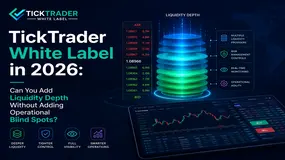
TickTrader White Label in 2026: Can You Add Liquidity Depth Without Adding Operational Blind Spots?
A TickTrader white label can look like the fastest route to a modern branded trading environment, but a fast launch is not the same as a controlled launch. This 2026 broker guide explains what the TickTrader platform is, where a Soft-FX broker solution can sit in a wider operating stack, and how to evaluate the difference between a white label, a server licence, and a connected CRM or Client Office setup. It also unpacks TickTrader cost beyond the monthly headline, including implementation, integration, support, data, governance, migration, and exit assumptions. Use the practical questions, workflow tests, comparison table, and launch checklist to assess a Soft-FX TickTrader provider without mistaking a feature demo for evidence that your brokerage can run the service safely at scale.
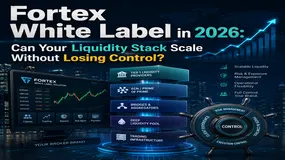
Fortex White Label in 2026: Can Your Liquidity Stack Scale Without Losing Control?
A Fortex white label can look like the fastest route to a modern branded trading environment, but a fast launch is not the same as a controlled launch. This 2026 broker guide explains what the Fortex platform is, where a Fortex broker solution can sit in a wider operating stack, and how to evaluate the difference between a white label, a server licence, and a connected CRM or Client Office setup. It also unpacks Fortex cost beyond the monthly headline, including implementation, integration, support, data, governance, migration, and exit assumptions. Use the practical questions, workflow tests, comparison table, and launch checklist to assess a Fortex provider without mistaking a feature demo for evidence that your brokerage can run the service safely at scale.
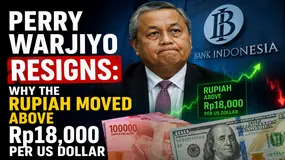
Perry Warjiyo Resigns: Why the Rupiah Moved Above Rp18,000 per US Dollar
Perry Warjiyo resigned as Bank Indonesia governor, Destry Damayanti became acting governor, and the rupiah traded above Rp18,000. Here is what forex traders should monitor next.
MT4 White Label Cost in 2026: What Brokers Must Budget Beyond the Platform Fee
The visible fee in an MT4 white label proposal is rarely the real cost of operating it. For an existing broker, the decision is not simply whether an MT4 white label platform is “cheap” or “expensive.” The real question is whether the commercial model remains viable after integration, support, data, client migration, compliance, and exit costs are included. That is why an MT4 white label cost review should be built as a 24- to 36-month operating case. It should compare three credible choices: 1. Keep the present MT4 setup and improve its weakest controls. 2. Replace the MT4 white label provider but retain the client proposition. 3. Migrate selected clients or products to another platform while running MT4 in parallel. This guide explains how to build that case without relying on headline prices or generic vendor claims.
WikiFX Broker
Latest News
LQH MARKETS Review: Multiple Traders Report Withdrawals Blocked and Accounts Terminated
 WikiFX
Spread Cheating: The Invisible Trading Cost That Could Be Working Against You
WikiFX"They Want to See Your Face": Inside ATFX Cambodia's Rise
WikiFX57 Booked in Pune Forex Scam Probe: The Fake Trading App Checklist Every Indian Investor Needs
WikiFXFxPro Review: Is This 1.80-Rated Broker Safe for Your Funds?
WikiFXRazor Markets Review: What Traders Should Know Before Depositing
WikiFXAGILE GLOBAL LIMITED Review: What Traders Should Know Before Depositing
WikiFXMASTER MIND CAPITALS Review: Withdrawal Complaints Pile Up Against This Unregulated Broker
WikiFXMangaluru Woman, 61, Loses Rs 16.2 Lakh in Facebook Scheme
WikiFXATFX Trading Volumes Drop 29% After Record Q1
WikiFXRate Calc

