XAUUSD: Elliott wave analysis and forecast for 10.02.23 – 17.02.23
Abstract:The Elliott Wave theory is a form of technical analysis that looks for recurrent long-term price patterns related to persistent changes in investor sentiment and psychology. The theory identifies impulse waves that set up a pattern and corrective waves that oppose the larger trend.
The Elliott Wave theory is a form of technical analysis that looks for recurrent long-term price patterns related to persistent changes in investor sentiment and psychology. The theory identifies impulse waves that set up a pattern and corrective waves that oppose the larger trend.
Let's look at Elliott Theory for the pair of XAUUSD
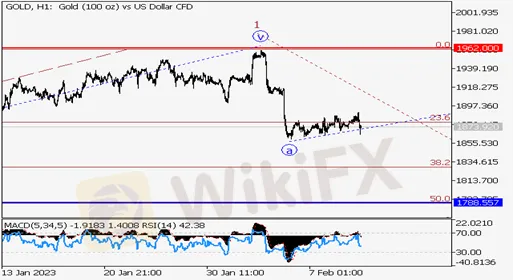
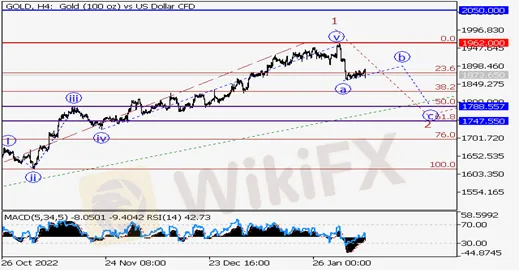
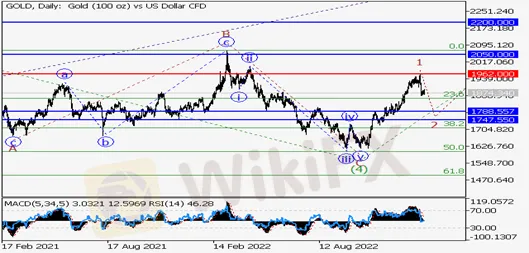
Main scenario: consider short positions from corrections below the level of 1962.00 with a target of 1788.55 – 1747.55.
Alternative scenario: breakout and consolidation above the level of 1962.00 will allow the pair to continue rising to the levels of 2050.00 – 2200.00.
Analysis: a descending correction appears to have formed as the fourth wave (4) of larger degree on the daily chart, with wave С of (4) completed and the fifth wave (5) unfolding inside. Apparently, the first wave of smaller degree 1 of (5) is formed on the H4 chart, and a local correction is developing as the second wave 2 of (5). On the H1 chart, apparently, wave a of 2 is formed, and wave b of 2 is developing at the moment. Once it's completed, the pair will continue to fall to the levels of 1788.55 – 1747.55 if the presumption is correct. The level of 1962.00 is critical in this scenario as a breakout will enable the pair to continue growing to the levels of 2050.00 – 2200.00.
Kindly note that the analysis provided above are just ones opinion and thoughts about the markets, which might not necessarily be accurate. Therefore it shouldn't considered as financial investment advice.


Read more

How to Start a Forex Broker in 2026: Build the Operating Model Before You Buy the Platform
A forex brokerage launch can look like the fastest route to a modern branded trading environment, but a fast launch is not the same as a controlled launch. This 2026 broker guide explains what the broker platform is, where a technology provider broker solution can sit in a wider operating stack, and how to evaluate the difference between a white label, a server license, and a connected CRM or Client Office setup. It also unpacks broker startup costs beyond the monthly headline, including implementation, integration, support, data, governance, migration, and exit assumptions. Use the practical questions, workflow tests, comparison table, and launch checklist to assess a technology provider without mistaking a feature demo for evidence that your brokerage can run the service safely at scale.

Rupee Nears 95.15 as RBI Cushions Oil Pressure: What India FX Traders Should Watch Now
India's rupee is expected to open near 95.14-95.16 per US dollar after closing at 95.2075 on Friday, while Brent crude was quoted at $84.50 and RBI market presence supported the currency. This report separates a reported market intervention from a fixed exchange-rate target, explains why oil, US employment data and Federal Reserve expectations matter, and gives a practical risk checklist for forex trading India. It also explains why volatility is not a reason to trust unverified online forex trading platforms.
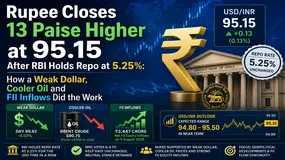
Rupee Ends 13 Paise Up at 95.15 After RBI Holds Repo at 5.25%: The Effect of a Weak USD, Cooler Oil
The Indian rupee settled at 95.15 against the US dollar on 5 August 2026, gaining 13 paise after the Reserve Bank of India's Monetary Policy Committee voted 6-0 to keep the repo rate unchanged at 5.25 percent for the third time in a row in FY27. The rupee had opened 46 paise higher, rallied to an intraday strongest of 94.89 ahead of the policy decision, and then drifted back as RBI Governor Sanjay Malhotra noted that the currency 'has not appreciated as intended despite the high flows from foreign shores.' A weak dollar index, a sharp pullback in Brent crude from above USD 100 in July, and net FII equity inflows of Rs 2,447 crore on Tuesday combined to support the rupee. USD-INR is expected to trade in a 94.80-95.50 band in the near term.

TickTrader White Label in 2026: Can You Add Liquidity Depth Without Adding Operational Blind Spots?
A TickTrader white label can look like the fastest route to a modern branded trading environment, but a fast launch is not the same as a controlled launch. This 2026 broker guide explains what the TickTrader platform is, where a Soft-FX broker solution can sit in a wider operating stack, and how to evaluate the difference between a white label, a server licence, and a connected CRM or Client Office setup. It also unpacks TickTrader cost beyond the monthly headline, including implementation, integration, support, data, governance, migration, and exit assumptions. Use the practical questions, workflow tests, comparison table, and launch checklist to assess a Soft-FX TickTrader provider without mistaking a feature demo for evidence that your brokerage can run the service safely at scale.
WikiFX Broker
Latest News
iFX Brokers Review: Is Your Deposit Safe?
 WikiFX
ONE ROYAL Faces SCM Malaysia Warning , What Traders Should Verify Before Funding an Account
WikiFXASIC Crackdown Hits 5-Year High: 150 Rogue Operators Banned
WikiFXMoneycorp Review: Is This Broker’s License Really Telling the Truth?
WikiFXBYBIT Review: Unregulated Broker Warning After Withdrawal Complaints and Forex Profit Disputes
WikiFXSECP Refers Blink Capital to FIA Over Rs446.6m Alleged Fraud
WikiFXHow to Start a Forex Broker in 2026: Build the Operating Model Before You Buy the Platform
WikiFXEMAR MARKETS Review 2026: Severe Withdrawal Complaints and Risk Signals
WikiFXTrader's Way Review: Trades Vanished Overnight , And There's No Regulator to Call
WikiFXLockwood Review: AMF-Blacklisted Broker with Users Reporting Blocked Withdrawals
WikiFXRate Calc

