Mastercard Q4 results announced
Abstract:For the fourth quarter, Mastercard's adjusted earnings rose 13% to $2.65 per share on 12% revenue growth to $5.8 billion. That just beat Wall Street expectations of 9.4% earnings growth to $2.57 per share on 10.9% revenue growth to $5.79 billion.

For the fourth quarter, Mastercard's adjusted earnings rose 13% to $2.65 per share on 12% revenue growth to $5.8 billion. That just beat Wall Street expectations of 9.4% earnings growth to $2.57 per share on 10.9% revenue growth to $5.79 billion.
As announced by
Mastercard Inc. (NYSE: MA the latest financial results for the previous quarter before the market open on Thursday. Worlds third largest financial services company beat both revenue and earnings per share (EPS) estimates for Q4 2022.
The company reported revenue of $5.817 billion vs. $5.793 billion estimate.
EPS at $2.65 per share in Q4 vs. $2.575 per share expected.
CEO commentary
“We closed out the year with strong financial results and notable wins which will help us capitalize on the tremendous secular shift to digital payments,” Michael Miebach, CEO of the company said in a press release.
“As we look at the broader economy, we see the continued recovery of cross-border travel, with volumes up 59% versus a year ago and were encouraged by Asia opening up further. While macroeconomic and geopolitical uncertainty persists, consumer spending has been remarkably resilient. We are well prepared to adjust our investment profile quickly if needed,” Miebach concluded.

Stock reaction
Share price of Mastercard dipped by around 2% on Thursday, trading at around $374 a share.
Stock performance
• 1 month: +7.91%
• 3 months: +17.65%
• Year-to-date: +8.06%
• 1 year: +7.19%
Mastercard stock price targets
• Baird: $410
• Barclays: $427
• Truist Securities: $450
• Jefferies: $430
• Keybanc: $425
• UBS: $441
• Wells Fargo: $405
• Mizuho: $380
• Morgan Stanley: $437
Mastercard is the 19th largest company in the world with a market cap of $363.31 billion. Mastercard Inc. (NYSE: MA) and many other stocks can be traded from the NYSE, NASDAQ, HKEX, ASX, LSE and DE with GO Markets as a Share CFD.


Read more
Best White Label Trading Platform 2026
The decision to switch white label providers or migrate to a modern white label trading platform is no longer a luxury for growth-minded brokers—it's a strategic necessity for survival in 2026. The convergence of technological stagnation, regulatory evolution, and shifting client expectations has created a perfect storm.
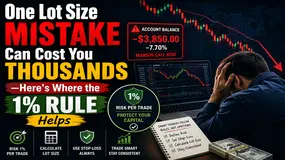
One Lot Size Mistake Can Cost You Thousands—Here's Where the 1% Rule Helps
Switched from one trading strategy to another but could not avert heavy losses? Wondering what went wrong despite your market analysis being spot on? It may not be a strategic issue then. It may just be that you chose the wrong lot size. Yes, a single oversized position can get your account exposed to far greater risks than you may imagine. You may be moved by the impressive profits with increasing lot sizes. But by doing so, you also invite a proportionate rise in losses. This is where you need to apply the essential 1% risk management principle. This rule helps you assess how much you can afford to lose if a trade does not go as planned.
Your Backtesting Results Mean Nothing If You Ignore This One Live Trading Reality
Backtesting remains one of the primary skills forex traders learn. By implementing a trading strategy based on historical currency pair price information, traders can view their past performance. The strategy leading to consistent profits during backtesting can raise confidence and lay a structured approach to the forex market. However, the path is not as simple as it may sound. Several traders tend to meet a harsh reality when transitioning to live trading. The strategy that seemed almost flawless on historical charts suddenly fails to deliver the results it did before. The sudden difference may not necessarily be because of a poor strategy. Rather, it indicates limitations concerning backtesting and several factors that play their part in a live market where conditions change frequently. It is thus important to understand these differences so that you can set realistic expectations and work on to achieve consistent success.

Can AI Really Improve Forex Trading? The Benefits, Risks and Hidden Limitations
We are living in the age of artificial intelligence, where everything including financial matters such as forex are rapidly influenced by this phenomenon. AI-powered tools are here to identify numerous trading opportunities and analyze thousands of data, all in seconds, becoming the preferred option for both retail and institutional traders. Regardless of its immense benefits, traders often question - Whether the AI can truly transform their forex trading experience or is it just like another technology offering scope for unrealistic expectations? While the AI can ensure faster trading and more informed decisions, it is never a sure shot way to profits. As a trader, you need to understand both the strengths and limitations of AI when it comes to generating real wealth.
WikiFX Broker
Latest News
ForexMart Review: Profit Canceled, Principal Withheld, and a Broker Warning Traders Cannot Ignore
 WikiFX
How a 'Legitimate' Investment Became a RM67.5 Million Ponzi Scheme That Scammed 206 Investors
WikiFXTitan Capital Markets Review 2026: Complaints, Withdrawals, and Severe Risk Signals
WikiFXRupee Hits Two-Week High as RBI Defends 97 Mark
WikiFXSingapore Dollar Holds Tight Range as FOMC Looms
WikiFXcTrader White Label Platform: A Practical Guide for Broker Evaluation and Multi-Asset Expansion in 2
WikiFXWhat a divided Fed means for investors
WikiFXReview 2026: Dollars Markets Regulation, Withdrawal Complaints, and Platform Risks
WikiFXCapital Guard Liquidated: $17.4m Raised, Most Funds Gone
WikiFXPocket Broker Review: Is Your Deposit Safe?
WikiFXRate Calc

