WIKIFX REPORT: Standard Bank announces Africa Trade Barometer
Abstract:Standard Bank has launched Africa Trade Barometer, which is expected to become Africa’s leading trade index.
Standard Bank has launched Africa Trade Barometer, which is expected to become Africas leading trade index.

Philip Myburgh, Head of Trade and Africa-China at Standard Bank, said that present in 20 African markets and supporting trade activities in many more, Standard Bank enjoys a uniquely privileged view of Africa, “especially its rapidly emerging enterprises heavily focused on domestic, cross-border and global trade.”
Trade is deeply rooted in Africas DNA and integral to its history and future development.
As such, Myburgh believes Africa‘s largest bank by assets and so single-mindedly committed to Africa’s growth has a duty to “leverage its privileged position, presence and insight to intelligently inform and grow the continents trade ecosystem.”
Over the long term, rapidly growing markets in East and West Africa and the re-emergence of global growth post Covid-19, currently combine with the broadly ratified African Continental Free Trade Area (AfCFTA) to present considerable opportunity for Africas small, medium, and larger domestic businesses.
Short-term challenges also demand closer coordination.
Current geopolitical volatility only highlights the importance of cross-border and regional African trade.
Food inflation in Africa as well as outright shortages of African staples like wheat underline the urgency of building much closer economic cooperation across the continent.
Trade offers Africa the opportunity to offset supply chain shocks while managing the worst effects of inflation, high interest rates and currency depreciation.
“Since insight is key to leveraging trade to build resilience, our Africa Trade Barometer couldnt be launching at a better time,” added Myburgh.
In a world of disrupted local and global supply chains - and on a continent with significant development and infrastructural challenges - businesses face a daunting array of both new and perennial risks. Understanding and resolving pain points as businesses leverage trade to drive growth in this complex risk and opportunity landscape, requires insight – ideally informed by an on-the-ground presence and proven capability across the continent.
Standard Banks Africa Trade Barometer will focus initially on Angola, Ghana, Kenya, Mozambique, Namibia, Nigeria, South Africa, Uganda, Tanzania and Zambia.
The Barometer, which aims to publish twice a year, currently shares comparative data on trade openness, access to finance, macroeconomic stability, infrastructure, foreign trade, governance, economy and trade finance behaviour.
Qualitative and quantitative intelligence gathered from 2,400 firms representing SMEs, large family businesses, corporates and multinationals across all 10 economies is analysed and then augmented with third-party sources including the World Bank, International Trade Center, and individual country central banks.
The result “presents one of the most comprehensive views of actual trade as experienced on the ground by real African businesses,” said Myburgh.
Trends and analysis gleaned will also provide insight into the broader regions that the 10 study markets represent.
This unique view of African trade will provide a valuable resource for businesspeople, students, governments, NGOs and investors considering the continent – as well as African entrepreneurs - to assess and leverage Africas considerable trade opportunity, currently estimated in the region of $70bn annually.
“We expect the Africa Trade Barometer to become the leading index of African trade trends, activities and developments as Africa‘s small, medium and large businesses define the continent’s next stage of domestic growth and regional and global expansion,” concluded Myburgh.

Read more
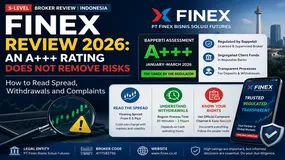
FINEX Review: A+++ Rating Does Not Remove Risks - How to Read Spread, Withdrawals & Other Aspects
FINEX review 2026 for readers comparing an Indonesia forex broker: understand what Bappebti's A+++ rating does and does not show, then check floating spreads, withdrawals, segregated accounts and the complaint route for PT Finex Bisnis Solusi Futures.
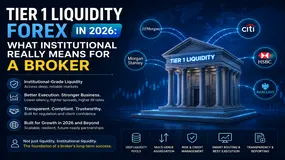
Tier 1 Liquidity Forex in 2026: What Institutional Really Means for a Broker
Choosing a tier 1 liquidity forex is not a search for the lowest displayed spread or the longest provider list. It is a broker decision about pricing integrity, depth, routing, credit, reporting, incident response, and client communication. This 2026 guide explains how an institutional liquidity provider, bank liquidity forex, or interbank liquidity provider arrangement fits into a broker’s execution chain; what to test before onboarding; why a “best tier 1 liquidity forex” claim cannot replace due diligence; and how to compare cost beyond commission. Use the execution-quality scorecard, provider questions, routing scenarios, and 90-day onboarding plan to assess whether a liquidity relationship can support your actual client mix, instruments, risk model, and jurisdiction. The goal is not to make a universal ranking. It is to build evidence that your broker can explain, supervise, reconcile, and recover its execution service when market conditions are difficult.
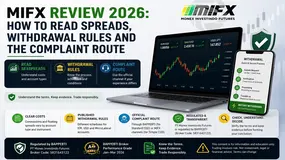
MIFX Review 2026: How to Read Spreads, Withdrawal Rules and the Complaint Route
MIFX review 2026: understand published commissions and spreads, the withdrawal process, Instant Withdrawal conditions, and the PT Monex Investindo Futures complaint route without turning community discussion into factual allegations.
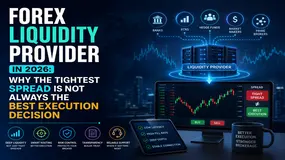
Forex Liquidity Provider in 2026: Why the Tightest Spread is Not Always the Best Execution Decision
Choosing a forex liquidity provider is not a search for the lowest displayed spread or the longest provider list. It is a broker decision about pricing integrity, depth, routing, credit, reporting, incident response, and client communication. This 2026 guide explains how a forex LP, FX liquidity provider, or liquidity provider forex arrangement fits into a broker’s execution chain; what to test before onboarding; why a “best forex liquidity provider” claim cannot replace due diligence; and how to compare cost beyond commission. Use the execution-quality scorecard, provider questions, routing scenarios, and 90-day onboarding plan to assess whether a liquidity relationship can support your actual client mix, instruments, risk model, and jurisdiction. The goal is not to make a universal ranking. It is to build evidence that your broker can explain, supervise, reconcile, and recover its execution service when market conditions are difficult.
WikiFX Broker
Latest News
BX Trade Review: Is a $1 Minimum Deposit Worth the No-Regulation Risk?
 WikiFX
US PPI Cools, but the Core Number Tells a More Complicated Story
WikiFXSingapore Nabs 270 Suspects in RM17 Million Scam Bust
WikiFXVestrado Review: A 4.84 Score, an Offshore Base and an FSCA Status Worth Verifying
WikiFXRinggit climbs vs US dollar as markets await inflation data
WikiFXTier 1 Liquidity Forex in 2026: What Institutional Really Means for a Broker
WikiFXFINEX Review: A+++ Rating Does Not Remove Risks - How to Read Spread, Withdrawals & Other Aspects
WikiFXWhy Importers Panic When Dollars Dry Up, and Why You Should Care
WikiFXFizmo Fx Markets Review 2026: Unregulated Status and Withdrawal Complaints
WikiFXJust Markets Review: 1.82 Score and No Regulation Despite Positive Reviews
WikiFXRate Calc

