WIKIFX REPORT: Russians lose millions as Finiko pyramid scheme collapses
Abstract:Many people link Russia's big financial pyramid schemes with the 1990s and the financial Wild West that followed the Soviet Union's demise. They are, nevertheless, still alive and well today. The Finiko pyramid fraud was busted recently, and its founder, Kirill Doronin, was arrested. The scandal, which began in 2018, defrauded Russians of over $100 million.
Many associate giant financial pyramid schemes in Russia with the 1990s and the financial Wild West that followed the end of the Soviet Union. But they are still alive and well today. The last few weeks saw the unraveling of the Finiko pyramid scheme and the arrest of founder Kirill Doronin. The scheme, which launched in 2018, swindled about $100 million from the Russians who took part.
How Finiko operated
On one of its sites, Finiko described itself as an “automated profit-generation system”. Investors had three options. In one, you invested a sum over $1,000 on the promise of up to 30 percent a month in profit (the initial investment threshold later increased sharply). In another, Finiko promised to pay off a debt, loan or mortgage within 10 months if you paid 35 percent of the value of the debt to Finiko. In a third option, Finiko offered to purchase a house or car for 35 percent of the total cost.
Money could be invested in Finiko using Bitcoin or by purchasing Tether — the companys in-house currency — which traded at a value determined by Finiko. As always with a pyramid scheme, some clients made money off the investments of later clients. But returns were increasingly delayed and all payments ceased in June.
Who was behind it?
Dorinin was the face of Finiko and heavily promoted the company on his social media accounts. His charisma played a big role in the scheme‘s rapid expansion, according to a source at the Central Bank. “He looks trustworthy, he’s well-dressed, and he has an athletic physique,” the source said, adding that women were a particular target. A store owner from Krasnoyarsk told The Bell that even when it was clear the company was struggling, Doronins YouTube performances convinced her everything would be OK.
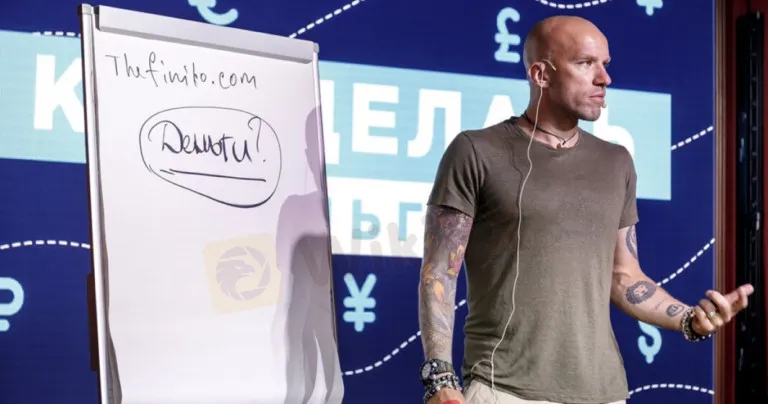
The other founder of Finico was Eduard Sabirov, an ex-business partner of former Communications Minister Nikolai Nikiforov (they worked together on the Innopolis project — a state-funded attempt to build a Russian Silicon Valley). Back then, Nikiforov said he had “no doubts about Sabirovs business reputation”. The third key figure in Finiko was the unusually named Zygmunt Zygmuntovich.
The three founders blame each other for the collapse of Finiko. Doronin has said his partners deceived him, while Sabirov claimed money disappeared in the accounts of brokers. Before his arrest last month, Doronin announced he was going to move to Turkey. The whereabouts of Sabirov and Zygmuntovich are unknown.
Who invested in Finiko?
A Finiko manager told a local newspaper late last year that there were more than 200,000 investors (but this figure is difficult to verify). By earlier this summer, popular Russian search engine Yandex was recording almost half a million monthly questions about Finiko. Thats significantly more than the Cashberry pyramid scheme, which fell apart a few years ago, resulting in $50 million of losses.
How it came to the attention of the authorities
Officials first began to take notice of Finiko in spring 2020, according to The Bells source at the Central Bank. By the summer, the regulator had passed details to law enforcement. A criminal case was eventually opened against the founders of Finico in December, although even this did not deter new investors.
Where did Finiko come from
Finiko was set-up in Tatarstan, an oil-rich, majority Muslim region in Central Russia. Pyramid schemes in Tatarstan are common because financial literacy is low, according to a source familiar with the Finiko investigation. Many locals do not trust banks, and are inclined to hand over their money to anyone who promises them mountains of gold.
Why the world should care: The background to Finico is a multi-year fall in real wages, poverty and a lack of options for savers. Just as the MMM pyramid scheme in the 1990s was a symbol of the post-Soviet period, so Finico tells us something about contemporary Russian politics and society.

Read more
FCA Warns EXOTICINVEST on 3 September 2026 with Seven Checks Before Paying
FCA warns EXOTICINVEST in a notice first published and updated on 3 September 2026. The UK regulator identifies EXOTICINVEST TRADING AND INVESTMENT FIRM and the website www.exoticinvest.ltd, stating that the firm is not authorised and may be targeting people in the UK. This is a dated regulatory warning, not a customer review or a confirmed loss report. Anyone approached through the named website should stop before paying, avoid sharing login credentials and verify the exact business independently through the FCA Firm Checker.
FTMO Global Markets Review for India: RBI FTMO Entry and Licence GB21027119
This FTMO Global Markets review starts with a naming problem. The RBI Alert List updated 22 October 2024 names FTMO and links to ftmo.com/en at item 13. FTMO's current contact page separately lists FTMO Global Markets in Mauritius, company ID C187370 and licence GB21027119. Its January 2025 privacy policy describes FTMO Global Markets Ltd as a Mauritius investment dealer. These records do not prove RBI authorisation for the broker domain, and they do not justify treating every FTMO-branded service as the same product or legal entity.
XMR Markets Review 2026: Allegations of Failed Withdrawals & Bonuses
XMR MARKETS, a South Africa-based brokerage entity, continues to face user allegations questioning the authenticity of its withdrawal processes. Some complaints also talk about bonuses failing to reflect in the traders' accounts. Users have reported these allegations on broker review platforms such as WikiFX. In this XMR MARKETS review, we have examined user complaints and provided a regulatory overview of the broker.
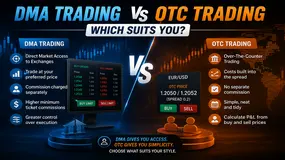
DMA Trading vs OTC Trading - Which Suits You?
Foreign exchange trading is basically of two types: Direct Market Access (DMA) and Over the Counter (OTC). Both come with their own pros and cons. It’s important to understand these two concepts before figuring out the differences between them. In this article, we will explain all of these.
WikiFX Broker
Latest News
Australian Dollar drifts higher above 0.7200 despite as strong US NFP
 WikiFX
Do You Know Your Cost of Swinging Gold? Gold CFD Costs Shift From Spreads To Overnight Fees
WikiFXSwiss Franc weakens as US Dollar strengthens on Fed rate hike bets
WikiFXXMR Markets Review 2026: Allegations of Failed Withdrawals & Bonuses
WikiFXOANDA Is Shutting Down MT4 Trading by 25 September 2026
WikiFXAustralian Dollar rides thin-trading lift as Fed test looms
WikiFXBlackwell Global UK Loss Widens as Revenue Falls 37%
WikiFXLiquid Network Suffers from a US$320 Million Bitcoin Hack
WikiFXCouple Faced Over RM1.5 Million Loss After Stock Tip Scheme
WikiFXThai Baht: Recent THB gains face headwinds – OCBC
WikiFXRate Calc

