Guide on How to Create a trading account for South African traders
Abstract:As Forex trading is becoming increasingly popular in South Africa today, many traders are now curious to learn how to create a trading account. To create a trading account one needs to have a valid email address, contact phone number, and valid identity card. We have simplified the process in this work for new traders seeking to open an account today.
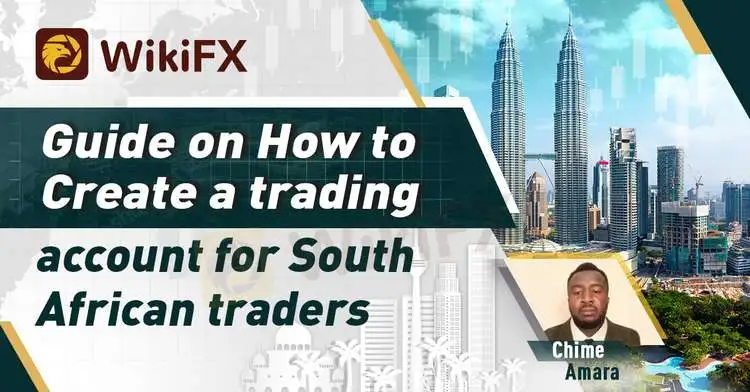
By: Chime Amara

There are various procedures one needs to follow to create a trading account. The following guide will help the trader to do so without stress.
Step by step procedure on how to create a trading account
Step 1: Choose your preferred broker: This is the first thing every trader needs to do. Brokers are not to be chosen hastily without proper investigations. This is because one's capital is at risk if one chooses the wrong broker. Only regulated brokers with years of experience in the industry are recommended from the list. To get help in choosing the best broker, it is necessary to visit Wikifx's website to choose from their list of approved brokers. Simply go to playstore and download the Wikifx app on your phone.
Step 2: Visit the broker's website and click on registration: This is the second step after one has found a reliable broker. On getting to the broker's website, a registration option is provided. You will have to click on this link and fill out the form provided. Here, you will have to enter the following details: Full names, phone number, address, email, and other personal information that may be requested.
Step 3: Email and phone number verification: After filling in one's details, a confirmation code will be sent to your email and phone number to verify you are the owners. You will have to login into your email and click on the link sent to you.
Step 4: Upload your identity card: After your email is verified, you will have to complete your identity verification process by uploading your identity documents. The broker will review this to confirm they are genuine. Your trading account details will be sent to you once approved.
Step 5: Fund your account: Once your account has been approved, you can proceed to fund it using any of the deposit options provided by the broker.
Step 6: Login into your Meta Trader 4 (MT4): This is the final step after one's account has been funded. You will need to login into the MT4 using the login details sent to you by the broker and begin your live trading.

Related broker


Read more
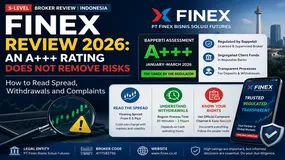
FINEX Review: A+++ Rating Does Not Remove Risks - How to Read Spread, Withdrawals & Other Aspects
FINEX review 2026 for readers comparing an Indonesia forex broker: understand what Bappebti's A+++ rating does and does not show, then check floating spreads, withdrawals, segregated accounts and the complaint route for PT Finex Bisnis Solusi Futures.
Forex Liquidity Provider in 2026: Why the Tightest Spread is Not Always the Best Execution Decision
Choosing a forex liquidity provider is not a search for the lowest displayed spread or the longest provider list. It is a broker decision about pricing integrity, depth, routing, credit, reporting, incident response, and client communication. This 2026 guide explains how a forex LP, FX liquidity provider, or liquidity provider forex arrangement fits into a broker’s execution chain; what to test before onboarding; why a “best forex liquidity provider” claim cannot replace due diligence; and how to compare cost beyond commission. Use the execution-quality scorecard, provider questions, routing scenarios, and 90-day onboarding plan to assess whether a liquidity relationship can support your actual client mix, instruments, risk model, and jurisdiction. The goal is not to make a universal ranking. It is to build evidence that your broker can explain, supervise, reconcile, and recover its execution service when market conditions are difficult.
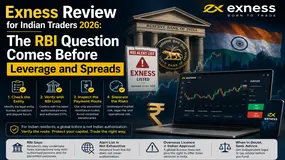
Exness Review for Indian Traders 2026: The RBI Question Comes Before Leverage and Spreads
Exness review for Indian traders in 2026. This guide explains what the RBI Alert List says, what it does not say, why a global license is not Indian authorization, and how to verify permitted forex routes before funding an account.
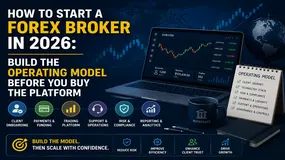
How to Start a Forex Broker in 2026: Build the Operating Model Before You Buy the Platform
A forex brokerage launch can look like the fastest route to a modern branded trading environment, but a fast launch is not the same as a controlled launch. This 2026 broker guide explains what the broker platform is, where a technology provider broker solution can sit in a wider operating stack, and how to evaluate the difference between a white label, a server license, and a connected CRM or Client Office setup. It also unpacks broker startup costs beyond the monthly headline, including implementation, integration, support, data, governance, migration, and exit assumptions. Use the practical questions, workflow tests, comparison table, and launch checklist to assess a technology provider without mistaking a feature demo for evidence that your brokerage can run the service safely at scale.
WikiFX Broker
Latest News
US PPI Cools, but the Core Number Tells a More Complicated Story
 WikiFX
Fizmo Fx Markets Review 2026: Unregulated Status and Withdrawal Complaints
WikiFXWhy Elections Make Currencies Swing Harder Than You Expect
WikiFXSingapore Nabs 270 Suspects in RM17 Million Scam Bust
WikiFXBX Trade Review: Is a $1 Minimum Deposit Worth the No-Regulation Risk?
WikiFXJust Markets Review: 1.82 Score and No Regulation Despite Positive Reviews
WikiFXRinggit climbs vs US dollar as markets await inflation data
WikiFXVestrado Review: A 4.84 Score, an Offshore Base and an FSCA Status Worth Verifying
WikiFXWhy Importers Panic When Dollars Dry Up, and Why You Should Care
WikiFXFINEX Review: A+++ Rating Does Not Remove Risks - How to Read Spread, Withdrawals & Other Aspects
WikiFXRate Calc

