Citizens Bank
Abstract:Citizens Bank is the 13th largest bank in the U.S. with more than $185 billion in assets. It serves 11 states across the New England, Mid-Atlantic, and Midwest regions. Headquartered in Providence, R.I., it is one of the nation's oldest and largest financial institutions and offers a wide variety of banking products.
General Information
Citizens Bank is the 13th largest bank in the U.S. with more than $185 billion in assets. It serves 11 states across the New England, Mid-Atlantic, and Midwest regions. Headquartered in Providence, R.I., it is one of the nation's oldest and largest financial institutions and offers a wide variety of banking products.
Business Scope
Citizens Bank offers a wide array of products for consumers and businesses. As a large regional bank, Citizens Bank offers an extensive array of deposit accounts and related services. It serves customers with approximately 1,000 branches and 3,000 ATMs across the regions in which it operates. Additionally, it offers an online savings account through its subsidiary, Citizens Access. Specifically, it provides Checking accounts, Savings accounts, Money market accounts, CDs and Credit cards. Citizens Bank also offers a wide range of banking and investment services for its customers including: Purchase mortgages, Refinance mortgages, Home equity loans, Home equity lines of credit (HELOCs), Student loans, Student loan refinancing, Personal loans, IRAs, Managed investment portfolios, Robo-advisor, Private banking, Financial advisors and Business loans.
Customer Service
Customer service at Citizens Bank is available Monday through Friday from 7 a.m. to 10 p.m. (EST). Live agents are also available Saturday and Sunday from 9 a.m. to 6 p.m. (EST) at 1-800-922-9999. Investors can also send a secure message through online banking to receive a response during regular business hours. In addition, investors can access accounts online or through the bank's mobile app. Online accounts at Citizens Access have a separate phone number for customer service and the hours are different. Live customer service is available Monday to Friday from 8 a.m. to 10 p.m. (EST), Saturday from 9 a.m. to 3 p.m. (EST), and Sunday from 10 a.m. to 3 p.m. (EST).
Read more

Top Trends in India’s Forex, Gold and Stock Markets Today
While it was a flat day for India’s benchmark stock indices (Sensex & Nifty), there was a sort of recovery for the rupee in the foreign exchange market on May 21, 2026. Giving investors more reasons to enjoy was another bull run for gold, which is touching the 16K threshold for 10 grams. Taking three markets combined, the overall sentiment remains mixed for investors. Here is how the day panned out for investors across these markets.

Mazi Finance Analysis Report
Mazi Finance presents a concerning mixed picture with an overall rating of 5.2 out of 10 and a "Use with Caution" designation that should give traders pause before committing funds. Based on 41 total reviews, the broker shows a troubling 43.9% negative rate, with sentiment nearly evenly split between positive experiences (21 reviews) and negative ones (18 reviews), alongside just 2 neutral assessments. Check this extensive analysis report.

Best Lowest Spread Forex Brokers in Indonesia 2026
Indonesia's retail forex market has matured into one of Southeast Asia's most active. With more than 800,000 Indonesians now trading currencies online and demand for tighter pricing rising every year, the spread — the gap between a broker's bid and ask quote — has become the single most decisive cost factor for active traders. A difference of even half a pip on EUR/USD can add up to thousands of US dollars annually for a trader running 50+ standard lots a month. This guide breaks down the brokers offering the lowest spreads to Indonesian traders in 2026, explains exactly how spread mathematics impacts your bottom line through real trader scenarios, and walks through the regulatory framework you should understand before depositing.
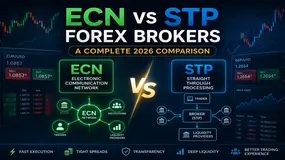
ECN vs STP Forex Brokers: A Complete 2026 Comparison
If you've spent any time researching forex brokers, you've almost certainly run into the labels ECN and STP. They sound technical, broker marketing departments use them interchangeably, and the actual difference matters more for your trading costs than most beginners realize. Both ECN and STP are No Dealing Desk (NDD) execution models — neither broker type takes the opposite side of your trade. That alone separates them from market makers and matters because it removes a fundamental conflict of interest. But the way each model routes your order, prices it, and earns revenue is structurally different, and those differences directly translate into the spread you pay, the slippage you absorb, and whether your strategy is profitable at scale. This guide breaks down exactly how the two models work, where they diverge, and which one fits which type of trader.
WikiFX Broker
Latest News
CFI Expands UAE Offering with Direct Access to Dubai Stocks
 WikiFX
Dollar Steadies Amid Oil Swings
WikiFXFast Profits vs Holding Overnight: Finding Your Forex Trading Pace
WikiFXDollar Eases As Gulf Tensions Cool
WikiFXTRANS X MARKETS Review: Unregulated Broker Warning for Forex Traders
WikiFXTrades Universal Review 2026: Unregulated Status and Regulator Warnings
WikiFXFAST TRADEFX Review 2026: Official Warnings and Severe Risk Signals
WikiFXST Global Markets Review 2026: Withdrawal Delays & Poor Customer Support Service Complaints
WikiFXDollar Strengthens Amid Strait of Hormuz Standoff
WikiFXDollar Steadies While Asian Currencies Slide
WikiFXRate Calc

