WikiFX report: Forex Versus The Stock Market
Abstract:The most popular worldwide markets are forex and stocks. It's critical to know which is optimal for your trading strategy and risk appetite before you start trading.

Forex and stocks are two of the most popular global markets. Before you start trading either, it's vital to know which is best suited for your trading strategy and risk appetite. Look at our comparison and learn the differences. Both have large numbers of historical transactions, volatility, and educational resources. However, a traders choice of the market is dependent on their personality, experience level, and preferred trade pace.
Generally speaking, forex tends to appeal more to those who prefer to make quick trades over short periods. What is Forex Trading? Forex is a liquid market with many buyers and sellers, so many profit opportunities exist. The stock market typically appeals more to investors with a longer-term strategy in mind. The process of buying shares can take longer as it involves more steps than in trading forex.
Forex Market Versus Stock Market; Overview
The largest difference between forex and the stock market is, of course, what you are trading. Forex, or foreign exchange, is a marketplace for the buying and selling of currencies, while the stock market deals in shares – the units of ownership in a company. Primarily, your decision about whether to trade currencies or stocks should be based on which asset you are interested in trading, but there are some other factors you need to consider.
The Foreign Exchange market, also called FOREX or FX, is the global market for currency trading. In its simplest form, forex is a game of speculating on currency exchange rates. If you want to start trading Forex, check out this guide for forex trading beginners.
For example, if you think that the dollar will fall against another currency (say the Canadian dollar) over the next three months, you can go short the Canadian dollar and make a profit. Or, if you think that the Canadian dollar will rise against another currency (the U.S. dollar), you can go long on the Canadian dollar and make money. It is important to know the difference between Forex VS Stock Market.
Stock trading is also about predicting what will happen to the market values over time — but with stocks instead of currencies. Traders buy stocks expecting that theyll increase in value over time — assuming nothing bad happens like a corporate earnings miss or other adverse news items.
To buy a stock means to own a piece of a company. To sell a stock means you no longer own that piece. When you trade on a CFDs platform, you own a contract for difference, not a real stock.
Difference Between The Forex And The Stock Market
Trading Hours: The opening hours of a market can have a significant influence over your trading, impacting the time you will need to spend monitoring the markets.
As forex is a completely global market, you can trade 24 hours a day, five days a week. This provides you with ample opportunities for trading, but also creates the risk of the market moving while you aren‘t around to monitor it. If you decide to trade forex, it is important to create a risk management strategy with appropriate stops and limits to protect your trades from unnecessary losses. The stock market is available only on weekdays from 9:30 am to 4 pm EST, while the forex market is open 24 hours a day for five days a week. However, it’s not always active during these 24 hours because there are four significant sessions where most of the trading occurs.
Accessibility: The forex market is far more accessible than the stock market because theres generally no minimum amount required to open an account. You can even open a micro account for less than $100. In the stock market, registration requirements dictate that you must register with a brokerage firm and open an account with a minimum of $25,000. You can trade stocks on margin with a margin account if extra funds are deposited into your account.
Liquidity
Liquidity is the ease at which an asset can be bought or sold in a market. It is an important consideration because the higher the volume of traders, the more money there is flowing through the market at any time – making it easier for you to find someone to take the other side of your position.
Forex is the largest and most popular financial market in the world, which means it is extremely liquid and frequently sees a daily turnover of trillions of dollars.
Market liquidity can fluctuate throughout the day as different sessions open and close around the world, but it also varies greatly depending on which FX pair you choose to trade. Just eight currency pairs account for the majority of trading volume – for example, the dollar is involved in almost 75% of all forex trades according to the Bank of International Settlements (2016).
The stock market sees comparatively fewer trades per day, but shares are still easy to access and trade. Large, popular stocks – such as Apple, Microsoft or Facebook – are the most liquid as there are usually willing buyers and sellers, but once you move away from blue chips there is often significantly less liquidity.
Leverage
Trading on leverage enables you to gain exposure to markets with just a fraction of the capital normally required. Leveraged products, such as CFDs, can be used to trade on margin across a range of markets.
Though it can be an advantage of both share trading and forex trading alike, it is more commonly cited as a feature of currency trading. Forex trades usually have a much larger leverage ratio, in some countries as much as 200:1. But leverage is a double-edged sword: though it can magnify returns, it can also magnify losses.
Whichever market you choose, it is important to be aware of the size of your exposure, and understand the risks involved.

Read more
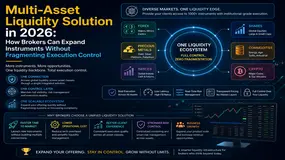
Multi-Asset Liquidity Solution in 2026: Expand Instruments Without Fragmenting Execution
A multi-asset liquidity solution can help a broker support FX, CFDs, commodities, and indices through a more unified operating model. But adding asset classes can also create fragmented symbols, pricing, routing, margin rules, records, and client messages if controls are not designed first. This 2026 guide explains how a multi asset liquidity provider, forex CFD liquidity setup, commodity liquidity provider, and indices liquidity provider fit into a broker-owned execution service. It outlines the due-diligence questions, shared-control model, cost drivers, and 90-day implementation plan that help teams expand without making the execution chain harder to explain. The aim is not to promise deeper liquidity or better trading outcomes. It is to create evidence that a broker can supervise market access, trace order events, reconcile costs, and communicate consistently to the relevant clients when conditions are difficult.
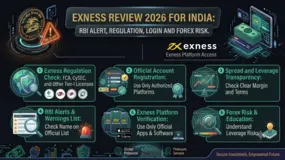
Exness Review 2026 for India: RBI Alert, Regulation, Login and Forex Risk
The RBI Alert List, updated on 19 November 2025, names Exness and the website www.exness.com. RBI says listed entities are not authorised to deal in forex under FEMA or operate an authorised forex ETP. Exness also publishes overseas regulatory records. These facts must not be mixed. Overseas regulation does not create RBI authorisation for an Indian resident.

Swissquote Review 2026 for India: Regulation, Login, Forex and Clone Risk
Official sources support overseas regulated identities linked to the Swissquote name. FINMA's current list shows Swissquote Bank SA as a bank, while an FCA warning identifies genuine UK firm Swissquote Ltd under FRN 562170. These records do not prove RBI authorisation. Indian residents must still check the authorised person, permitted purpose, electronic trading platform, payment route and legal entity before any forex transaction.
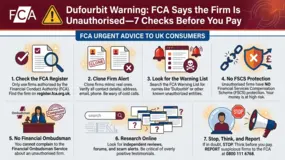
Dufourbit Warning: FCA Says the Firm Is Unauthorised—7 Checks Before You Pay
The FCA warned about Dufourbit on 19 August 2026. Check the named domain, contact details, missing protections and seven steps before making any payment.
WikiFX Broker
Latest News
DFSA Warns of Scam Impersonating Firm Menhir Capital
 WikiFX
KATOPRIME Review: Regulation Gaps and Broker Risks Traders Cannot Ignore
WikiFXSQUAREDFINANCIAL Review: Withdrawal Requests Go Unanswered as Clients Report Locked Accounts
WikiFXUK Inflation Jumps to 2.9%: What the July Data Means for GBP and Bank Rate Expectations
WikiFXWhy Fake Screenshots Make You Feel Like a Losing Trader
WikiFXMiri man loses RM511,406 to fake online investment scheme
WikiFXKATOPRIME Review: Unregulated and Risky, With Withdrawal Complaints to Verify
WikiFXReview 2026: STMARKET Regulation, MT5 Access, and Withdrawal Complaint Signals
WikiFXTrump bemoans Fed interest rate policy, says U.S. should be paying much less
WikiFXSri Lanka to Criminalize Unauthorized Forex Transfers
WikiFXRate Calc

