WikiFX report: Habits of Successful Traders
Abstract:The most successful forex traders are those who have developed and maintained good routines. We've compiled a list of some of the structures, methods, and disciplines you can use to improve your trading skills.

The most successful forex traders are the ones who have established good habits and stick to them. Weve put together a list of some of the structures, processes and disciplines you can follow to become better at trading.
When you are a trader, you already know there is no single secret to guaranteed success. But following a set of good habits of successful traders will help maximize your chances of achieving success in the markets.
These habits take many forms and result from years of experience in the market. Yet, knowing what successful traders do isnt enough to be as successful. But taking time to learn what they do and incorporate it into your daily life is step one.
Research daily
Researching your chosen verticals should be the first habit you form. Understanding what success and failure looks like for your targets is the first step to knowing what to trade and when.
Successful traders have a plan and realistic expectations
Successful traders have realistic expectations of what they can achieve over time, and understand that losses are part of the game and that it‘s not all roses! They accept that sometimes things don’t go according to plan!
Additionally, It is one thing to create a plan for the markets. And it is quite another to execute that plan effectively. As a result, successful traders make sure that they understand the market environment and develop an appropriate game plan; they also make sure that they are ready to execute that plan.
Take responsibility and be patient
Dont blame everything on markets, other traders or bad luck: at the end of the day, you are making the investments. If you can take responsibility for your strategy, then you can improve it for future gains. Because The market can be volatile, but trends become clear if you wait long enough, and the profit potential becomes apparent.
There is no point in rushing into a position when it isn‘t clear which way the market will go; you’ll end up losing money. Successful traders know this for a fact and wait for these opportunities with patience.
They are disciplined and self prepared in getting their work done
Thriving marketers set up daily stop-loss limits to ensure that they don‘t lose more than they can afford on any given day. This means staying focused and sticking with their trading plan, even if things don’t go their way in the short term.
Being disciplined helps them avoid making emotional decisions based on short-term news or price movements, leading to bad outcomes over time. Instead, successful traders spend time analyzing and researching so they can make more informed decisions about how and when they enter into trades.
Also Successful traders have studied various trading styles and have found one that fits their personality. Some successful traders like hedging strategies, others don‘t. They’ve also explored a variety of markets and have chosen one that matches their experience level and financial goals.
They set limits
Setting limits Is very key factor to be adopted to a successful trader. The longer your exposure to risk on a trade, the more volatile your returns will be. Volatility can be suitable for traders but also really bad for them. That‘s why successful traders set limits on their trades, including profit targets and stop-loss orders that limit their losses when things don’t go their way.
They are flexible
By adapting and improvising, youll do better than traders that are set in their ways.
But That doesn‘t mean you should chop and change your investments at the first sign of movement. Be prepared to abandon an open position if things aren’t going your way, while at the same time keeping enough margin to respond to fresh opportunities.

Read more
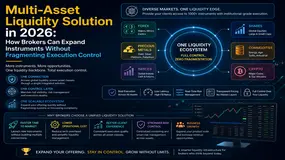
Multi-Asset Liquidity Solution in 2026: Expand Instruments Without Fragmenting Execution
A multi-asset liquidity solution can help a broker support FX, CFDs, commodities, and indices through a more unified operating model. But adding asset classes can also create fragmented symbols, pricing, routing, margin rules, records, and client messages if controls are not designed first. This 2026 guide explains how a multi asset liquidity provider, forex CFD liquidity setup, commodity liquidity provider, and indices liquidity provider fit into a broker-owned execution service. It outlines the due-diligence questions, shared-control model, cost drivers, and 90-day implementation plan that help teams expand without making the execution chain harder to explain. The aim is not to promise deeper liquidity or better trading outcomes. It is to create evidence that a broker can supervise market access, trace order events, reconcile costs, and communicate consistently to the relevant clients when conditions are difficult.

Exness Review 2026 for India: RBI Alert, Regulation, Login and Forex Risk
The RBI Alert List, updated on 19 November 2025, names Exness and the website www.exness.com. RBI says listed entities are not authorised to deal in forex under FEMA or operate an authorised forex ETP. Exness also publishes overseas regulatory records. These facts must not be mixed. Overseas regulation does not create RBI authorisation for an Indian resident.

Swissquote Review 2026 for India: Regulation, Login, Forex and Clone Risk
Official sources support overseas regulated identities linked to the Swissquote name. FINMA's current list shows Swissquote Bank SA as a bank, while an FCA warning identifies genuine UK firm Swissquote Ltd under FRN 562170. These records do not prove RBI authorisation. Indian residents must still check the authorised person, permitted purpose, electronic trading platform, payment route and legal entity before any forex transaction.
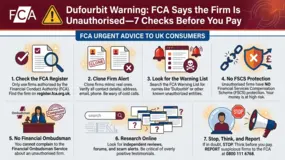
Dufourbit Warning: FCA Says the Firm Is Unauthorised—7 Checks Before You Pay
The FCA warned about Dufourbit on 19 August 2026. Check the named domain, contact details, missing protections and seven steps before making any payment.
WikiFX Broker
Latest News
DFSA Warns of Scam Impersonating Firm Menhir Capital
 WikiFX
KATOPRIME Review: Regulation Gaps and Broker Risks Traders Cannot Ignore
WikiFXSQUAREDFINANCIAL Review: Withdrawal Requests Go Unanswered as Clients Report Locked Accounts
WikiFXUK Inflation Jumps to 2.9%: What the July Data Means for GBP and Bank Rate Expectations
WikiFXWhy Fake Screenshots Make You Feel Like a Losing Trader
WikiFXMiri man loses RM511,406 to fake online investment scheme
WikiFXKATOPRIME Review: Unregulated and Risky, With Withdrawal Complaints to Verify
WikiFXReview 2026: STMARKET Regulation, MT5 Access, and Withdrawal Complaint Signals
WikiFXTrump bemoans Fed interest rate policy, says U.S. should be paying much less
WikiFXSri Lanka to Criminalize Unauthorized Forex Transfers
WikiFXRate Calc

