WikiFX report: Jelly Swap Provides Bridge to Swap XDC With ETH and BTC
Abstract:Jelly Swap is a Decentralized Exchange (DEX) that connects to the XDC network via a swap bridge. Users can now exchange XDC for ETH and BTC. Furthermore, Jelly Swap uses the atomic swap technology to enable cross-chain, immediate token swaps.

Jelly Swap is a Decentralized Exchange (DEX) that offers a swap bridge to the XDC network. This enables users to swap XDC with ETH and BTC. Moreover, Jelly Swap allows cross-chain, instant token swap, supported by the technology atomic swap.
More so, XinFin encourages and supports all decentralized ecosystems where the XDC community has full access over their funds. It can also seamlessly engage with the XDC ecospace. Even more, there are a number of DeFi use cases on The XDC Network, that includes BlockDegree, which finances students blockchain education in a decentralized way.
Moreover, XinFin‘s flagship app is TradeFinex. This is a peer-to-peer decentralized platform for Trade Finance originators to share deals to a wide range of bank or non-bank funders. However, this platform enables MSME’s to find funding. It will also deploy escrow smart contracts to fund infrastructure projects.
In order to render goods and services, through TradeFinex financiers and beneficiaries could record payment obligations on the blockchain. More so, the TradeFinex is developed to seamlessly create financial experience without barriers or borders.
For instance, Tito Titov is the CEO of Jelly Swap, who is considered as one of the superheroes. Moreover, he says that DeFi is a fantastic ecospace where everyone is supportive and open to help. In line with this, their aim is to provide exposure to the best technology in the blockchain space that could offer real difference in the future.
Tito Titov said,
We are excited to add a bridge to one of the fastest-growing networks in the DeFi space that solves the scalability and high fees issues of the current widely used blockchains.
Furthermore, Jelly Swap is a futuristic Decentralized App that solves the interoperability issues in blockchain transactions. It makes swapping between different blockchains possible within one application. It does not hold users‘ assets in its custody and completely does away with a middleman’s need. A customer deals directly with another customer peer-to-peer.
Jelly Swap is considerably the brainchild of founders Tito Titov and Krasimir Raykov. However, they developed the DApp to offer a fully decentralized service. More so, the public testnet was launched in November 2019, and mainnet went live in January 2020.
XDC network is a smart contract compatible, hybrid blockchain ecosystem that supports over 2000 TPS with minimum fees and confirmation in seconds. XDC is powered by its native XDC token. Moreover, the XDC ecosystem provides multi-dimensional solutions, ranging from robust KYC/AML protocols to Masternode implementation toolkits.
Even more, XinFins XDC Network is an enterprise-ready blockchain that is positioned well to appeal to institutions looking to engage with blockchain technology. More so, the hybrid architecture of the XDC Network focuses on combining the best of both private and public blockchains, maintaining both a permissioned private and a permissionless public state. Moreover, the network runs on the XinFin delegated proof of stake consensus (XDPoS) between trusted masternodes.

Read more
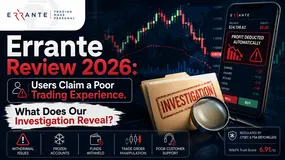
Errante Review 2026: Users Claim a Poor Trading Experience. What Does Our Investigation Reveal?
Errante, a Seychelles-based brokerage entity, is facing serious trading allegations from users globally. Users claim to have earned profits legitimately using their strategies. However, on the Errante login dashboard, many users reported an automatic deduction of earned profits. At the same time, withdrawal issues allegedly haunt many traders here. While investigating, we also found complaints concerning trade order manipulations by the broker. In this Errante review, we have examined these allegations and given an overview of its regulatory status.
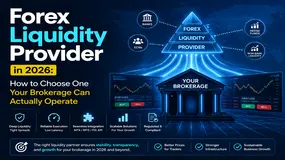
Forex Liquidity Provider in 2026: How to Choose One Your Brokerage Can Actually Operate
A forex liquidity provider decision now shapes the broker's spreads, fills, slippage, hedging cost, regulatory exposure, and exit options long after the platform is chosen. This 2026 guide explains what a forex LP actually delivers versus what the marketing claim says, how tier-1 banks, prime of prime, and multi-LP aggregators differ in practice, and how execution models (DMA, ECN, STP) change the broker's daily operating reality. It also walks through due diligence on credit, technology, reporting, governance, and exit, and shows how a 2026 broker can combine a primary LP with secondary routing without losing control of the client experience. Use the decision matrix, integration timeline, and operational tests to compare an fx liquidity provider before contract signature, not after a market event.
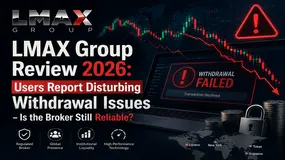
LMAX Group Review 2026: Users Report Disturbing Withdrawal Issues - Is the Broker Still Reliable?
Did LMAX Group deny you withdrawals citing frozen funds at the wallet service provider’s end? Have you been so exhausted by the endless withdrawal hassles that you have begun to stop investing in the platform? Has this UK-based liquidity provider even questioned your fund ownership status when you requested withdrawals? You are not alone! Many users have complained about these issues while sharing their LMAX Group reviews.
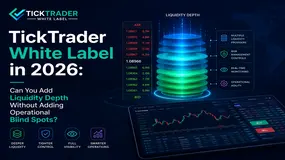
TickTrader White Label in 2026: Can You Add Liquidity Depth Without Adding Operational Blind Spots?
A TickTrader white label can look like the fastest route to a modern branded trading environment, but a fast launch is not the same as a controlled launch. This 2026 broker guide explains what the TickTrader platform is, where a Soft-FX broker solution can sit in a wider operating stack, and how to evaluate the difference between a white label, a server licence, and a connected CRM or Client Office setup. It also unpacks TickTrader cost beyond the monthly headline, including implementation, integration, support, data, governance, migration, and exit assumptions. Use the practical questions, workflow tests, comparison table, and launch checklist to assess a Soft-FX TickTrader provider without mistaking a feature demo for evidence that your brokerage can run the service safely at scale.
WikiFX Broker
Latest News
57 Booked in Pune Forex Scam Probe: The Fake Trading App Checklist Every Indian Investor Needs
 WikiFX
Accused of a RM123 Million Crypto Scam, He Fled to Malaysia and Claimed He Was Robbed
WikiFXAfrica's 10 Strongest Currencies in July 2026: Naira Absent
WikiFXU.S. and Japan Stand Ready for Further Coordinated Yen Intervention, Treasury Warns
WikiFXYen Retreats After Coordinated Intervention
WikiFXRinggit Flat Near RM4.09 After US Factory Data Surprise
WikiFXHF Market Review – A 1.76 Score, an Unverified CYSEC Licence, and a Frozen Account
WikiFXSri Lanka Rupee Slides 7.9% in H1 2026 as Bank Steps In
WikiFXMarket, Limit, and Stop Orders in Forex Explained Simply
WikiFXApple Faces Lawsuit Over Fake Crypto App Exposing $1.8 Million Theft
WikiFXRate Calc

