Segregated accounts and forex bonuses – Khwezi Trade has it all
Abstract:Segregated accounts and forex bonuses are designed to safeguard the financial interests of traders while allowing them to reap more. How is Khwezi Trade making this possible?

The financial markets nowadays feature hundreds, if not thousands, of forex brokers who are trying to attract more beginner traders by providing outrageous offers and benefits. Traders who have been trading for a while already have it ingrained into them that they should never deal with unregulated brokers.
The reason for this is extremely simple; unregulated brokers are not bound by law to ensure client fund security. In addition to this, these brokers are not overseen to ensure that they fulfil their financial obligations or provide a transparent, fair, and safe trading environment. The new over-the counter (OTC) regulation has been implemented by the local regulator, the FSCA, to combat bad players in the industry. Khwezi Trade, a division of Khwezi Financial Services (Pty) Ltd, is the first South African owned forex platform to be authorised and approved by the FSCA and has received the OTC licence. View a comprehensive list of FSCA Forex Brokers.
There are lists of blacklisted brokers that got away with client funds because of the false front that they put up, drawing in unsuspecting investors and traders of all experience levels. Unfortunately, these brokers have given deposit and trading bonuses a bad name, and because of this most traders associate the presence of bonuses with the signs that they may be dealing with a scam broker.
However, this is not always true and there are still brokers that can offer bonuses while ensuring that client funds are kept safe in segregated accounts which are separate from the brokers funds.
What is client segregation of funds?
A segregated account is a separate account for each trader. Funding your trading account with a broker that offers segregated bank accounts has several advantages. Primarily, the separate account provides traders with a measure of protection if their brokerage goes out of business.
Neither the brokerage nor the trader is left in the dark as to where their money is going or how it is being utilized. A segregated account is required by many countries to guarantee that customer money is not utilized for operational reasons by brokerages. Confusion is avoided, and both parties are protected by using a separate account.
Only brokers with a category 2 Financial Advisory and Intermediary Services (FAIS) licence can offer segregated third-party funds administration accounts (TPFA) to their clients. These TPFA accounts are held with a top-tier South African bank.
What are Deposit bonuses and what purpose do they serve?
When it comes to attracting new clients, the deposit bonus is one of the most popular promotional incentives. Traders get a set sum of money or a percentage of their original investment in return for funding their trading accounts. This is the basic principle.
Most of the time, new customers are only eligible for this sort of promotion. Some Forex deposit bonus brokers, however, give this advantage to their consumers whenever they deposit to their trading account.
How the Khwezi Trade offer makes it stand out from the rest
Khwezi Trade is a proudly South African Forex commodity and indices broker that offers traders the best of both worlds; a guarantee that their funds are safeguarded and kept in segregated accounts, and the reward that they will receive a 30% deposit bonus on their first deposit.
Khwezi Trade is regulated and overseen by the Financial Sector Conduct Authority (FSCA) in South Africa, with the registration number FSP 44816. The FSCA is one of the strictest market regulators in the world and to keep their license, Khwezi Trade is required to ensure that all funds are kept in accounts with top-tier banks in South Africa.

Read more

OnFin Review 2026: Investigating $45K+ Fund Loss & Other Trading Allegations
OnFin, a Comoros-based multi-asset brokerage firm, impresses users with its wide range of products and trading platforms. However, user reviews largely reflect negative sentiments for the broker. Withdrawal issues have allegedly become the talking point among users on broker review platforms such as WikiFX. Among the complaints, one user even highlighted a fund scam totaling over $45,000. Additionally, the alleged failure of the broker in providing trade logs added to negative OnFin reviews. While examining the reviews, we have provided a regulatory overview of the broker.

FCA Warns reclaim-experts.com: 7 Checks Before You Pay
The UK regulator classified the website as a clone of an authorised firm on 28 August 2026. The FCA says the genuine Reclaim Experts Ltd has no connection with the clone.
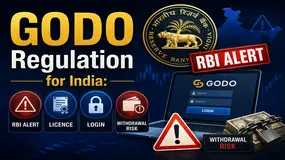
GODO Regulation for India: RBI Alert, Licence, Login, and Withdrawal Risk
People searching GODO regulation or regulation GODO should separate overseas licensing from permission in India. The Reserve Bank of India Alert List, updated 19 November 2025, names “GoDo FX” and godofx.com. RBI says listed entities are neither authorised to deal in forex under FEMA nor authorised to operate an approved forex electronic trading platform. GODO's legal documents name GODO LTD and a Mauritius FSC licence, but that overseas status does not create RBI authorisation. No cited court ruling proves fraud. The main checks are jurisdiction, domains, leverage, and withdrawals.

Succedo Markets Review 2026: The First Withdrawal Worked—What Happened Next?
Most traders who have opened accounts with Succedo Markets, a Saint Lucia-based brokerage entity, have reported withdrawal request denials after a pleasant first experience. Traders globally, including those from India, have made these complaints. Meanwhile, some traders have reportedly taken legal recourse to recover their stuck funds. The critical nature of these complaints made us share this in-depth Succedo Markets review. This review does not only examine user allegations but also shed light on its regulatory framework.
WikiFX Broker
Latest News
Canadian Dollar strengthens despite hawkish Fed rhetoric
 WikiFX
Germany flash HICP growth remains slower than expected at 2.9% in August
WikiFXBritish Pound edges higher as USD softens ahead US jobs data
WikiFXForex Today: Attention shifts to US ISM, JOLTs and inflation in Europe
WikiFXAustralian Dollar holds firm amid hawkish Fed and RBA expectations
WikiFXEuro strengthens against Canadian Dollar ahead of Germanys HICP data
WikiFXNew Zealand Dollar: RBNZ seen hiking in September – UOB
WikiFXEuro: Limited downside, range defined against US Dollar – Scotiabank
WikiFXUSD/JPY Forecast: Retreats from one-month high but dip-buying eyed
WikiFXPolish Zloty: Fiscal slippage and cautious NBP weigh – Commerzbank
WikiFXRate Calc

