Spruce Biosciences Rallies on Oppenheimer Outperform Rating
Abstract:Oppenheimer Holdings is an American multinational independent investment bank and financial services company offering investment banking, financial advisory services, capital markets services, asset management, wealth management, and related products and services worldwide. The company, which once occupied the One World Financial Center building in Manhattan, now bases its operations at 85 Broad Street in New York City. Spruce Biosciences Inc (NASDAQ:SPRB) shares rose 21% Friday after bullish commentary from Oppenheimer. as a rating given by some analysts that publicly research and recommend securities of it will produce higher returns, for the foreseeable future, than the major market indexes. The analyst Hartaj Singh initiated coverage of Spruce with an outperform rating and $15 price target, saying the company is a quality biotech name.
Oppenheimer Holdings is an American multinational independent investment bank and financial services company offering investment banking, financial advisory services, capital markets services, asset management, wealth management, and related products and services worldwide. The company, which once occupied the One World Financial Center building in Manhattan, now bases its operations at 85 Broad Street in New York City. Spruce Biosciences Inc (NASDAQ:SPRB) shares rose 21% Friday after bullish commentary from Oppenheimer. as a rating given by some analysts that publicly research and recommend securities of it will produce higher returns, for the foreseeable future, than the major market indexes. The analyst Hartaj Singh initiated coverage of Spruce with an outperform rating and $15 price target, saying the company is a quality biotech name.
Spruce is committed to transforming the lives of patients living with rare endocrine disorders. Spruces wholly-owned product candidate, tildacerfont, is a CRF1 receptor antagonist currently in late-stage clinical trials in adult patients with classic congenital adrenal hyperplasia (CAH). Spruce Biosciences is a U.S.-based late-stage biopharmaceutical company focused on developing and commercializing therapies for rare endocrine disorders. The company's lead product candidate, Tildacerfont, is a potential treatment for congenital adrenal hyperplasia, a rare endocrine disease.
The analyst of Oppenheimer Singh told investors in a research note that the recent clinical slowdown “is not reflective of the quality of this biotech name.”
“Tildacerfont is in late-stage development for congenital adrenal hyperplasia and a Phase 2 proof of concept trial in a sub-population of Polycystic Ovary Syndrome should be started in the next few months,” the analyst said.
Spruce shares have been on a constant decline for most of the year, down 88% in 2021. A week ago, Benchmark initiated the stock with a speculative buy rating and $7 price target and also as a clinical stage biopharmaceutical company focused on developing novel therapies for rare diseases affecting the endocrine system.

Read more

SIMPLEFX Review 2026: Trading Chart Complaints Continue - What Traders Should Know
SIMPLEFX, a Saint Vincent and the Grenadines-based brokerage entity, receives complaints mostly about trading chart manipulations. Generally, while researching broker reviews, complaints usually centre on hassles concerning fund withdrawals. User complaints for this broker have come from many regions, including South Asia. This SIMPLEFX review examines these user allegations and shares its regulatory framework.
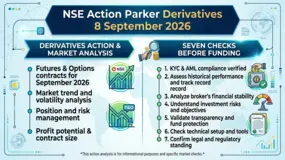
NSE Action Parker Derivatives 8 September 2026 and Seven Checks Before Funding
The NSE action Parker Derivatives 8 September 2026 is a current exchange disciplinary direction, not an expulsion notice. The National Stock Exchange page records a ₹1.5 lakh penalty and tells the member to strengthen supervision of existing Authorised Persons, stop onboarding new Authorised Persons until that work is completed, re-inspect the relevant branch or AP in the next quarter, and comply with prevailing anti-money-laundering rules. Indian clients should distinguish an Authorised Person from the broker itself. The published direction does not say that existing clients must close accounts or that trading membership has been cancelled. Before opening, funding or changing an account, verify the exact firm, website, member status, payment beneficiary and the scope of the latest direction.
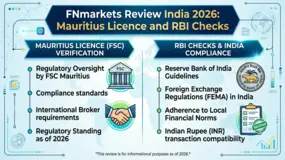
FNmarkets Review India 2026: Mauritius Licence and RBI Checks
This FNmarkets review for Indian readers starts with four verifiable facts. The Mauritius FSC public register lists FNmarkets (Mauritius) Ltd as an Investment Dealer, licensed on 12 August 2025. The broker website identifies the same entity and states licence GB25204149. However, the RBI list of authorised electronic trading platforms checked on 9 September 2026 did not show FNmarkets. The broker's help centre also sets a $50 minimum withdrawal and requires full account verification. These facts do not prove fraud, but they make FNmarkets regulation and payment checks essential before an Indian resident deposits money.
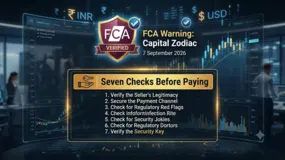
FCA Warning Capital Zodiac 7 September 2026 and Seven Checks Before Paying
The FCA named Capital Zodiac as an unauthorised clone on 7 September 2026. Check capitalzodiac.com, capitalzodiac.net and FRN 806702 before paying.
WikiFX Broker
Latest News
United States Dollar Index trades under pressure as Yen buying accelerates
 WikiFX
Thai Baht: Recent THB gains face headwinds – OCBC
WikiFXEuro rebounds against British Pound on diverging ECB-BoE interest rate paths
WikiFXIndian Rupee: Stable range with shallow gains against US Dollar – DBS
WikiFXDo You Know Your Cost of Swinging Gold? Gold CFD Costs Shift From Spreads To Overnight Fees
WikiFXXMR Markets Review 2026: Allegations of Failed Withdrawals & Bonuses
WikiFXBritish Pound climbs as USD fades, Hormuz risk keeps Fed in play
WikiFXePlanet Review 2026: Did Traders Report Withdrawal Blocks & Slippage Issues?
WikiFXSwiss Franc steadies as Fed hike expectations offset safe-haven flows
WikiFXNSE Action Parker Derivatives 8 September 2026 and Seven Checks Before Funding
WikiFXRate Calc

