
2026-11-09 17:48
IndustryASIC sounds urgent alarm over $678M superannuation scam bleeding Aussie nest eggs
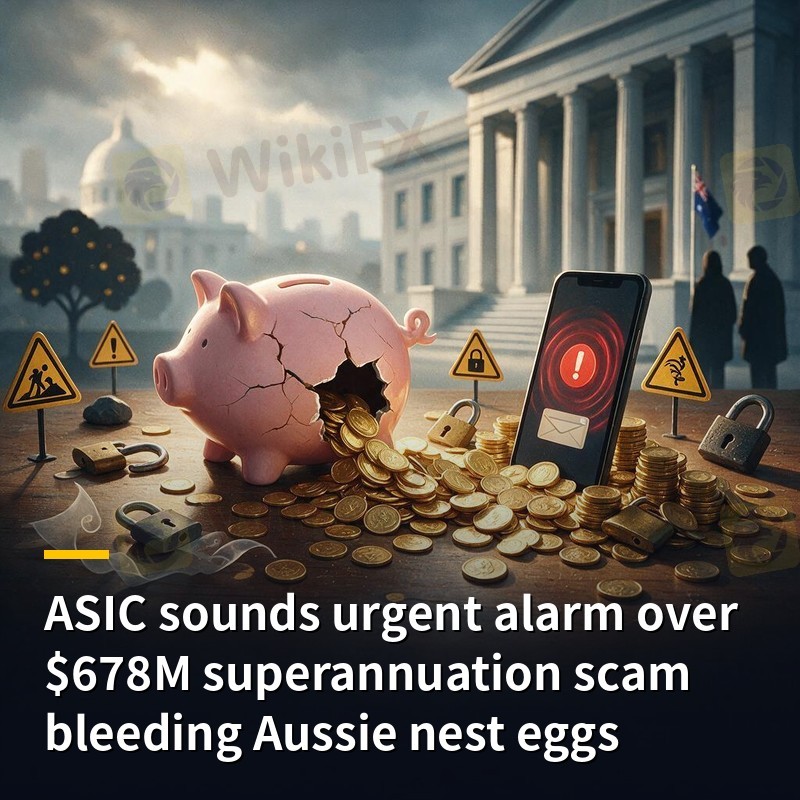
ASIC has issued an urgent alarm over a superannuation scam that has drained $678 million from Australians' retirement savings, according to 4BC.
The regulator's warning puts the focus squarely on the accounts Australians treat as untouchable — their nest eggs — and on the channels through which scammers reach them. Superannuation balances are a prime target precisely because they are large, long-held and often left unmonitored for years, giving fraudsters time to work before a victim notices anything wrong.
【Why super accounts are such a rich target】
Superannuation sits apart from everyday banking. Many members interact with their fund only a few times a year, and statements arrive infrequently. That distance creates opportunity: a scammer who gains access to an account, or who convinces a member to move money, can operate without the near-instant alerts that accompany a normal transaction account.
Scams in this space typically rely on impersonation — of a fund, a regulator or a financial adviser — to persuade members to hand over login details or transfer balances. Once funds leave a super account, recovery is difficult and slow.
【Who is exposed】
The warning concerns Australian superannuation members and their retirement savings, and the funds and advisers who service them. Anyone with a super balance is within the pool scammers are targeting, regardless of fund size or provider.
【What to watch for】
ASIC's alarm is a reminder to verify any contact claiming to be from a super fund or regulator through official channels, never to hand login credentials or identity documents to someone who contacts you first, and to enable two-factor authentication where a fund offers it. Members should treat unsolicited approaches about their super — particularly ones urging urgency — with suspicion and confirm details directly with their fund using contact information they have sourced themselves.
Like 0

Hot content
Industry
Event-A comment a day,Keep rewards worthy up to$27
Industry
Nigeria Event Giveaway-Win₦5000 Mobilephone Credit
Industry
Nigeria Event Giveaway-Win ₦2500 MobilePhoneCredit
Industry
South Africa Event-Come&Win 240ZAR Phone Credit
Industry
Nigeria Event-Discuss Forex&Win2500NGN PhoneCredit
Industry
[Nigeria Event]Discuss&win 2500 Naira Phone Credit
Forum category

Platform

Exhibition

Agent

Recruitment

EA

Industry

Market

Index
ASIC sounds urgent alarm over $678M superannuation scam bleeding Aussie nest eggs
Hong Kong | 2026-11-09 17:48
ASIC has issued an urgent alarm over a superannuation scam that has drained $678 million from Australians' retirement savings, according to 4BC.
The regulator's warning puts the focus squarely on the accounts Australians treat as untouchable — their nest eggs — and on the channels through which scammers reach them. Superannuation balances are a prime target precisely because they are large, long-held and often left unmonitored for years, giving fraudsters time to work before a victim notices anything wrong.
【Why super accounts are such a rich target】
Superannuation sits apart from everyday banking. Many members interact with their fund only a few times a year, and statements arrive infrequently. That distance creates opportunity: a scammer who gains access to an account, or who convinces a member to move money, can operate without the near-instant alerts that accompany a normal transaction account.
Scams in this space typically rely on impersonation — of a fund, a regulator or a financial adviser — to persuade members to hand over login details or transfer balances. Once funds leave a super account, recovery is difficult and slow.
【Who is exposed】
The warning concerns Australian superannuation members and their retirement savings, and the funds and advisers who service them. Anyone with a super balance is within the pool scammers are targeting, regardless of fund size or provider.
【What to watch for】
ASIC's alarm is a reminder to verify any contact claiming to be from a super fund or regulator through official channels, never to hand login credentials or identity documents to someone who contacts you first, and to enable two-factor authentication where a fund offers it. Members should treat unsolicited approaches about their super — particularly ones urging urgency — with suspicion and confirm details directly with their fund using contact information they have sourced themselves.
Like 0
I want to comment, too
Submit
0Comments

There is no comment yet. Make the first one.
Submit
There is no comment yet. Make the first one.