
2026-11-05 16:30
IndustryMisery Index Ranks the World's Most and Least Miserable Economies
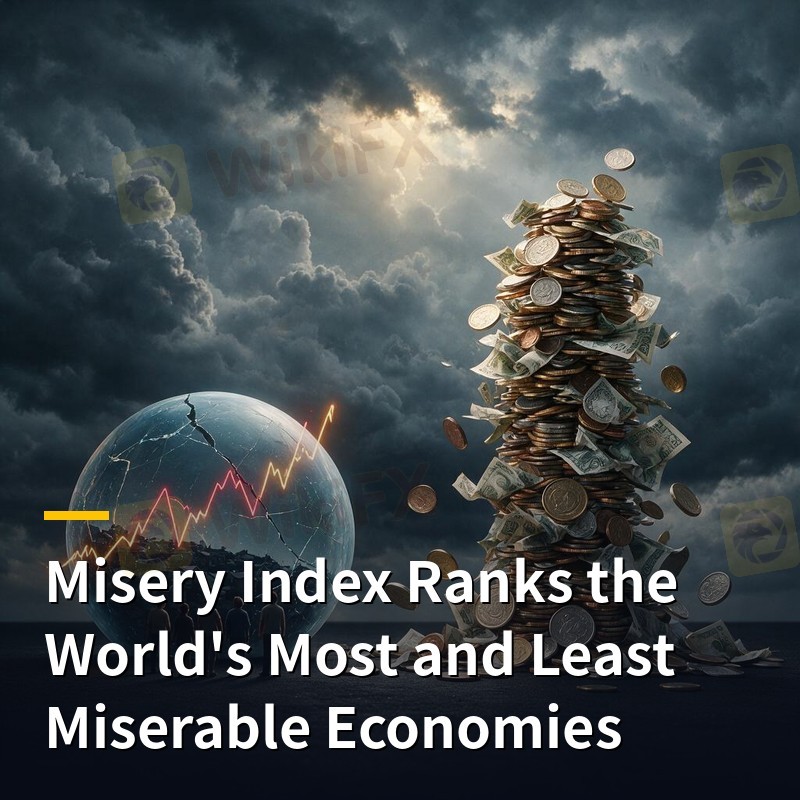
A fresh ranking of the world's most and least miserable economies is out, and it is built on two numbers every household already feels: inflation and unemployment. According to Forex Factory, the Misery Index framework boils national economic pain down to those pressures rather than growth headlines or stock market highs.
The index is a straightforward, blunt tool. It adds inflation and unemployment together, so an economy where prices climb fast and jobs are scarce scores worse than one where both stay contained. That means the ranking can look very different from GDP league tables — a country posting solid growth but stubborn inflation can still land on the miserable end.
【Why inflation and unemployment drive the score】
For households, those two variables are the ones that show up in daily life. Inflation erodes what a paycheck buys; unemployment determines whether there is a paycheck at all. Central banks watch the same pair when setting interest rates, which is why the Misery Index often tracks closely with the policy debate in each country.
For currency markets, the connection runs through rate expectations. Economies wrestling with high inflation tend to face tighter policy, while weak labor markets pull the other way — and that tension feeds into how a currency is priced against its peers.
【Who this touches】
The ranking covers economies whose currencies trade against the dollar and whose central bank decisions ripple into cross-border flows, import prices and the cost of holding foreign assets. Anyone with exposure to international markets — through travel, overseas holdings or currency-denominated accounts — sits downstream of the same inflation and jobs data the index tracks.
【A reminder on where you check the numbers】
Rankings like this are a starting point, not a verdict. Traders and savers should verify economic data through official statistical agencies and central bank releases, and confirm that any platform or account they use is properly regulated before acting on headline figures. Double-check official channels rather than social media summaries when a ranking makes the rounds.
Like 0

Hot content
Industry
Event-A comment a day,Keep rewards worthy up to$27
Industry
Nigeria Event Giveaway-Win₦5000 Mobilephone Credit
Industry
Nigeria Event Giveaway-Win ₦2500 MobilePhoneCredit
Industry
South Africa Event-Come&Win 240ZAR Phone Credit
Industry
Nigeria Event-Discuss Forex&Win2500NGN PhoneCredit
Industry
[Nigeria Event]Discuss&win 2500 Naira Phone Credit
Forum category

Platform

Exhibition

Agent

Recruitment

EA

Industry

Market
Index
Misery Index Ranks the World's Most and Least Miserable Economies
Hong Kong | 2026-11-05 16:30
A fresh ranking of the world's most and least miserable economies is out, and it is built on two numbers every household already feels: inflation and unemployment. According to Forex Factory, the Misery Index framework boils national economic pain down to those pressures rather than growth headlines or stock market highs.
The index is a straightforward, blunt tool. It adds inflation and unemployment together, so an economy where prices climb fast and jobs are scarce scores worse than one where both stay contained. That means the ranking can look very different from GDP league tables — a country posting solid growth but stubborn inflation can still land on the miserable end.
【Why inflation and unemployment drive the score】
For households, those two variables are the ones that show up in daily life. Inflation erodes what a paycheck buys; unemployment determines whether there is a paycheck at all. Central banks watch the same pair when setting interest rates, which is why the Misery Index often tracks closely with the policy debate in each country.
For currency markets, the connection runs through rate expectations. Economies wrestling with high inflation tend to face tighter policy, while weak labor markets pull the other way — and that tension feeds into how a currency is priced against its peers.
【Who this touches】
The ranking covers economies whose currencies trade against the dollar and whose central bank decisions ripple into cross-border flows, import prices and the cost of holding foreign assets. Anyone with exposure to international markets — through travel, overseas holdings or currency-denominated accounts — sits downstream of the same inflation and jobs data the index tracks.
【A reminder on where you check the numbers】
Rankings like this are a starting point, not a verdict. Traders and savers should verify economic data through official statistical agencies and central bank releases, and confirm that any platform or account they use is properly regulated before acting on headline figures. Double-check official channels rather than social media summaries when a ranking makes the rounds.
Like 0
I want to comment, too
Submit
0Comments

There is no comment yet. Make the first one.
Submit
There is no comment yet. Make the first one.