
2026-10-29 15:45
IndustryInstagram ad, fake trading app, forged SEBI certificate: how a Pune techie lost ₹2.17 crore
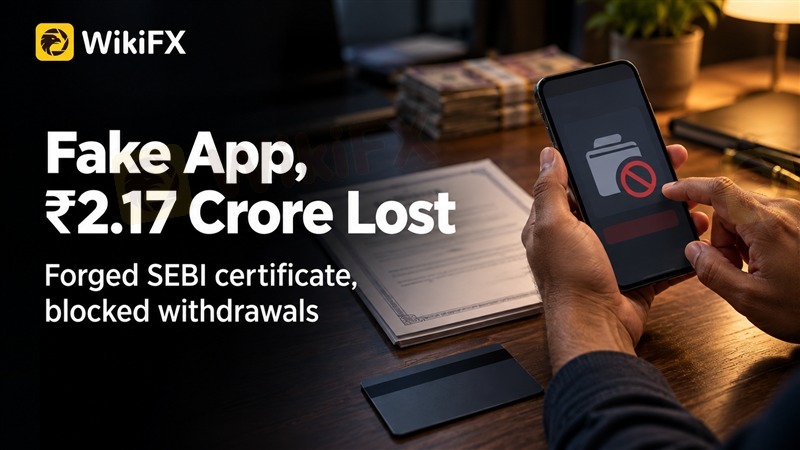
It started with an Instagram advertisement. It ended with ₹2.17 crore gone. A Pune-based technician was lured by cyber fraudsters into a fake share-trading application, reassured by a forged SEBI certificate, and then blocked from withdrawing his money, according to The Times of India and The Indian Express.
【How the trap closed】
The victim was first drawn in by a social media ad, then guided into an app built to look like a legitimate trading platform. On screen, the account appeared to work as expected. The problem came to light only when he tried to take money out: withdrawals were blocked.
According to The Indian Express, he later travelled to a firm in Indore, and only then realised the entire operation was a sham. No arrests have been reported so far.
【Why a fake certificate works so well】
The forged SEBI certificate is the most telling detail. The first question a careful investor asks is whether a platform is registered. Fraudsters now answer that question in advance, with a certificate that looks official but is not. A certificate shown inside an app or forwarded on a messaging chat proves nothing; only the regulator's own records can confirm registration.
The app itself follows the same logic. Numbers that seem to move with the market and paper profits that grow week after week are designed to encourage larger deposits. The withdrawal block is the moment the illusion breaks, because a real broker settles payouts through regular banking channels.
【Four red flags in this case】
An investment pitch that arrives through an unsolicited social media ad. A trading app reached through a link rather than a verified broker. A registration certificate supplied by the platform itself. A smooth deposit process paired with a stalled withdrawal. Any one of these is reason to stop; all four together describe this case.
Before funding any trading account, verify the platform directly with SEBI's records, never send money to a personal account or an individual's UPI handle, and be wary of anyone on messaging apps claiming to represent a regulator.
Like 0

Hot content
Industry
Event-A comment a day,Keep rewards worthy up to$27
Industry
Nigeria Event Giveaway-Win₦5000 Mobilephone Credit
Industry
Nigeria Event Giveaway-Win ₦2500 MobilePhoneCredit
Industry
South Africa Event-Come&Win 240ZAR Phone Credit
Industry
Nigeria Event-Discuss Forex&Win2500NGN PhoneCredit
Industry
[Nigeria Event]Discuss&win 2500 Naira Phone Credit
Forum category

Platform

Exhibition

Agent

Recruitment

EA

Industry

Market

Index
Instagram ad, fake trading app, forged SEBI certificate: how a Pune techie lost ₹2.17 crore
Hong Kong | 2026-10-29 15:45
It started with an Instagram advertisement. It ended with ₹2.17 crore gone. A Pune-based technician was lured by cyber fraudsters into a fake share-trading application, reassured by a forged SEBI certificate, and then blocked from withdrawing his money, according to The Times of India and The Indian Express.
【How the trap closed】
The victim was first drawn in by a social media ad, then guided into an app built to look like a legitimate trading platform. On screen, the account appeared to work as expected. The problem came to light only when he tried to take money out: withdrawals were blocked.
According to The Indian Express, he later travelled to a firm in Indore, and only then realised the entire operation was a sham. No arrests have been reported so far.
【Why a fake certificate works so well】
The forged SEBI certificate is the most telling detail. The first question a careful investor asks is whether a platform is registered. Fraudsters now answer that question in advance, with a certificate that looks official but is not. A certificate shown inside an app or forwarded on a messaging chat proves nothing; only the regulator's own records can confirm registration.
The app itself follows the same logic. Numbers that seem to move with the market and paper profits that grow week after week are designed to encourage larger deposits. The withdrawal block is the moment the illusion breaks, because a real broker settles payouts through regular banking channels.
【Four red flags in this case】
An investment pitch that arrives through an unsolicited social media ad. A trading app reached through a link rather than a verified broker. A registration certificate supplied by the platform itself. A smooth deposit process paired with a stalled withdrawal. Any one of these is reason to stop; all four together describe this case.
Before funding any trading account, verify the platform directly with SEBI's records, never send money to a personal account or an individual's UPI handle, and be wary of anyone on messaging apps claiming to represent a regulator.
Like 0
I want to comment, too
Submit
0Comments

There is no comment yet. Make the first one.
Submit
There is no comment yet. Make the first one.