Bangladesh ACC Files Case Against Eight Over Tk23.68 Crore Chattogram Land Fraud

Abstract:Bangladesh's Anti-Corruption Commission (ACC) has filed a case against eight people, including a serving executive engineer of the Public Works Department (PWD), over the alleged embezzlement of about Tk23.68 crore through forgery and fraud involving government land in Chattogram. The ACC announced the case at a press conference on 4 October, as reported by The Business Standard, which published the details of the filing.
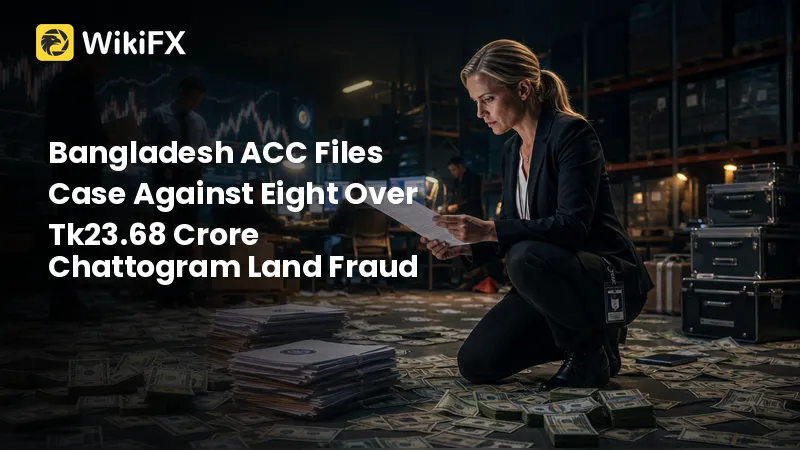
Bangladesh's Anti-Corruption Commission (ACC) has filed a case against eight people, including a serving executive engineer of the Public Works Department (PWD), over the alleged embezzlement of about Tk23.68 crore through forgery and fraud involving government land in Chattogram. The ACC announced the case at a press conference on 4 October, as reported by The Business Standard, which published the details of the filing.
The case centers on 24.96 decimals of government-owned land in the Agrabad commercial area of Chattogram. For readers unfamiliar with the unit, a decimal is a measure of land area used in South Asia; 24.96 decimals is roughly one-quarter of an acre. The ACC alleges the land was occupied and used fraudulently through forged records and a failure to pay rent, causing a loss of Tk23,68,39,268. That figure is the same as the roughly Tk23.68 crore cited in the case filing.
Who is Accused?
The ACC named Mohammad Shah-Alam Faruk, a former sub-divisional engineer of the Chattogram PWD and the current executive engineer of the Bagerhat PWD, among the accused. The other seven are Md Farid Ahmed, proprietor of M/s Concord Trading; Mohammad Fahim Ahmed, proprietor of Agrabad Convention Hall; Fatema Begum; Hasina Momtaz; Md Foyez Ahmed; Rokeya Sultana; and Shaheen Sultana.
The ACC said it approved the filing of the case over the alleged forgery, fraudulent occupation and failure to pay rent for the government property. The commission also said the accused allegedly abused their entrusted powers, benefited themselves and others, and created forged records through fraud and used them as genuine.
What the ACC Announced
ACC Public Relations Officer and Deputy Director Aktarul Islam disclosed the information at the press conference on 4 October. The ACC's statement described the alleged loss as Tk23,68,39,268, which matches the roughly Tk23.68 crore cited in the case filing. The commission did not say when the alleged fraud took place or over what period the rent went unpaid.
The ACC did not provide details on how the alleged forged records were created or detected, whether any arrests have been made, or what the next procedural step in the case will be. There was also no immediate response or comment from any of the accused or from the PWD. It is not clear from the available information whether the government land has been recovered or remains occupied.
Background on the Agencies
The ACC is Bangladesh's main anti-corruption agency, responsible for investigating and prosecuting corruption and financial crimes. The PWD is the government department responsible for public works and government buildings. The case is one of a series of anti-corruption actions involving government property in Bangladesh. The Business Standard reported the filing on 4 October.
Download the WikiFX app for the latest financial news and insights.

Read more
Nifty's Worst September Since 2018: FIIs Pull $40 Billion, Rupee Stuck Near 96
Indian stocks have fallen for eight straight weeks. The economy grew 7.8% in the June quarter. In a post on flow problem, not a growth problem. For anyone trading USD/INR, that distinction decides where the pressure lands. The rupee has been hovering around 96 per dollar, with the Reserve Bank of India selling dollars to keep the move orderly (Rediff MoneyWiz). Orderly spot is not the same thing as cheap carry. The cost of that stability shows up elsewhere.

A 19.2x Nifty is cheap in rupees. In dollars, the hurdle is 13–15%
Foreign funds pulled roughly Rs 3 lakh crore out of Indian equities in 2026, with about Rs 36,000 crore of that leaving in September alone. Those are the numbers in a widely shared post on X by Vivek Khatri (@CaVivekkhatri), whose argument runs in one direction: the Nifty is cheap in rupees and expensive in dollars. The post's snapshot: Nifty PE near 19.2, the rupee near 96.3, the US 10-year Treasury at 5.28%. Individually, those look calm. Over a year, they do not. According to the post, the rupee is down about 8.5% over the year, about 7% in 2026, and almost 10% in the last financial year alone. The Nifty is down about 13% over the same stretch. Nifty IT is down about 27%. "They still bought IPOs," the post says of foreign investors. "They sold the secondary market." Put in position terms: a single-currency valuation is not a cushion if the currency itself is moving against you.
RBI MPC Meets Today: An Anticipated 25 BPS Hike Would be the First Since February 2023
The RBI's Monetary Policy Committee begins its three-day meeting today, October 5, and the rate decision lands on Wednesday, October 7 at 10:00 am. The repo rate is 5.25%. A 25 basis point increase takes it to 5.50% — the first hike since February 2023. Most of the street expects exactly that. A Reuters poll of 61 economists had 35 forecasting 25 bps. An ET Poll published Monday pointed the same way: 25 bps, to 5.50%. Governor Sanjay Malhotra holds a press conference at 12:00 pm, two hours after the statement, and the RBI livestreams both on its YouTube channel. If you hold USD/INR, or any floating-rate loan priced off an external benchmark, Wednesday morning is the only scheduled event this week that moves your numbers.

US and China Publish $60bn Tariff-Cut Lists-Soybeans Stay Out, and Nothing Is in Force Yet
The United States and China have published reciprocal tariff-cut lists covering about $30 billion of goods on each side, $60 billion in total. Neither list is in force. China's covers 1,619 categories of American products. America's covers 77 categories of Chinese goods. Soybeans are on neither. That omission is the first thing to register. Soybeans are the largest single US agricultural export to China, and they stay subject to China's 10% additional tariff even as corn, wheat, sorghum, beef and dairy come off the list.
WikiFX Broker
Latest News
Chris and Tiger Podcast – Euro Slides as France Fears, High Yields Shape Markets
WikiFXWorld Bank warns of AI concentration risks as it lifts East Asia and Pacific growth outlook to 4.5%
WikiFXA 19.2x Nifty is cheap in rupees. In dollars, the hurdle is 13–15%
WikiFXBOJ Interest Rate Forecast: Tokyo Inflation Builds Case for Next Hike
WikiFXRBI MPC Meets Today: An Anticipated 25 BPS Hike Would be the First Since February 2023
WikiFXFrom Food Cart to Seized Mercedes: Panchkula Police Name Rajesh 'Nana' in Alleged Rs 8 Crore Fraud
WikiFXU.S. Dollar Retreats On Profit-Taking: Analysis For EUR/USD, GBP/USD, USD/CAD, USD/JPY
WikiFXFirst Light News: Nasdaq 100 Hits Another Record as 10-year Yield Holds at 5.3%
WikiFXFBS Review 2026: Traders Report Stop-Loss Issues and Deposit & Withdrawal Failures
WikiFXBangladesh ACC Files Case Against Eight Over Tk23.68 Crore Chattogram Land Fraud
WikiFXRate Calc
